In the contemporary Thai dramatic landscape, “Girls’ Love” (GL) productions are no longer merely a peripheral movement or a handful of light romantic attempts; rather, they have transformed into an industrial and cultural phenomenon carrying a clear desire for renewal and for transcending traditional frameworks.
However, the series Dangerous Queen, adapted from the novel by author Khun Phuying, stands out as a glaring cautionary tale of how television adaptations can utterly abort the promise of their source material. Rather than honoring its literary origin, the production loses its way entirely, reducing what could have been a bold noir drama into a structural disaster trapped between production constraints and flawed storytelling.
What should have been a nuanced narrative on power and pleasure ultimately collapses under the weight of poor execution, leaving the series as a stark conflict between the text’s original ambition and its botched screen context.

The Crisis of Comparison with the Novel
The dramatic structure of the series stems from characters that are starkly contradictory in terms of class and psychology. The first is Queen, portrayed by actress Tangkwa Vinyanich, an executive and heiress to influential families, characterized by a stern nature and an obsession with control. On the other hand, we find the character of Bonita, played by actress Noor Desuraya, a broken girl suffering under the weight of poverty, her mother’s addiction, and social abuse.
In the original novel, the text was classified as explicit literature or (NC-17), where the relationship between the two parties was carved within the frameworks of complex power dynamics, pleasure intertwined with pain, a sense of submission, and the desire for possession. However, in the television work, a structural shift occurred in the construction of the characters to the extent that they lost the coherence with which they were built inside the novel.
The second aspect where the series failed compared to the novel is the narration of motivations. In the literary text, Bonita lived under a constant and direct threat from her environment, which made her recourse to Queen a brutal survival tool. On screen, however, the showrunners replaced the immediate danger with softer faces—such as converting the predatory neighbor obsessed with her into the character of Kim, who appears more civil at first. This softening weakened the initial spark that charged the protagonists’ relationship with tension and utilitarian necessity, and it undermined the reasons that led them to this relationship in the first place.
The third offense committed by the series against the novel is characterization. Bonita was converted on television into a somewhat passive victim, whereas in the novel she was armed with a sharp defensive fierceness resulting from the harsh environment in which she grew up. This shift on screen made the relationship appear in parts as if one party was seeking a wealthy savior for rescue, rather than being a clash of two wills as presented in the novel.

Gender Deconstruction: Dynamics of Control and Possession
From a gender perspective, the series raises an important question regarding how female queer relationships are represented when borrowing the structure of “male power” or (Alpha Dynamics). Queen appears in her formal suits void of any emotional detail, walking steadfastly through corporate corridors and making stern financial decisions. This representation certainly broke the traditional trope of women in Asian drama and celebrated the nature of a woman who commands and dictates. However, looking at emotional depth, we see that the series fell into the trap of turning love into “possessive ownership.” The relationship develops in many scenes not through equal dialogue, but through an abundance of dominant stares, alongside financial support and influence that place the other party under constant moral and psychological obligation. This possession is barely disguised as romance, reflecting sheer writing laziness and replacing the novel’s complex psychological construction of characters with visual indoctrination of the first party’s power and the second’s weakness.
Visuals, Editing, and Soundtrack
When dissecting the visual and technical level of the series, a clear gap appears between the production capacities of small emerging companies and the vision of noir drama.
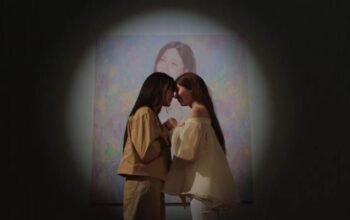
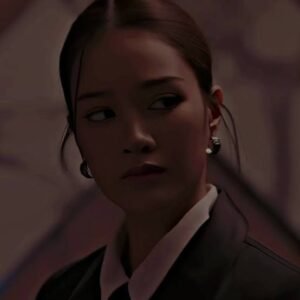
The director relied on high-contrast lighting (Chiaroscuro) to highlight Queen’s lavish world against the dark alleys and dilapidated houses of Bonita, while employing dark colors and shadows to grant the series a distinct visual identity separate from standard Thai drama filled with bright lighting. However, the excessive use of slow motion and long silent glances yielded an adverse result; instead of creating an emotional charge or subtle dramatic tension, those scenes turned into temporal monotony that harmed the overall pacing.
The dull and tense soundtrack weakened the artistic value of the work as a whole even further. Sound engineering constituted one of the weakest artistic aspects of the production: first, due to the discrepancy in volume levels between dialogue and score, alongside abrupt cuts in musical cues without appropriate cinematic transitions; second, due to the exaggerated repetition of the main theme, which stripped it of its expressive value and turned it into an ear-fatiguing background noise.

Editing and Chaotic Pacing
The series suffered from structural editing instability. The first episode began with a promising and tightly cohesive introduction, only for the tempo to plunge in the middle of the work by recycling the very same conflicts—such as debt crises and exploitation attempts—before the drama regained its rhythm in the final episode. This erratic pacing of events exposed the lack of seamless transitions between the romantic drama storyline and the subplot of crime and corporate-political intrigues.

Acting Performance
The work cannot be evaluated without addressing the chemistry between the two leads and their contrasting acting performances.
The strongest performance undoubtedly belonged to actress Tangkwa Vinyanich, who played Queen. She possessed a theatrical presence and a visual charisma that succeeded in convincing the viewer of the stern, harsh woman. Nevertheless, tight dialogue and a limited script prevented her from exploring the character’s internal vulnerability, trapping her performance in a single zone: the “noble ice face.”
As for actress Noor Desuraya, although her acting occasionally felt like a genuine, unpretentious performance expressing the psychological emptiness and exhaustion of a character subjected to continuous abuse, it was flat in most confrontation scenarios requiring intense emotion or deep crying, losing emotional nuance. This ultimately made the relationship on screen look like the first party was performing while the second was merely receiving.
On the other hand, some supporting characters stood out with remarkable performances, such as the bodyguard Sam, who injected doses of social and human balance as well as light comedy moments, and the mother, who mastered portraying the traits of addiction and greed in a way that truly provoked the viewer’s ire.
Conclusion
Even though the final product deserves to have its producer and director publicly reprimanded in a public square, and despite the technical and narrative flaws along with the catastrophic divergences from the novel, Dangerous Queen possesses one of the best comprehensive endings in emerging Thai drama of this genre. The finale steered clear of quick fixes or unearned rosy resolutions, offering a logical closure to the threads of crime and revenge, specifically regarding punishment and forgiveness.
The experience of Dangerous Queen serves as a mirror reflecting the ambition of modern Thai drama—an attempt to break free from the capture of school stories and light romances to delve into dark psychological and social drama. While it suffered from budget stumbles, editing errors, and a fragmented script, it nevertheless opened the door for greater audacity in addressing themes of power, control, and complex relationships within this promising genre.