The American political and judicial landscape has entered a period of intense volatility this week, as the nation grapples with a high-stakes Supreme Court intervention on reproductive rights and a series of alarming security breaches targeting the executive branch. From the quiet delivery of medical supplies to the high-security perimeters of the capital, the friction between policy, law, and personal safety has reached a fever pitch.
A One-Week Window: The Abortion Pill Standoff
In a swift response to an appellate court decision that threatened to overhaul how reproductive care is accessed nationwide, the Supreme Court issued a temporary stay on Monday. Justice Samuel Alito signed an order that effectively pauses a lower court’s ban on the mail-order delivery of mifepristone, a drug used in more than half of all abortions in the United States.
The stay provides a vital, yet precarious, seven-day window for patients and providers. Key details of the legal battle include:
• The Fifth Circuit Conflict: The stay follows a Friday ruling from the U.S. Court of Appeals for the 5th Circuit, which sought to reinstate a mandatory in-person pickup requirement, essentially banning telehealth prescriptions and mail delivery.
• A Temporary Reprieve: The Supreme Court’s order remains in effect until 5:00 p.m. on May 11. During this time, the court will review emergency appeals from the FDA and drug manufacturers before deciding on a more permanent path forward.
• Scientific Sovereignty: Proponents of the pill argue that judicial interference undermines the FDA’s decades-long safety reviews, while opponents maintain that the current mail-order system bypasses necessary state-level health safeguards.
Security Under Fire: The Correspondents’ Dinner Incident
Parallel to the judicial drama, the nation’s capital remains on edge following a violent breach during one of its most high-profile social events. Law enforcement officials have identified 31-year-old Cole Tomas Allen as the suspect in a shooting that occurred near a security checkpoint for the White House Correspondents’ Dinner.
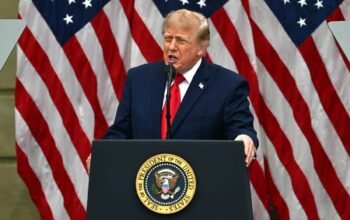
According to investigative reports, Allen allegedly ran past a magnetometer at the Washington Hilton armed with a shotgun and multiple knives. A Secret Service officer was struck in his bullet-resistant vest during the encounter but was not seriously injured. Preliminary findings from the Department of Justice suggest that the president and senior administration officials were the intended targets of the assault, which forced the evacuation and eventual cancellation of the evening’s program.
Internal Threats: The FAA Investigation
In a separate but equally disturbing development, federal authorities have arrested Dean DelleChiaie, a 35-year-old contractor for the Federal Aviation Administration (FAA) in New Hampshire. DelleChiaie is accused of sending an email to the White House threatening to neutralize the president, a message sent just days after he reportedly used his government-issued computer to research assassination methods and high-profile security protocols.
Federal prosecutors allege that DelleChiaie’s search history included inquiries into how to smuggle weapons into federal facilities and the residential locations of various cabinet members. The arrest has sparked a wider debate regarding the vetting processes for federal contractors and the potential for “insider threats” within critical government infrastructure.
A Nation at a Crossroads
As the Supreme Court prepares its next move on the mifepristone case and the Secret Service tightens its protective rings around the White House, the events of this week highlight a growing sense of instability. Between the battle over the mail-order pharmacy and the physical defense of the presidency, the lines between legal debate and civil unrest continue to blur.
For the American public, the coming days will be defined by two clocks: one counting down the minutes until the Supreme Court’s temporary order expires, and another tracking the ongoing investigations into those who seek to circumvent the democratic process through violence.