The Thai television industry has recently witnessed a massive boom in the production of GL (Girls’ Love) series, significantly raising the bar for an audience that now craves mature narratives, meticulously penned characters, and intellectually respectful dramatic arcs. Amidst this momentum, “Play Park” arrives as a colossal disappointment. It doesn’t merely fail to bring anything new to the table; it fumbles the very ABCs of television production.
What began with lofty ambitions quickly devolves into a harsh masterclass on how to squander a promising premise, turning it into a visual and narrative mess that leaves viewers genuinely wondering: Was there even a director on set?

Paper-Thin Screenwriting
The crisis begins on the page. The core narrative is built on a classic socio-economic clash between Ing, a struggling single mother running a dilapidated amusement park, and Lin, the assertive, wealthy heiress who decides to buy the property. This dichotomy should have served as fertile ground for escalating dramatic tension, but the script takes the path of least resistance, heavily relying on tired cliches. Rather than delving into the psychological depths of young motherhood or the crushing weight of family legacy, the writers lean on naive coincidences and aggressively shallow dialogue. The plot progression lacks any logical flow, jumping erratically in a way that effectively kills any potential viewer empathy for the protagonists.

An Absent Visual Language
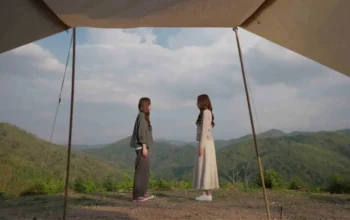
The primary justification for this review’s title lies in the project’s abysmal visual execution. The amusement park, inherently a setting bursting with color, life, and dynamism, is rendered on screen as a soulless, abandoned stage. Camera angles are strictly conventional and uninspired, and the lighting is completely devoid of any mood-setting intent that might reflect the evolving dynamic between the two leads.
The director seems content with merely placing the camera and letting the actors recite lines, offering zero guidance on blocking or spatial interaction. This results in a lethargic, excruciatingly tedious pacing that strips the locations of all their supposed charm.

A Desaturated Disaster
The directorial incompetence doesn’t end with dead angles; it extends into post-production with the baffling application of a heavy “fade” color filter. Typically, this technique—which lifts black levels and lowers sharp contrast to create a vintage, soft look—is smartly deployed in period pieces or to evoke a quiet, melancholic atmosphere. However, applying it to a series set in a vibrant amusement park is a genuine visual catastrophe. The image is stripped of all depth and color saturation, producing washed-out, murky visuals that cause active eye strain and rob the frames of any aesthetic pleasure.
A Cacophony of Soundtrack Choices
One of the most glaring narrative flaws is the excessive reliance on songs and musical cues at the expense of actual dialogue. Music is shoehorned in without any legitimate dramatic justification, making the viewer feel as though they are watching a stage musical, but entirely missing the choreography or visual spectacle required to warrant such a relentless sonic barrage. This haphazard audio mixing occasionally drowns out the dialogue altogether, draining the scenes of the authentic emotional tension that should have been built through silence or pure, unadulterated drama.

Mechanical Chemistry
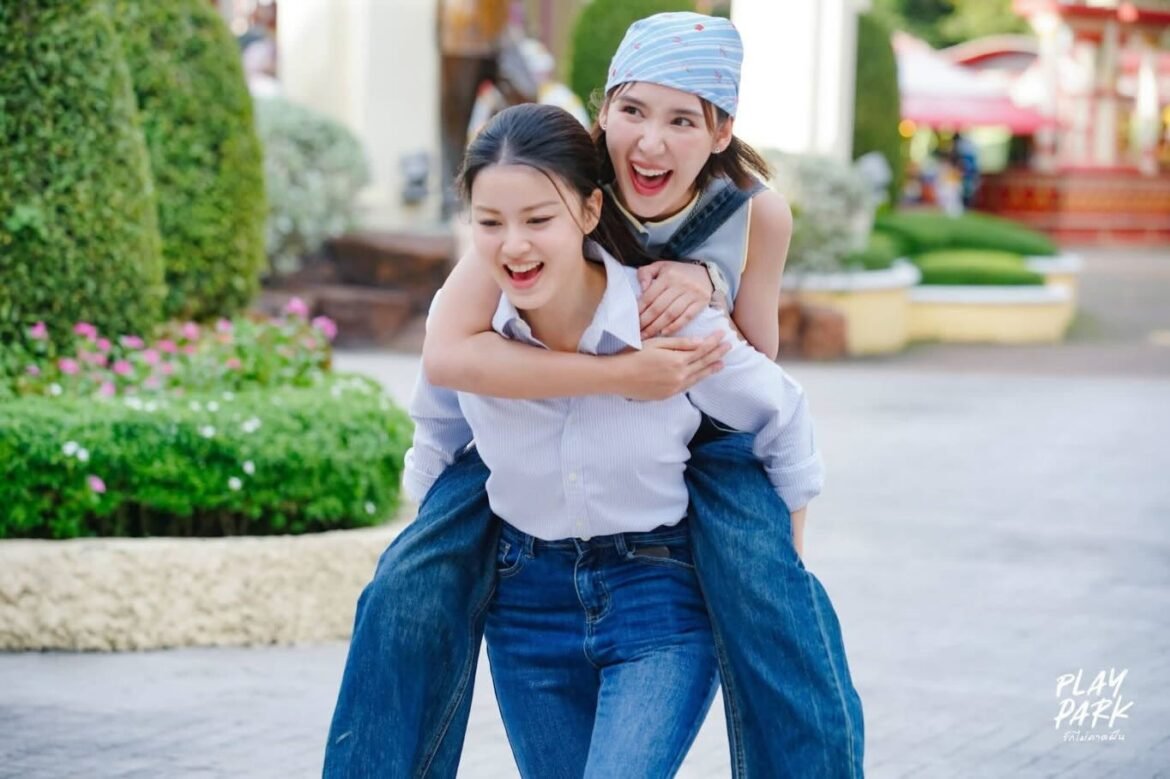
It is an industry open secret that the success of any series within this genre relies heavily on the chemistry between its leads, something “Play Park” entirely lacks. Yada Narilya and Tan Duangkeaw, despite their apparent efforts, act as if they are starring in two completely different shows. Their emotional beats feel calculated and synthetic, and the transition from animosity to romantic attraction is jarringly abrupt and unearned. The meaningful glances and nuanced micro-expressions essential for building romantic tension are missing in action, replaced by repetitive, vacuous, and mechanical smiles that fail to convey any genuine emotion, further alienating the audience from the story.

Shameless Cameo Baiting
Compounding the show’s identity crisis is its blatant piggybacking on the success of its peers. This is glaringly obvious in the cameo appearance of the popular duo LenaMiu in the early episodes, followed by a fourth-episode sequence where the protagonists literally sit down to watch a show starring the mega-hit couple LingOrm. Capping it off, the finale features a guest appearance by the stars of the series “Fulfill.” The subtext of these inclusions exposes a cheap marketing strategy. It serves as an indirect admission by the showrunners of their inability to craft a compelling standalone universe, opting instead to borrow the spotlight of other stars to fill a massive creative void and artificially inflate viewership.

The Verdict
Ultimately, “Play Park” is not just suffering from a low budget or poor distribution; it is the victim of undeniable corner-cutting and a total absence of artistic vision. It is a production that aggressively attempts to cash in on the commercial boom of the GL genre without possessing any of the necessary artistic credentials to back it up, ultimately cementing its status as one of the weakest offerings currently available in this space.