How does an individual become an outsider in their own life, drifting through existence with a sense of forced survival rather than genuine agency?
The answers often trace back to one’s perceived worth within the family structure from early childhood. While this complex, emotionally heavy dilemma serves as a sub-theme in Reverse with Me, the series frames it with striking narrative ambition. Viewers tuning into this Thai GL production solely for lighthearted romance or breezy comedy should look elsewhere; adapted from Zezeho’s novel, Reverse with Me positions itself as a rich, high-concept destination for fans of dark science fiction, philosophical thrillers, and temporal mechanics.

The Laws of Time
Beyond its examination of crushed childhood self-worth, the overarching narrative poses an eternal question: Can humanity rewrite destiny by shattering the laws of time, and does the toll paid in each temporal loop truly equate to the value of saving a loved one?
From its opening frames, the series establishes a sleek, moody, and visually complex identity. Yet a rigorous cinematic critique requires looking past polished surface aesthetics to evaluate the narrative scaffolding beneath. Reverse with Me functions as a hybrid experiment—an audiovisual feast overflowing with artistic intent that nevertheless suffers from structural plot flaws, a rushed emotional progression between its leads, and misallocated screen time spent on secondary arcs.

Dramatic Structure and Narrative Scaffolding
The central plot revolves around Dr. Karan (Nat Nattamon), a surgeon endowed with an inherited temporal ability passed down through the matriarchs of her family. This power allows her to experience prophetic glimpses of impending disasters threatening Kliao Khluen (Pitcha Pitchatorn), the woman she loves. To avert these tragedies, Karan initiates temporal reversals to alter the timeline.
Because the narrative unfolds backwards—frequently relying on non-linear jumps and flashbacks—the early episodes risk disorienting viewers, presenting a structural complexity that may test audience patience from the outset.
High Concept vs. Execution
Conceptually, the creators deserve praise for steering clear of lightweight fantasy tropes. Time here is neither a gimmick nor a light escape; it functions as a crushing psychological and physical burden on Karan. Every temporal reset forces her to relive trauma, triggering an unpredictable chain reaction of consequences.
However, structural flaws emerge in adapting this expansive concept into a tight eight-episode format. While the pilot episode succeeds as a tense, high-stakes drama that effectively establishes the existential stakes, the mid-series narrative wobbles. The repeated temporal loops gradually turn into mechanical plot devices used to resolve immediate crises rather than deep character explorations.
Pacing Misfires
The pacing exhibits clear calibration issues. The series lingers unnecessarily in its opening chapters, only to accelerate at a frantic speed during the final act to resolve its web of subplots. This rushed resolution robs crucial narrative moments—including the central conflict and ultimate resolution—of organic development, making key decisions feel artificially imposed to secure a resolution.

Performances and Character Dynamics
In any romantic drama, emotional resonance hinges on convincing onscreen intimacy, an area where the series encounters friction. Nat Natamon delivers a grounded, composed performance as Dr. Karan, stepping comfortably into the “Ice Queen” archetype burdened by clinical dignity and immense personal sacrifice. Opposite her, Pitcha Pitchatorn effectively captures Kliao Khluen’s vulnerability and emotional volatility, rooted in past family trauma.
Yet the writing falls into the classic narrative trap of telling rather than showing. Although the script repeatedly asserts that Karan and Kliao Khluen share an eternal destiny spanning “a million orbits,” the direction grants them insufficient screen time to build organic romantic weight. The relationship jumps abruptly from guarded professional interactions to life-altering devotion, bypassing the quiet intimacy, daily interactions, and emotional accumulation necessary to make such sacrifices compelling. While the chemistry between Natamon and Pitchatorn remains warm and appealing, it lacks the raw, explosive passion needed to heighten the tragedy of Karan’s time-bending choices.

Subplots and Structural Distractions
In a concise eight-episode order, every subplot should directly serve the central narrative arc. Instead, Reverse with Me allocates significant screen time to the parallel romance between secondary characters Tree and Meow. While charming and well-scripted on its own terms, this secondary plot inadvertently hurts the primary arc; Tree and Meow’s relationship evolves with a natural logic that makes the central romance feel comparatively underwritten and emotionally starved.
Equally problematic is the handling of the primary antagonist. After spending four to five episodes building the heroine’s father into a symbol of domestic tyranny and toxic control, the script abruptly walks back his behavior in the final chapter. His sudden, unearned remorse functions as a convenient deus ex machina, deflating the dramatic tension built over the course of the series.

Domestic Trauma and Toxic Legacy
Where Reverse with Me truly excels is in its psychological dissection of emotional inheritance under an authoritarian household. The series offers a sharp critique of how the home can transform from a sanctuary into an environment that strips away individual agency.
This dynamic is clearly illustrated through Kliao’s domestic experience. The household operates under harsh double standards: her brother is granted complete freedom, systemic support, and ready forgiveness, while Kliao is saddled with perfectionism and total compliance without room for vulnerability. With a passive mother and a controlling father, Kliao builds rigid emotional walls to survive daily life, highlighting a painful reality: the deepest isolation often takes root under one’s own roof.

Intertextuality and Generational Representation
As a narrative continuation within Zezeho’s fictional universe, Reverse with Me builds upon the foundation of Reverse 4 You. The narrative connective tissue seamlessly transitions from the youthful romance of Jattawa and Four in the previous series to the future fruits of that relationship, represented by their daughter, Karan.
When Jattawa and Four appear in Episode 8 as Karan’s mothers, the series sets a notable milestone for Thai GL television. Presenting an established, mature lesbian couple navigating domestic parenthood provides a rare depiction of generational sapphic family life. This inclusion enriches the story’s emotional framework, demonstrating that the genre can move beyond initial romantic courtships to showcase long-term family structures.

Visual Architecture, Direction, and Audio Engineering
Where the script falters, the technical craft shines. The direction establishes a sophisticated visual architecture, using tailored color grading to distinguish temporal shifts and prophetic visions. The atmospheric, low-key lighting avoids the flat illumination typical of standard television productions.
The visual effects (CGI)—particularly the time-reversal sequences featuring frozen motion and reassembling glass—achieve a polished finish that effectively conveys Karan’s internal panic. Furthermore, the sound design and musical score serve as the show’s strongest assets, filling the emotional gaps left by the dialogue with rich, dramatic compositions in both Thai and English.

Comparative Outlook
When measured against genre contemporaries like Reverse 4 You or Pluto, Reverse with Me stands out for its moody atmosphere, visual ambition, and sonic direction. However, it trails those titles in developing natural romantic chemistry and relationship dynamics, remaining somewhat constrained by its high-concept premise.
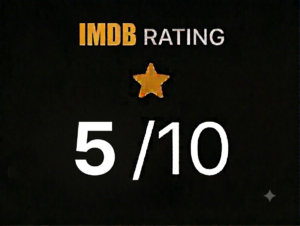
Ultimately, Reverse with Me is a bold, visually refined project that demonstrates the growing technical capabilities of the Thai television industry. While its eight-episode runtime leads to narrative shortcuts and uneven pacing, the series remains an ambitious entry that marks a progressive step in the evolution of Thai GL drama.