The daunting task of following one of the most beloved sitcoms in television history is met with surprising grace and a sharp comedic edge in The Paper. As the spiritual successor to the American version of The Office, this Peacock original successfully navigates the fine line between nostalgia and innovation. By trading the beige cubicles of a Pennsylvania paper supplier for the ink-stained, high-stakes chaos of a declining Midwestern newspaper, the series breathes new life into the mockumentary format.
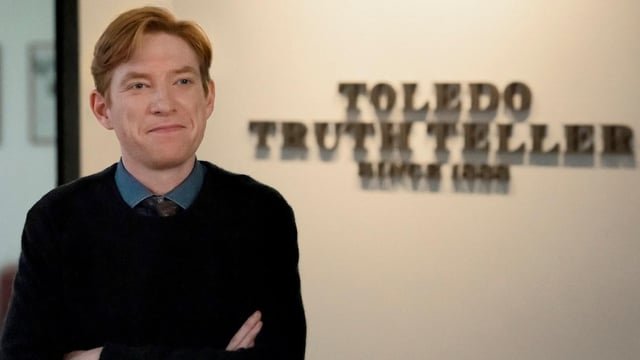
Set in the offices of the Toledo Truth Teller, the show follows a threadbare staff struggling to keep print journalism alive in a digital age. The arrival of an idealistic new publisher, played with frantic charm by Domhnall Gleeson, sets the stage for a workplace comedy that feels both comfortably familiar and strikingly relevant.
A Newsroom Reborn
The most significant triumph of The Paper is its setting. While Dunder Mifflin was a place where characters sought to pass the time, the Toledo Truth Teller is a place where they are fighting for a legacy. This shift in stakes adds a layer of “inspirational comedy” that distinguishes the show from its predecessor. The documentary crew—confirmed to be the same team that followed the Scranton branch twenty years ago—captures a newsroom that is woefully understaffed but suddenly energized by a desperate sense of purpose.
The direction by Greg Daniels and Michael Koman maintains the “fly-on-the-wall” intimacy fans expect, but the visual palette is grittier, reflecting the industrial character of Ohio and the cluttered, tactile reality of a historic press building.
The New Faces of the Franchise
The strength of any workplace ensemble lies in its archetypes, and The Paper delivers a roster of characters that are instantly memorable without being mere carbon copies of the original Scranton crew.
• Domhnall Gleeson as Ned Sampson: Gleeson is a revelation as the well-meaning but socially awkward publisher. Unlike Michael Scott’s desperate need for affection, Ned is driven by a desperate need for journalistic integrity, leading to a different but equally effective brand of cringe-humor.
• Sabrina Impacciatore as Esmeralda Grand: Fresh off her success in The White Lotus, Impacciatore brings a theatrical, self-involved energy to the managing editor role. Her resistance to Ned’s “old-school” methods provides the central friction of the newsroom.
• Chelsea Frei as Mare Pritti: As the disillusioned veteran reporter, Frei serves as the emotional anchor and the “straight man” to the surrounding antics. Her chemistry with Gleeson hints at a slow-burn narrative that anchors the season.
• The Returning Veteran: In a move that bridges the two series, Oscar Nunez reprises his role as Oscar Martinez. Now the head accountant for the paper’s parent company, his weary, “I’ve seen this all before” attitude toward the camera crew provides some of the show’s biggest laughs.
Tweak to the Formula
While The Paper retains the “talking head” testimonials and zoom-heavy camera work, it introduces subtle meta-commentary. The documentary crew is more present than ever, occasionally using snarky title cards to fact-check the characters’ more outlandish claims. This evolution reflects a world where everyone is now hyper-aware of being filmed, a stark contrast to the early 2000s innocence of the original series.
Highlights of the First Season:
• The Digital Rivalry: An episode involving a feud with a teenage local blogger highlights the generational gap in modern media with painful accuracy.
• The Volunteer Reporters: Watching accountants and ad-sales reps try to conduct investigative “exposés” on local mattress stores results in masterfully executed physical comedy.
• The Ohio Journalism Awards: The season finale manages to balance high-stakes professional tension with a genuine, heartfelt tribute to the importance of local reporting.
The Verdict
The Paper succeeds because it refuses to merely live in the shadow of Dunder Mifflin. It takes the bones of a proven format and grafts them onto a subject matter—the survival of local news—that carries genuine weight. The ensemble is first-rate, the writing is crisp, and the “cringe” is tempered by a sincere love for its eccentric characters.
For fans of The Office, the transition to this new workplace will feel like coming home to a house that’s been stylishly renovated. It’s still a comedy about the people we work with, but in The Paper, the work finally feels like it matters.