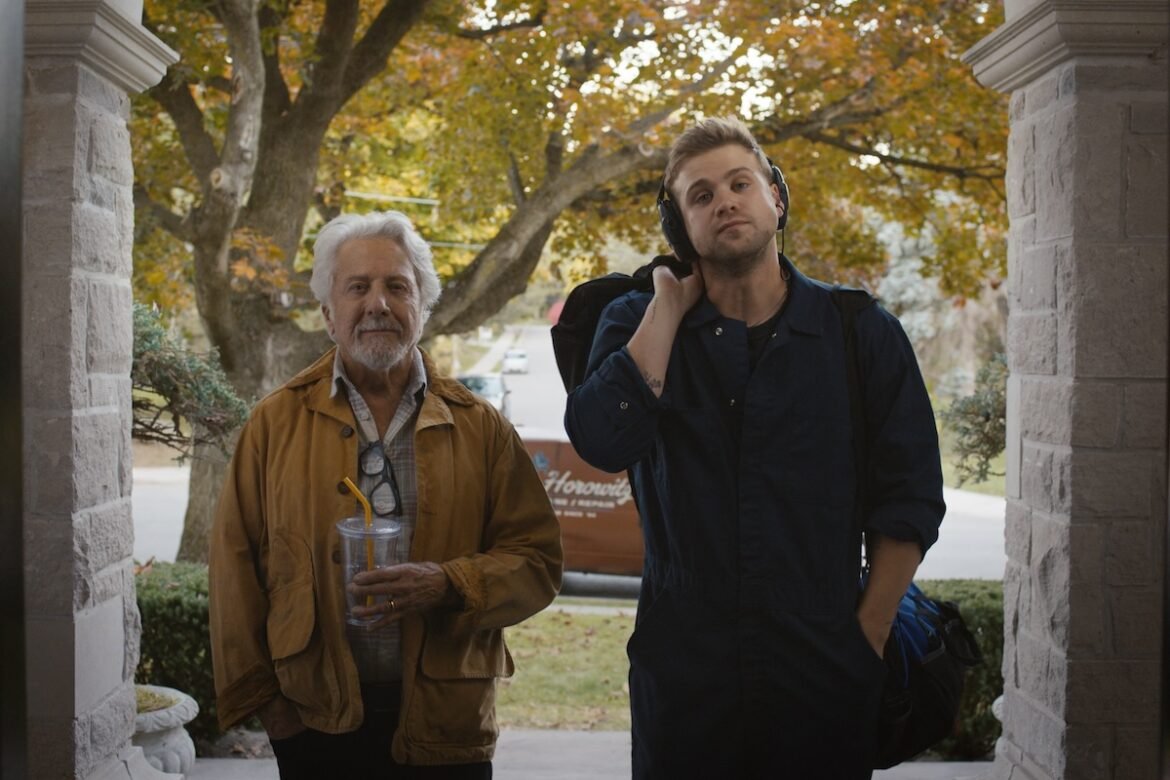
Transitioning from the high-stakes political intrigue of his Oscar-winning documentary Navalny to the shadowy corners of a psychological thriller, director Daniel Roher has delivered a stunning narrative debut with Tuner. The film is a masterclass in atmospheric tension, proving that the distance between a perfectly tuned piano and a perfectly executed crime is shorter than one might think.
The Architect of Sound
The film follows Stan, a meticulous and socially isolated piano tuner portrayed by Leo Woodall in a performance that can only be described as a career-defining breakthrough. Stan exists in a world of frequencies and vibrations, possessing an almost supernatural ability to hear the slightest discordance in a string. Woodall plays him with a controlled, vibrating intensity, capturing a man who is clearly more comfortable with mechanical precision than human interaction.
The narrative shifts gears when Stan’s financial desperation leads him to an unexpected client: a charismatic yet lethal figure in the city’s underground (played with chilling restraint by Dustin Hoffman). What begins as a specialized technical job—repairing an antique instrument—slowly devolves into a high-stakes heist where Stan’s “perfect ear” becomes the ultimate tool for safecracking.
A Sensory Symphony
Roher’s documentary background serves him exceptionally well here, as he treats the act of piano tuning with the reverence of a surgical procedure. The cinematography by Adam Arkapaw focuses on extreme close-ups of hammers, wires, and internal mechanisms, turning the wooden body of the piano into a claustrophobic landscape.
Key elements that elevate the film include:
• The Soundscape: The film’s audio design is its true protagonist. The audience is invited to hear the world as Stan does—amplified, rhythmic, and often overwhelming. Every click of a tumbler and every snap of a string feels like a thunderclap.
• Pacing and Percussion: Much like the film Whiplash, Tuner moves with a percussive energy. The editing mimics the tempo of a metronome, gradually accelerating as the central heist approaches.
• The Moral Dissonance: The script explores the corruption of craft. It poses a haunting question: what happens to an artist’s soul when their lifelong dedication to beauty is repurposed for destruction?
Performance Dynamics
The chemistry between Leo Woodall and Dustin Hoffman provides the film’s emotional anchor. Hoffman, as the aging mastermind, acts as a twisted mentor to Woodall’s Stan, seducing him with the idea that his talent is wasted on the “unworthy ears” of the musical elite. Woodall’s transformation—from a trembling technician to a cold, calculated participant in a crime—is subtle, believable, and deeply unsettling.
Support from Jean Smart, playing a cynical piano restorer, provides a grounded, worldly counterpoint to the film’s more heightened noir elements. Her scenes offer a brief glimpse into the dignity of honest labor before Stan is pulled back into the abyss.
The Final Chord
Tuner is a rare breed of thriller that values intellect and sensory detail over mindless action. It is a film about the “obsession with perfection” and the dangerous places that obsession can lead. While the final act leans heavily into traditional suspense tropes, the sheer technical brilliance of the first two acts carries the film to a resonant conclusion.
Daniel Roher has successfully avoided the “sophomore slump” by pivoting genres entirely, crafting a film that is as precise as its title suggests. For the audience, the experience is a taut, 105-minute exercise in tension that stays in the mind long after the final note has faded. In the crowded landscape of 2026 cinema, Tuner hits all the right notes, establishing itself as a frontrunner for the year’s best psychological drama.