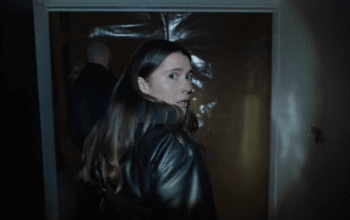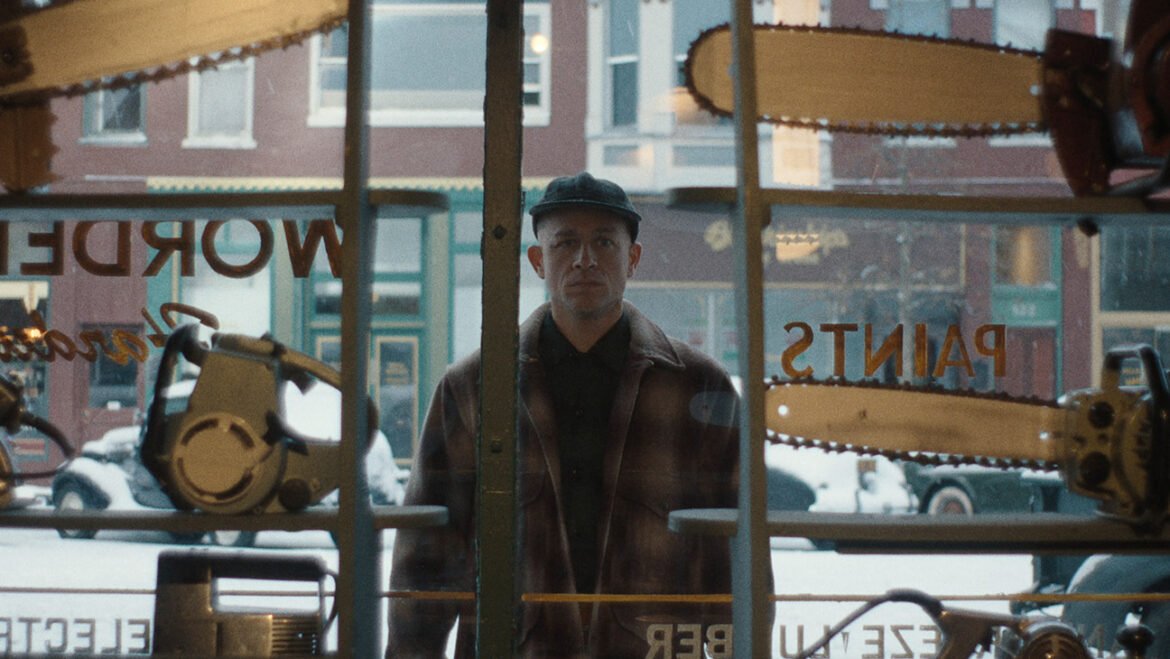
The third installment of the Monster anthology has arrived, and it is every bit as provocative, polarizing, and visually arresting as its predecessors. In Monster: The Ed Gein Story, showrunners Ryan Murphy and Ian Brennan turn their lens toward the 1950s Wisconsin farmhand whose grisly hobbies provided the blueprint for Hollywood’s most enduring slashers. Leading the charge is Charlie Hunnam, who delivers a transformative—if unsettling—performance that sheds every ounce of his Sons of Anarchy grit.
While the series covers the expected territory of grave-robbing and rural isolation, the image that has set social media ablaze involves Hunnam’s Gein draped in the delicate, frilly undergarments of his victims. It is a moment that perfectly encapsulates the show’s uneasy balance between psychological drama and lurid exploitation.
A Transformation into the Macabre
Charlie Hunnam’s portrayal of the “Plainfield Ghoul” is a study in repressed mania. Opting for a high-pitched, hesitant midwestern lilt that he reportedly modeled after rare recordings of the real Gein, Hunnam captures the character’s jarring duality: a “golly gee” neighborliness masking a stomach-turning private reality.
Critics have pointed out that the series leans heavily into the “fetishized caricature” of the killer, particularly in scenes that emphasize Gein’s obsession with female anatomy. The sight of Hunnam in lace and silk is not just for shock value; the narrative presents it as a manifestation of “gynophilia”—a profound, eroticized desire to literally inhabit the female form.
The Mother of All Issues
No Ed Gein story would be complete without the shadow of Augusta Gein, played here with terrifying, religious fervor by the legendary Laurie Metcalf. The chemistry between Metcalf and Hunnam is the engine that drives the series’ most effective moments. Metcalf’s Augusta is a harridan of biblical proportions, whose shaming of Ed’s sexual impulses provides the distorted foundation for his later crimes.
The series also takes bold, often controversial, creative liberties by weaving in other figures of the era:
• The Hitchcock Connection: Tom Hollander appears as Alfred Hitchcock, alongside Joey Pollari as Anthony Perkins, as the show attempts to culturally tether Gein to the production of Psycho.
• The Surrealist Touch: Vicky Krieps appears in fantasy sequences as the Nazi “Beast of Buchenwald,” Ilse Koch, acting as a perverse mentor in Gein’s imagination regarding the “utility” of the human body.
• Historical Contortions: The finale has drawn significant fire for an absurdist “receiving line” of other famous serial killers, a move critics have called irresponsible and crass.
Style Over Substance?
From a technical standpoint, Monster remains a high-water mark for Netflix. The cinematography is bleakly beautiful, capturing the frozen, hopeless atmosphere of a 1950s Wisconsin winter. However, the “must-see” factor is frequently undermined by a script that struggles to find a deeper meaning behind the gore.
For some, the series is an intriguing character study of a man whose trauma turned him into a myth. For others, it is an exploitative “freak show” that prioritizes the visual of a “hunk” in a corset over a meaningful exploration of mental health or the victims’ lives.
The Verdict
Monster: The Ed Gein Story is a descent into a very specific kind of American nightmare. It is a show that dares you to look away while providing exactly the kind of sensationalist imagery—like Hunnam’s lace-clad transformation—that ensures you won’t. Whether you view it as a sophisticated deconstruction of a monster or a lurid exercise in serial-killer worship, one thing is certain: Ryan Murphy’s latest nightmare is destined to be the most talked-about, and most uncomfortable, binge-watch of 2026.