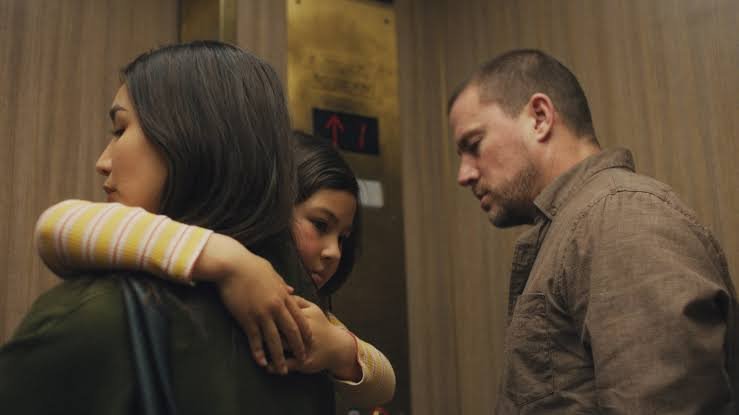
Following the visceral, real-time tension of her debut Soft & Quiet, writer-director Beth de Araújo returns with a work of profound restraint and psychological depth. Josephine, which emerged as a critical darling at the 2026 Sundance Film Festival, is a haunting character study that trades the outward chaos of her previous work for an internal, slow-burning examination of grief and the “phantom limbs” of the human heart.
The Weight of Absence
Set against the backdrop of a sprawling, isolated estate, the film centers on the titular character, portrayed by Gemma Chan in what is undoubtedly the most nuanced performance of her career. Josephine is a woman living in the wake of a catastrophic personal loss, navigating a world that has become a series of “hollowed-out rituals.”
Chan’s performance is a masterclass in stillness. She conveys a mountain of history through the slight tension in her shoulders or the way she stares at the dust motes in a sunlit room. Opposite her, Channing Tatum delivers a surprising, heavy-set performance as a man whose presence is both a comfort and a reminder of the life they once shared. The chemistry between the two is not one of romantic fire, but of shared exhaustion—a portrait of two people tethered together by a tragedy they cannot speak aloud.
A Sensory Exploration of Trauma
De Araújo’s direction is surgically precise. She treats the silence of the house not as a void, but as a “living entity” that Josephine must negotiate. The film’s pacing is deliberate, allowing the audience to feel the heavy passage of time that defines the life of someone in deep mourning.
The film excels through several key artistic choices:
• The Visual Palette: Cinematographer Greta Zozula uses a muted, almost desaturated color grade that makes the world feel as though it has been drained of its vitality. Every frame feels like a memory that is slowly fading.
• Aural Intimacy: The sound design is hyper-focused on the mundane—the scrape of a chair, the hum of a refrigerator, the distant sound of wind. These sounds become the “music” of Josephine’s isolation, amplifying the sense of her withdrawal from society.
• The Script’s Economy: There is very little dialogue. De Araújo trusts her actors to tell the story through subtext and physical movement, creating a viewing experience that feels deeply intimate and voyeuristic.
Breaking the Cycle
The narrative tension in Josephine doesn’t come from external threats, but from the question of whether its protagonist will ever choose to “re-enter the light.” The film avoids the easy sentimentality often found in “grief cinema.” Instead, it offers a gritty, honest look at the physical and mental toll of long-term sorrow.
The introduction of a secondary plot involving a local community project provides a subtle contrast between Josephine’s internal stagnation and the indifferent, moving world outside her gates. It highlights the friction between the private “world of the past” and the public “demand for a future.”
The Verdict: A Quiet Triumph
Josephine is a film that demands patience and rewards it with a soul-stirring conclusion. It is a work that respects the “dignity of suffering” while gently suggesting that survival is a quiet, daily choice.
Beth de Araújo has proven herself to be a versatile filmmaker, capable of shifting from high-octane social commentary to this delicate, poetic meditation on the human spirit. In 2026’s cinematic landscape, where spectacle often drowns out substance, Josephine stands as a necessary, quiet triumph. It is a film that doesn’t just show you grief—it invites you to sit with it, understand it, and eventually, breathe through it.