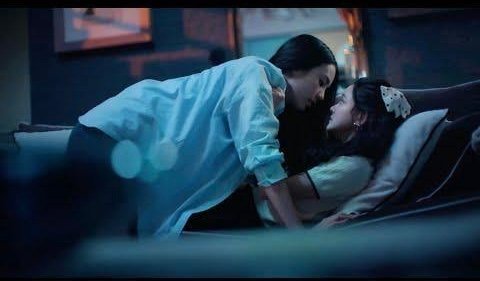
Have you ever witnessed two corpses sharing a kiss? If not, this is your best chance to discover a unique brand of cold romance.
We are diving into the latest Thai adaptation of ‘I Wanna Be Sup’tar’, starring Nichapalak Thongkham and Belle Jiratchaya Kettapornsakul,which premiered on Netflix in February 2026.
This iteration of the narrative centers on the relationship between Wan and Wanyong, where sharp contrast serves as the essential pillar of the series’ identity.
Wan embodies the star burdened by the constraints of fame and a structured lifestyle, while Wanyong enters as a chaotic, spontaneous force breaching this fortified world.
This collision between two disparate worlds acts as the fundamental engine driving the show’s vitality.

The series’ strength does not lie in groundbreaking plot innovation, but rather in the craftsmanship with which it recycles established Thai drama tropes.
Repeated misunderstandings—often a stale narrative device—are transformed into moments that reveal a gradual maturation in the relationship, turning initial dissonance into human and professional harmony.
This evolution creates a genuine emotional connection with the audience, elevating the show beyond superficial viewing.
From a content perspective, the series succeeds in spotlighting the inner workings of Thailand’s entertainment industry.
It effectively captures the pressures exerted by social media and media rumors, grounding the narrative in contemporary reality, even if the pacing occasionally veers into dramatic exaggeration.
However, this penchant for melodrama sometimes comes at the expense of supporting characters, who possessed deeper potential that remained largely untapped.



Artistically, the production excels in its meticulous attention to detail.
The costume design and scenography reflect an intelligent visual awareness, perfectly suited to the series’ ambition to portray the high-stakes world of celebrity.
Despite script flaws that could have been avoided, the series remains a complete entertainment experience, offering a clear message about balancing the ambition of reaching the summit while preserving one’s humanity amidst the false glitter of fame.
On the visual front, the show employs a saturated, warm color palette that serves the story’s romantic tone.
Yet, the lighting director falters in specific studio sequences, where harsh lighting occasionally strips away the desired realism in moments meant to reflect the stars’ lives away from the cameras.
Conversely, the styling stands out as a bright spot, with the characters’ evolving wardrobes serving as a visual narrative of their psychological development—a cinematic technique that effectively conveys mood without relying solely on dialogue.
Regarding the screenplay, critical observations highlight a repetitive conflict pattern.
The series relies excessively on misunderstandings as the sole vehicle for plot progression, leading to a sluggish pace in the middle episodes.
Dialogue often leans toward overt directness rather than employing the dramatic principle of ‘show, don’t tell,’ particularly when articulating the stars’ pressures regarding fame.
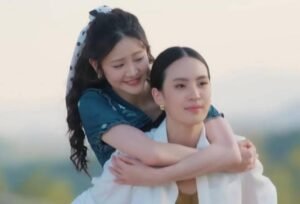
In terms of acting, the chemistry between the leads receives high artistic praise.
Physical acting manages to compensate for various script gaps. However, a technical note regarding the editing: transitions between comedic and deeply dramatic scenes are sometimes abrupt, affecting the overall tonal consistency of the work.
When it comes to directorial treatment, the director bears sole responsibility for the execution of the intimate scenes.
They appear superficial and devoid of the necessary emotional depth, coming across as naive—an odd choice for a drama aimed at a mature audience.
This directorial vision rendered these moments dry and staged, disappointing a large segment of the GL (Girls’ Love) fanbase who expected a portrayal more aligned with the escalating intensity of the plot.
This approach fell below expectations and negatively impacted the credibility of the emotional bond on screen.
Conversely, the performances by Nichapalak Thongkham and Belle Jiratchaya Kettapornsakul serve as the series’ saving grace.
Both actresses deliver nuanced, profound performances that transcend traditional romance. Their work is imbued with a palpable tenderness, care, and gentleness that dominates their interactions.
This high level of harmony between ‘Nicha’ and ‘Belle’ successfully captures the essence of true human partnership; their genuine affection and support for one another make their interaction feel authentic and moving, effectively redeeming much of the shortcomings left by the questionable directorial choices.
The finale invites harsh scrutiny, as the narrative trajectory collapses under the weight of an rushed, poorly constructed resolution that abandons all pretense of internal logic.
This structural failure is most egregious in the sudden, unearned metamorphosis of May; her instantaneous pivot from bitter resentment to saintly forgiveness feels less like character growth and more like a deus ex machina, stripping away the weight of her previous arc without the requisite emotional scaffolding. Compounding this narrative malaise is the baffling arc of the protagonist, Wan, whose inexplicable sprint to the director’s office—devoid of any narrative motivation or logical summons—exposes a script that prioritizes convenience over character integrity.
Fundamentally, this resolution feels less like a natural conclusion and more like a hollow, artificial fix, shattering the show’s credibility in its final moments.
Ultimately, the production succeeds in creating an engaging visual environment consistent with modern Thai television standards, while leaving clear room for improvement in dramatic bridge techniques and the development of subplots, which would have granted the work greater weight had they received more structural planning.