There is a fragile, unspoken tension in the theater world surrounding superstitions—you never wish an actor “good luck” before they step under the footlights; you tell them to break a leg, as if coaxing fate into a less cruel compromise.
In Julia Hart’s tender and surprisingly piercing coming-of-age drama Don’t Say Good Luck, that theatrical adage becomes a poignant metaphor for a family attempting to navigate a devastating reality while pretending the show can go on as scheduled.
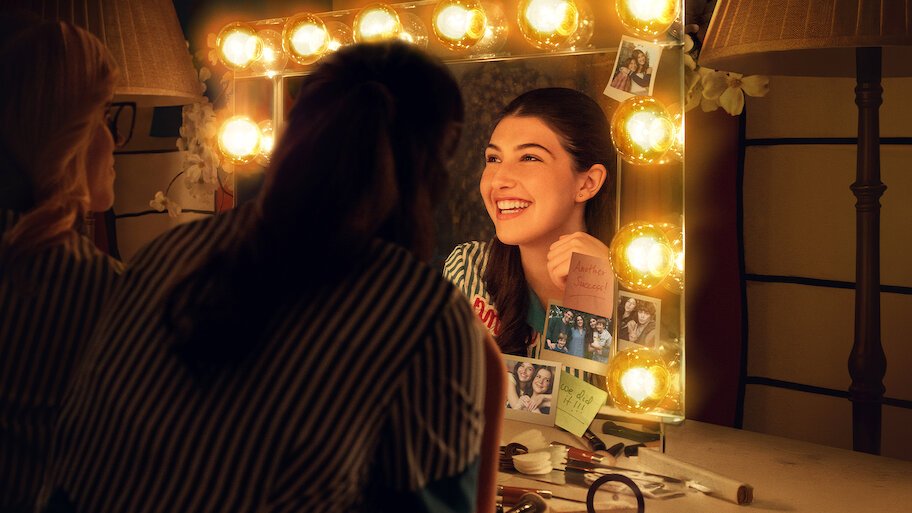
On paper, the premise risks slipping into the well-trodden territory of glossy teen melodramas: Sophie Birenbaum (Sunny Sandler), a high school theater enthusiast, lands the dream lead role in her school’s ambitious stage production.
Yet, just as her artistic ambitions take flight, her domestic life collapses inward. Her mother, Elizabeth (Melanie Lynskey), is facing a sudden, irreversible resurgence of her terminal cancer after a period of hopeful remission.
What elevates Don’t Say Good Luck above standard young-adult weeping fodder is Hart’s patient direction and, crucially, the extraordinary, grounded chemistry between its two leads.
Sunny Sandler, continuing to establish a distinct screen identity beyond her comedic pedigree, delivers a performance marked by quiet restraint and striking authenticity.
She captures the visceral guilt of a teenager trying to celebrate her own emerging independence while watching her anchor slowly drift away.
Sandler’s Sophie does not resort to grand theatrical outbursts; instead, her grief lives in swallowed tears during rehearsal breaks and the subtle stiffness in her posture as she tries to hold two opposing worlds together.
Opposite her, Melanie Lynskey once again proves why she remains one of contemporary cinema’s most nuanced performers.
plays Elizabeth not as a tragic plot device, but as a fully realized woman wrestling with the indignity of illness and the heartbreaking irony of having to raise a daughter to live without her. The scenes shared between Sandler and Lynskey feel remarkably unvarnished, pulsing with an organic intimacy that avoids cheap sentimentalism.
Supported by a sharp ensemble—including Max Greenfield and Stephanie Beatriz, who bring welcome, grounded humor to the high school faculty side of the narrative—the film balances its heavy themes with genuine warmth. Hart’s script, co-written with Laura Hankin and Jordan Horowitz, treats the adolescent obsession with the stage not as trivial fluff, but as a vital sanctuary where grief can be temporarily transformed into performance art.
While the film occasionally rushes through its secondary character arcs in the final act, its emotional core remains unshakable. Don’t Say Good Luck is a subtle, haunting exploration of love, legacy, and the unbearable courage it takes to step onto a stage when life refuses to follow the script.