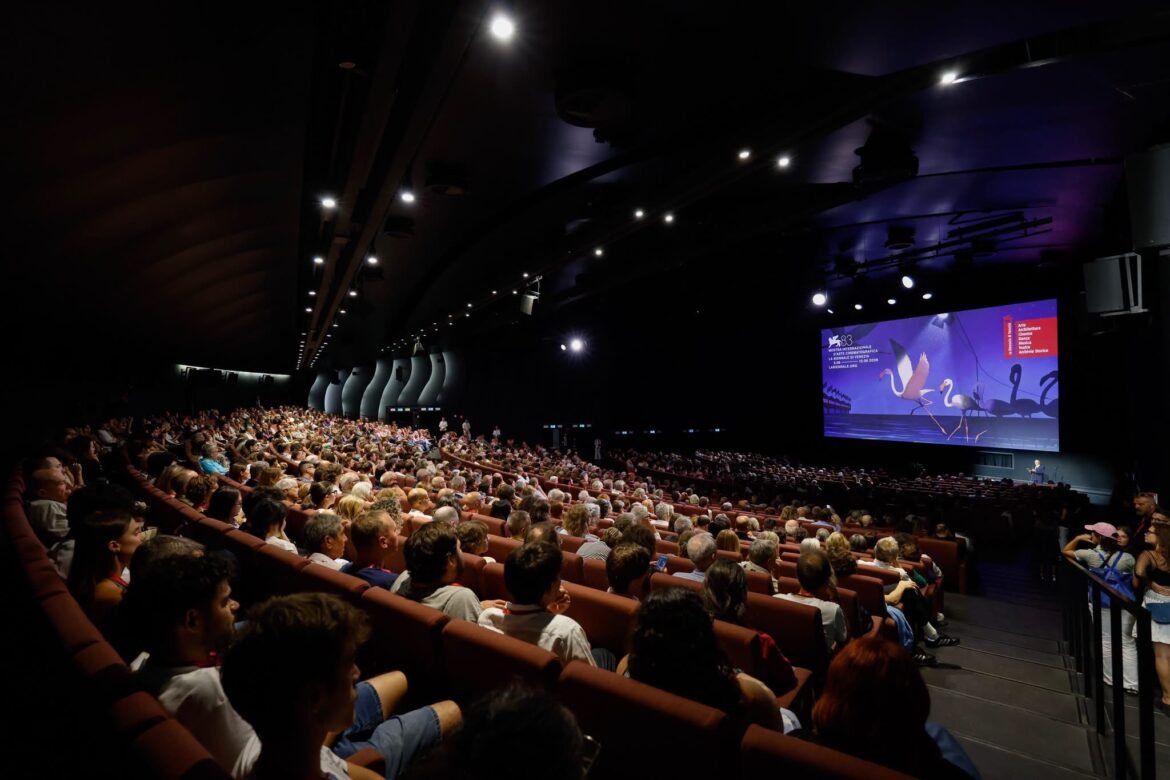
Hours before the official launch of the 83rd Venice International Film Festival, the Lido paid tribute on Tuesday evening to iconoclastic Italian auteur Tinto Brass. The festival hosted a special pre-opening screening at the Sala Darsena featuring the newly restored version of his 1967 cult classic Deadly Sweet (Col cuore in gola).
Marking its world premiere in a pristine 4K digital restoration within the Venice Classics section, the screening celebrated a filmmaker long recognized as one of the most provocative and rebellious voices in Italian cinema. The digital restoration was carried out by the Centro Sperimentale di Cinematografia (CSC) National Film Archive in Rome, with backing from Netflix and in collaboration with Compass Film.
Directed and co-edited by Brass, the London-set thriller stars Jean-Louis Trintignant and Ewa Aulin, featuring visual consultation from legendary Italian comic artist Guido Crepax. The picture delivers a avant-garde blend of suspense, pop art, comic strip aesthetics, and a kinetic soundtrack wrapped in the spirit of “Swinging London”.
The 93-year-old filmmaker was unable to attend the Lido event in person due to health reasons. However, his legacy was well-represented by his wife, Caterina Varzi—who oversees his archives—and star Ewa Aulin. Varzi read a poignant statement on his behalf. In his message, Brass characterized the film’s return to Venice screens as a “homecoming,” reflecting on the project’s origins during his time in London and his unwavering belief in granting visual form and rhythm a central role in cinematic storytelling.
Venice Film Festival artistic director Alberto Barbera emphasized the dual significance of selecting Deadly Sweet for the pre-opening slot. Barbera noted that the event offered audiences a rare chance to rediscover a picture unseen in its original brilliance for decades, while simultaneously honoring a native Venetian director whose career was defined by formal experimentation, audacity, and a refusal to conform to establishment norms.
By bringing Deadly Sweet back to the Lido, the festival did more than unearth a piece of archival history; it reopened a vital chapter in 1960s cinema, during which Brass was forging a distinct cinematic language that positioned imagery, cadence, and sound at the very core of narrative film.