Fulfill derives its true strength and critical weight from its sharp observations of what traditional dramatic narratives usually overlook. It refuses to stop at the initial thresholds of love or the formulaic struggles for societal acceptance, diving headfirst into the nuanced, everyday realities of life after two lovers settle down. The pivotal value of this work lies in its meticulous focus on high sensitivity within the management of daily relationships, celebrating minor details that appear mundane on the surface but constitute the actual backbone of a sustained, resilient partnership.
It is a drama that thrives on hyper-awareness of emotions, mutual care, and the ability to catch and contain the hidden emotional and physical shifts of the other person with mature empathy, serving as an intensified model for relationship awareness and preservation.

Reassurance, Intimacy, and Unwavering Loyalty
The dynamics between Aioon, played by Eisaya Hosuwan, and Pafun, played by Saralee Prasitdumrong, showcase several vital yet delicate concepts in complex romantic bonds. Chief among them is emotional responsibility and immediate reassurance. While most series in this genre rely on manufactured, multi-episode misunderstandings to generate dramatic tension—where characters simply stop communicating, driving viewers to scream at their screens—Fulfill offers a refreshing alternative through swift emotional containment. When one partner senses a subtle emotional shift or distress, the issue is never left to fester into a cloud of doubt. Instead, it is addressed through a brief, focused dialogue aimed at re-establishing security and reinforcing that they are allies against the problem, not opponents.
The second critical concept the series establishes is the portrayal of domestic, lived-in intimacy. The director captures the quiet moments that usually get lost in grander plotlines—the everyday intimacy of post-marriage life. This is translated through unforced daily body language, from casual eye contact while preparing meals or organizing the house, to gentle, brief touches when passing through a doorway or sitting side-by-side on the sofa, all the way to routine negotiations over household chores and personal space. These subtle beats give the audience a genuine impression of a partnership with a shared history, far removed from performative romantic grandstanding.
The third key concept is the management of boundaries and absolute allegiance to the marital union. When external elements threaten to intrude—such as the appearance of an old friend or the friction caused by maternal and familial interference—both characters display early firmness in setting boundaries to protect their partner. They send unambiguous signals to outsiders that their priority and loyalty lie squarely with their home and partnership, effectively shutting down the speculative grounds that other shows typically exploit to prolong conflict.

Everyday Paradoxes and Psychological Duality
A particularly engaging element of the narrative is its nuanced depiction of the pair’s contrasting personalities. Aioon is an engineer who operates with a pragmatic, analytical, and at times dry logic. Opposite her is Pafun, an interior designer characterized by high sensitivity, meticulous attention to detail, and a desire for aesthetic and emotional resonance. The writing shines in showing how a minor annoyance, such as neglecting a home detail or a specific organizational setup, can trigger momentary frustration while remaining seamlessly interwoven with deep affection and trust. This synthesis of daily bickering and profound care captures the authentic reality of domestic life.
Feminine Triumph
Among the scene-stealers deemed epic by viewers is the confrontation between Krit and the two wives in episode six. Pafun gets into the car with her wife, and as the vehicle reverses slightly, Pafun rolls down the window and tosses the house key out to Krit, who is already standing defeated on the ground. The camera then zooms in on Aioon behind the wheel, who cannot help but raise her eyebrow in a swift, triumphant smirk.
Here, throwing the car key out the window was not merely an impulsive gesture or a theatrical beat; it carried rich symbolic weight. It marked the definitive closure of any avenue for intrusive masculinity to violate their private space. Casting the key aside was an explicit statement that Krit was officially locked out, and the boundaries of their home were permanently sealed against him.
Looking closely at Aioon’s physical detail as she raises her eyebrow with unmistakable smugness, the shot becomes a moment of triumphant devotion. The gesture was not just petty spite, but a vivid visual confirmation that Pafun had chosen total alignment with her home and partner, rejecting all the emotional blackmail Krit attempted to exert. That eyebrow raise served as the quiet seal of victory, settling the battle of loyalty once and for all. This moment proved to the audience that Pafun left zero grey area for Krit to play on past nostalgia or doubt. Tossing the key, followed by Aioon’s triumphant glance, delivered a decisive declaration that any attempt to dismantle this bond had failed entirely. It was easily one of the most gratifying beats of episode six, granting Aioon a position of strength and giving the audience a well-deserved moment of catharsis after Krit’s repeated provocations.

The Period Taboo
As noted, the show’s greatest strength lies in its depiction of delicate daily care. Episode four tackled one of the ultimate taboos usually avoided by romantic dramas: emotional and physical support during menstruation, presenting several scenes that successfully break boundaries and normalize period care.
The series approaches menstruation without awkwardness or manufactured dramatic embarrassment, framing period pain, hormonal shifts, and mood swings as a natural, ordinary part of a shared life between two women, rather than something to hide or ignore. The focus remains on the partner’s intelligent emotional response; rather than reacting defensively or with resentment to mood fluctuations driven by hormonal changes, the partner responds with immediate empathy and warmth. This reflects a deep awareness of the other’s psychological needs during those days, effortlessly absorbing frustration or sadness without creating friction.

Physical care is rendered through small, thoughtful gestures of mutual attentiveness—preparing warm drinks and favorite food unprompted, providing physical comfort like heating pads or soft back massages, and respecting depleted energy levels by taking over household chores. Depicting these realities adds profound value and authenticity to GL narratives. Because the partner fully understands and shares the same physical and emotional baseline, support and care flow with genuine solidarity, deepening the emotional bond between the characters.

Fandom Baiting
The series featured an extraordinary moment where Channel 3 strategically deployed cameo appearances to maximum effect. In a single scene, five of the network’s top GL onscreen pairs were brought together—headlined by its marquee duo, LingLing and Orm (LingOrm), alongside stars like Lina and Miu (LinaMiu), and actress Amanda Obdam. The result was a massive social media swell and widespread celebration across global fandom communities.
From a marketing and audience standpoint, the scene functioned as a massive promotional booster. On one hand, it successfully cracked the algorithms of platforms like X and TikTok through the viral spread of fan edits, drawing in a massive audience segment that followed other network shows but had not initially tuned into Fulfill. On the other hand, it established a cohesive CH3 GL Universe, generating immense promotional value and driving viewership metrics across digital platforms.
While gathering top-tier talent in this manner leans into deliberate fan baiting over organic narrative integration, the publicity and fandom impact proved wildly successful in creating a cultural event that extended far beyond the episode itself, serving as a masterstroke that sustained viewer momentum.

Deconstructing the Technical Elements
Fulfill, produced by Thailand’s Channel 3, delivers a dramatic experience that attempts to reshape the parameters of the East Asian GL genre. Deconstructing its technical components offers a fair and comprehensive view of the execution.

Acting Performance and Unscripted Chemistry
Among the many successful television pairings in Thai drama, the leads in this work share a genuine, unforced synergy that elevates their performance as a onscreen couple. Truthfully, without the chemistry between Oom Eisaya and Bam Saralee, these delicate narrative beats would lack resonance. Their attention to detail shows up in soothing vocal cadences and an ability to convey nuanced mood shifts without over-relying on heavy dialogue, giving the show a wholesome, nervous-system-soothing quality that prioritizes safety and joy over manufactured angst.
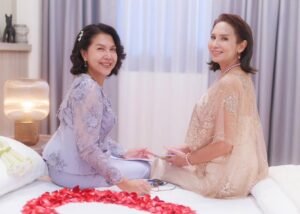
On the other hand, the supporting cast in the series Fulfill served far more than mere decorative window dressing to pad the episode runtimes. Instead, they anchored a crucial social and emotional safety net around the central couple’s journey, a dynamic showcased most prominently through the mothers’ presence in the partners’ domestic life.
Veteran actresses Daraneenute Pasutanavin as Prang (Aioon’s mother) and Daran Thitakawin as Anong (Pafun’s mother) dodged the classic Asian drama trope of rendering maternal figures as absolute obstacles or overbearing tyrants. Instead, the narrative leaned into the nuanced grey areas of authentic family dynamics. The strength of the maternal performance—particularly Aioon’s mother—lay in delivering a model of enduring acceptance, displaying a steadfast emotional commitment to safeguarding the household’s stability. This materialized through her decisive handling of intrusive outsiders and her grounding presence during complex crisis moments. Her support flared up once more during the adoption of the newborn baby, where her layered emotional beats further showcased her seasoned acting chops.
Beyond the mothers, the wider supporting ensemble struck a delicate balance between fueling conflict and anchoring the narrative. Kanin Stanley turned in a sharp performance as Krit, effectively capturing a brand of intrusive masculinity and boundary-pushing that pushed the lead pair to solidify their resolve and vigorously defend their home against emotional manipulation. Meanwhile, Parisaya Sriraswadi’s character, Nabnueng, functioned as the primary tragic catalyst for the show’s final stretch, with her return and storyline providing a gateway to redefine the concept of a “chosen family” and co-parenting for the leads. Down to the workplace colleagues and neighbors, the ancillary characters injected a warm, lived-in sitcom flavor, lightening heavy tensions and bolstering the drama’s overarching structure.
Ultimately, the supporting ensemble delivered a finely calibrated turn, with the maternal figures standing out as the vital backbone that lent the series its authentic warmth—proving that preserving a relationship takes an entire surrounding village.

Episodic Structure and Pace
In contrast to its poetic exploration of domestic life, the writing suffers from a reliance on a slice-of-life, sitcom-like structure. It lacks a major central dramatic conflict to build tension across episodes; minor issues are introduced and resolved within the same episode or immediately in the next. This format leaves the narrative feeling episodic and closer to a quiet domestic sitcom than a tightly wound drama.
Conversely, the series succeeds in subverting standard GL tropes by starting from the point of marriage and stability rather than the pursuit of love. It takes a bold step by rejecting the tension of initial pursuits or the fight for social recognition, choosing instead to focus on the dynamics of shared life, motherhood, and the challenges of sustaining a partnership. Fast-tracking the establishment of their relationship elevates the project from a coming-out drama to a study in relationship maintenance and the mechanics of domestic life.
Gratuitous Melodrama
One of the show’s most jarring plot turns—and the very reason I knocked down its score after previously handing it a top-tier rating on IMDb—arrived in Episode 7 with a sharp, left-field tragedy: the death of Nabnueng due to sudden medical complications from premature childbirth. Following her unexpected reappearance mid-pregnancy, she was hit with acute health crises during delivery, resulting in her death and leaving her newborn in the care of close friends Aioon and Pafun. This fulfilled their deep-seated desire for adoption and motherhood, albeit through an unforeseen human tragedy.
Relying on a character’s immediate postpartum death felt like an artificial melodramatic trope, engineered to wring tears from the audience and fast-track the lead couple into motherhood. Retreating into cheap shock value was largely unnecessary, disrupting the serene, fluid pacing that defined the series’ early run and undermining the narrative maturity touted at the outset.
Furthermore, injecting heavy grief into the penultimate entry (Episode 7 of 8) threw off the show’s tranquil slice-of-life rhythm. The narrative was forced to scramble, cramming the processing of trauma, adjusting to a newborn, and eulogizing a friend into a tight time slot right before the finale.
Granted, while the death was cruel and sudden, it did serve up a true test of the couple’s resilience and commitment, cementing the concept of a “chosen family” and executing a genuine shift toward shared maternal responsibility amid grief—which admittedly gave the episode a potent emotional punch. Nevertheless, testing the couple could have easily been achieved if Nabnueng had simply decided to relocate and leave the child in their care, rather than resorting to a fatal outcome that injected an acute sorrow at odds with the show’s signature warmth and gentleness.

Character Construction
The show occasionally falls into traditional lakorn tropes. Aioon is written in several emotional and situational contexts with excessive naivety and a surprising lack of interpersonal awareness, standing in sharp contrast to her age and professional background as an engineer—a role requiring logical structure and sharp awareness. This emotional dynamic occasionally makes the character appear childish, as if the script forces her into unearned innocence simply to allow her partner to step into a nurturing, guiding role.

Direction

Visually, director Nay Saratswadee constructs a warm domestic environment that mirrors the show’s core philosophy. The directorial approach favors soft, natural lighting and medium to tight framing that confines interactions within intimate household spaces—the kitchen, the living room, the bed—giving the viewer the sensation of eavesdropping on a lived-in reality.
The camera avoids flashy angles, choosing instead to capture spontaneous body language: a fleeting touch of the hand while moving around the kitchen, shared glances during mundane negotiations over chores, and quiet listening. These small visual choices breathe life into the frame, frequently compensating for flat dialogue.
However, despite the rich lighting and warm palette, the direction remains firmly within a cinematic safe zone. The camera rarely attempts inventive visual solutions to internalize the characters’ isolation or anxieties, relying instead on direct cuts and traditional reaction shots that keep the visual presentation closer to standard television broadcasts than a meticulously crafted cinematic work.
In conclusion, Fulfill presents a commendable model in its treatment of love as a continuous daily act of maintenance, marked by a rare focus on the psychological and physical nuances between partners. While writing stumbles, occasional character naivety, and a flat narrative structure prevent it from becoming a fully realized masterpiece, it remains a meaningful entry in Thai GL, daring to ask the hardest question: what happens after the initial rush fades and real life begins?