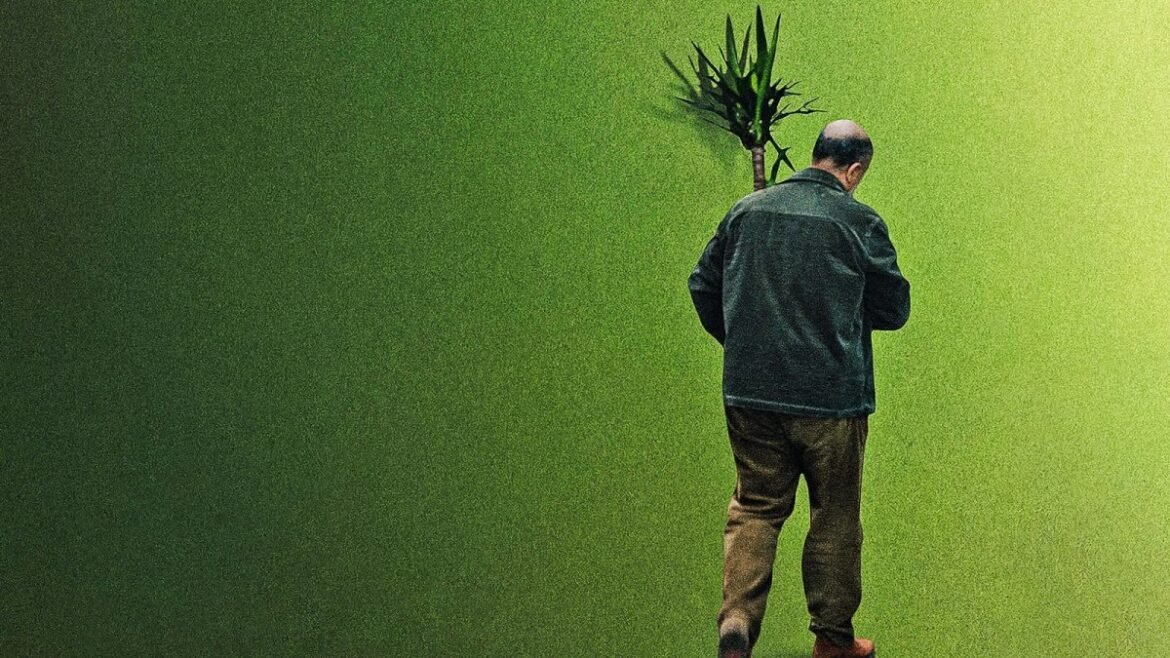
Ali Asgari makes a profound and resonant splash with A Bit of Light, an 87-minute existential drama that world-premiered in the main competition of the 83rd Venice International Film Festival before traveling to major international showcases, including the 9th El Gouna Film Festival. Co-written by Asgari and Shadmehr Rastin, the film positions its protagonist on a razor-thin edge, transforming an imminent crisis not into a loud tragedy, but into a quiet, contemplative inquiry into the sheer will to persist.
A Physician on the Edge of Tomorrow
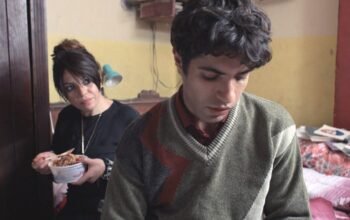
The narrative tracks a single, harrowing day in the life of Arash, a Tehran physician whose medical license has been revoked and practice sealed after treating injured protesters. Played with remarkable, bone-deep economy by Misagh Zareh, Arash has lost his professional footing, his societal standing, and any semblance of faith in tomorrow. Content with his decision to end his life, he foregoes melodrama, opting instead to orchestrate his final affairs and brace his family for his impending absence. This striking premise gives the film its core dramatic gravity while setting up an inherent narrative tightrope: how to sustain suspense when the audience already knows the hero’s ultimate destination. Asgari navigates this challenge brilliantly by leaning into minute psychological details, capturing Arash’s gradual internal shifting as he interacts with relatives and ghosts of his past.
Politics in the Shadow of Daily Life
Politically, the film operates with impressive restraint, never reducing contemporary Iranian reality to blunt-force didacticism. State pressure and the looming shadow of conflict are not treated as isolated thematic lectures, but as an inescapable atmosphere suffusing daily life. Arash does not merely lose a clinic; he loses his sense of vocational purpose, while protests and household survival preparations murmur in the background. Asgari’s approach ensures that politics remain organically tied to character fate rather than expositional sermonizing, even utilizing dark humor regarding the phantom of war as a psychological coping mechanism for collective fear.
Performances That Speak Through Silence
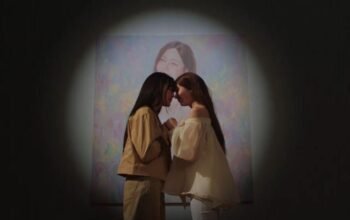
Visually and aurally, the production benefits immensely from Iman Tahsin’s dual contribution as cinematographer and editor, utilizing lingering frames and long, unbroken takes that honor the heavy silences of the moment. Zareh’s performance is a masterclass in minimalism, conveying absolute collapse through a dropped gaze, a slowed step, or a loaded pause rather than overwritten monologues. He is surrounded by a stellar supporting ensemble, including Sadaf Asgari as Mahsa, Forouzan Jamshidnejad as Massi, Ramtin Daghigh, and Mina Rahimzadeh as the mother, grounding the narrative in authentic familial friction and warmth.
Family as the Final Bulwark Against Mortality
Produced through an expansive international collaboration involving companies like Iran’s Seven Springs Pictures alongside entities from Switzerland, Italy, Canada, and Turkey, A Bit of Light evokes cinematic predecessors like Abbas Kiarostami’s Taste of Cherry. Yet, Asgari contracts the philosophical expansiveness of Kiarostami’s open-air inquiry into a claustrophobic, deeply intimate family sphere, suggesting that redemption does not arrive via grand epiphanies, but through ordinary, unassuming human tethers. It is a mature, profoundly humanistic achievement that proves a mere flicker of illumination can sometimes pull a soul back from the brink.
A Critical appraisal of ‘A Bit of Light’
The protagonist is introduced in his final day, standing before the mirror of his building elevator—a poignant visual metaphor for a definitive farewell. He departs his residence alongside his houseplants, which he has meticulously arranged to distribute among those around him, ensuring their survival in a world he no longer wishes to inhabit. This scene evokes a complex duality of lightness and liberation; one senses a profound degree of autonomy upon clearing one’s personal space and relinquishing responsibilities, culminating in a self-determined departure that embodies the ultimate expression of personal independence and agency over one’s fate.
First: Reverse Narrative Structure
The director initiates the narrative from its endpoint, tracing the protagonist’s decision to end his life. This structural choice confronts the viewer with fundamental queries regarding motives, the psychological trajectory that precipitated such a choice, and the magnitude of suffering prior to reaching this conviction—transforming the viewing experience into an inquiry into the underlying causes of this resolution.
Second: Pacing and Visual Grammar
The work relies heavily on the language of silence across extensive sequences. While the initial rhythm appears deliberately sluggish to mirror the core theme of mortality, the camera gradually shifts into an active stance, tracking secondary characters to unveil the protagonist’s surrounding ecosystem and interpersonal relationships.
Third: Production Scale and Resource Deployment
Characterized by modest production value, the film strategically eschews visual spectacle in favor of performance-driven scenes. This scaled-back environment bridges the gap between the viewer and the cinematic world through recognizable spaces and everyday conflicts, fostering authenticity and positioning the narrative as a direct reflection of human reality.
Fourth: Performance and Character Portrayal
The cast delivers a nuanced performance stripped of melodrama, presenting emotional states with a understated naturalism that aligns with the existential weight of the narrative and enhances the dramatic presence of the actors.
Fifth: Screenplay Mechanics and Textual Economy
The screenplay benefits from concise, purpose-driven dialogue that avoids heavy-handed exposition or moralizing. The text reflects the sharp clarity of a character preparing for a final exit, granting the narrative a cohesive structure and thematic focus.
A bit of Light serves as an exploration of war, homeland, and familial bonds, examining themes of empathy, grief, and human transcendence.