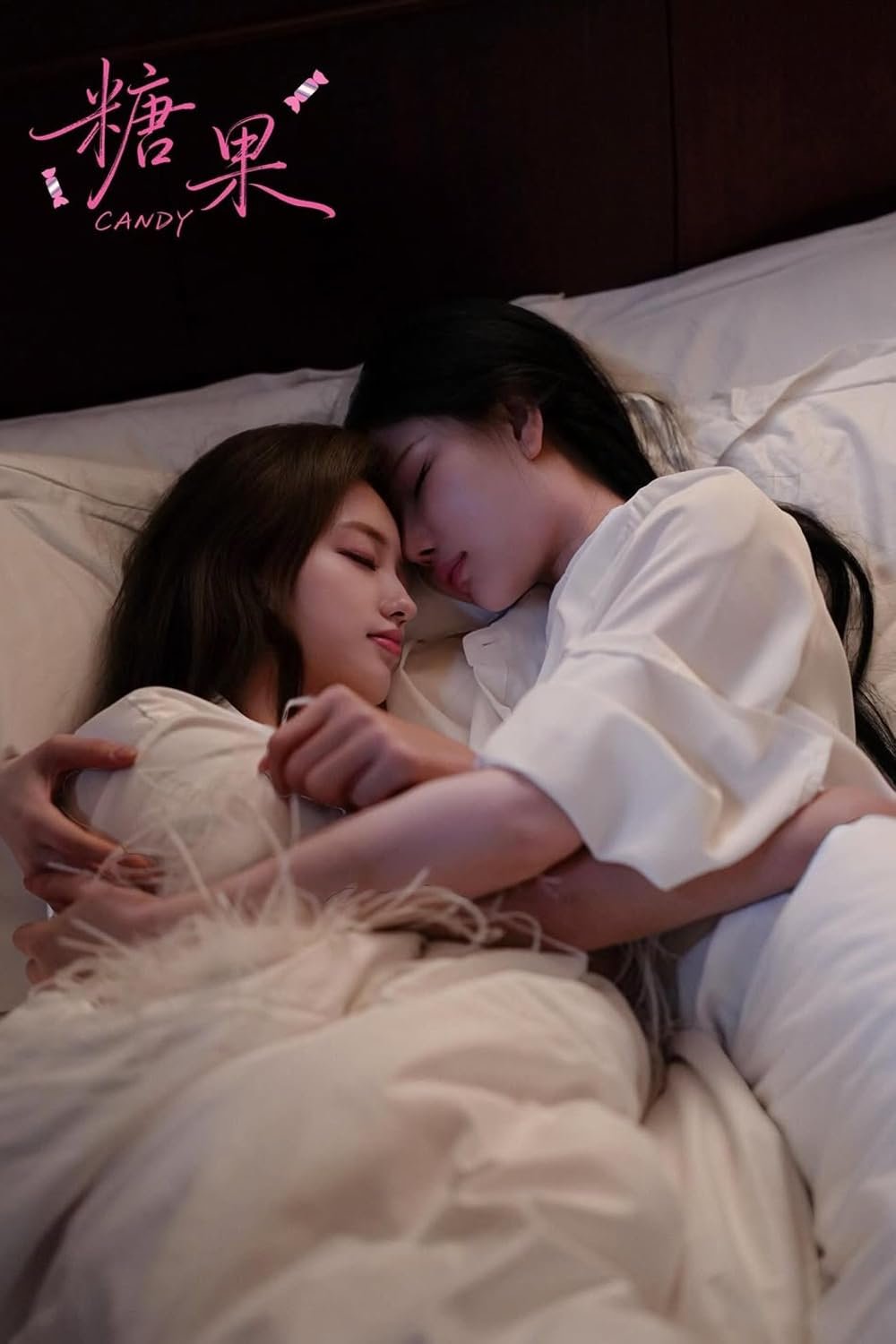
Contemporary Chinese television presents a stark paradox: As production budgets skyrocket for period epics and fantasy blockbusters, alternative narratives—specifically sapphic and GL (Girls’ Love) stories—remain strictly sequestered on the margins, silenced by stringent mainland censorship. Amid this barren landscape, director Xiao Ze’s Candy , which found a safe haven on Taiwan-based streamer GagaOOLala, emerges as a remarkably nuanced and singular visual document.
The series’ significance extends far beyond merely filling a void in a starved subgenre; it distinguishes itself through a mature exploration of love, celebrity, and psychological trauma, adroitly bypassing the superficial fan-service traps that plague similar titles.
Xiao Ze frames his narrative within the pressure-cooker of the entertainment industry. While a showbiz setting risks feeling derivative, here it serves as a razor-sharp counterpoint between public display and private intimacy. In a world where cameras devour public figures and scandal is churned out for quick consumption, a romance between two women becomes a quiet act of defiance.
The title Candy functions as an objective correlative for those stolen, fleeting moments of closeness—a transient sweetness cutting through the bitterness of a reality where the protagonists must conceal their true selves. It dissolves quickly, yet its lingering aftertaste remains the sole proof of genuine emotion in a sea of fabricated personas.

Structured across a tight eight-episode run, the drama’s narrative power rests on a dual-track dissection of human relationships under strain. The primary storyline follows Lin Can and Nuan Nuan, whose past relationship was severed by scandal and familial interference, only to reignite in a suffocating workplace. Xiao Ze shuns melodramatic outbursts, leaning instead into an understated visual language driven by unscripted glances, hesitant body language, and heavy silences inside dressing rooms and private flats. Their eventual relocation to a rural setting for a reality TV shoot isn’t merely a change of scenery; it acts as an unspooling of urban artificiality, allowing old wounds to heal away from the cold glare of neon lights.
In sharp contrast, the secondary plot pairs veteran talent manager Si Han with starlet Jiang Wan. Where the first arc offers healing, the second delivers combustion—a toxic interplay of power, jealousy, and control. This tension prevents the show from drifting into idyllic fantasy, offering complex female characters who are not merely victims of a patriarchal system, but active agents capable of inflicting mutual damage in the name of ambition. This deliberate counterpoint balances the show’s pacing while broadening its spectrum of queer female experience.
When contextualized within the broader Asian GL boom—where neighboring markets favor slick, commercialized formulas steeped in heavy fan service, exaggerated rom-com tropes, and high-concept fantasy—Candy takes a decidedly more rugged, realistic route. Refusing to commodify emotion or treat its leads as eye candy, the series digs into existential anxiety, social exile, and conservative familial pressure within contemporary Chinese culture. This commitment to psychological realism yields a weightier, more authentic viewing experience, even if it lacks the polished sheen of its regional counterparts.

Visually, Xiao Ze constructs a cinematic vocabulary tailored to his characters’ isolation. Claustrophobic framing dominates workplace settings to mirror psychological confinement, whereas wider, warmer compositions anchor the rural and private scenes, fashioning a protective visual bubble for the lovers.
However, the drama’s soundscape proves to be its most contentious element. Rather than enhancing sensory immersion, the audio mix frequently severs the emotional connection. From the opening scene, technical flaws in the production sound disrupt the viewing experience: lavalier microphones are placed unnervingly close during intimate or emotionally charged moments, capturing harsh, unrefined breathing noises that were left unfiltered during post-production mixing. What should have been a delicate register of passion instead registers as an intrusive distraction.
Compounding this misstep is an overly aggressive score. Rather than leaning on dramatic silence or subtle ambient tracks, the director repeatedly overlays heavy pop tracks over dialogue. This jarring combination—unfiltered direct vocal tracks competing with dense musical cues—suffocates the performances and robs pivotal beats of their natural intimacy. What could have been a masterclass in quiet subversion comes off, technically, like an unpolished rough cut.
These technical shortcomings are exacerbated by the structural constraints of the micro-drama format. Packing complex psychological dynamics into eight abbreviated episodes forces erratic pacing, rushing character arcs and occasionally resorting to forced melodramatic tropes to create quick climaxes. Secondary characters are similarly sidelined, serving as plot devices rather than fully fleshed-out individuals.
Despite these production flaws, Candy retains its value through sheer thematic courage. It is less a conventional romance than a quiet manifesto on female autonomy and self-discovery outside patriarchal oversight and consumerist tropes. Bolstered by earnest performances and a contemplative lens, the series remains a meaningful milestone in independent Chinese drama—a work that came remarkably close to artistic excellence, held back only by its hurried narrative arc and a disruptive audio mix.