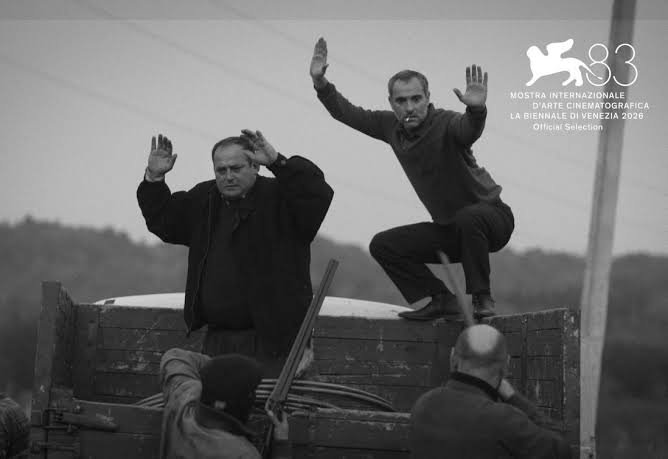
In the misty, impoverished hills of western Georgia circa 1992, the Soviet empire has crumbled, electricity is a myth, and the most coveted luxury in town is a food processor strapped to the roof of a beat-up sedan. Director Levan Koguashvili’s “Guria“—Georgia’s official submission for the International Feature Film category at the Academy Awards—approaches the absurd indignities of post-communist collapse not with despair, but with a bone-dry, deeply affectionate melancholia.
Following up his Tribeca-winning “Brighton 4th,” Koguashvili cements his status as a modern master of deadpan tragicomedy, capturing a rural community where almost everything is in short supply, yet human eccentricity flourishes in abundance.
Adapted by Boris Frumin from author Giorgi Kekelidze’s childhood memoirs, the narrative ambles leisurely through the chaotic rhythm of village life.
At its center stands Zuriko (Kakhaber Tcholadze), a stoic hazelnut farmer trying to hawk his harvest to indifferent buyers while navigating a parade of local matchmakers. Around Zuriko revolves a constellation of wonderfully peculiar figures: a nurse haggling for generator power to perform surgery, local bandits desperately hunting for morphine to patch up a wounded comrade, a school with daily grenade drills, and a small-town beauty pageant where extra points are awarded for catching runaway livestock.
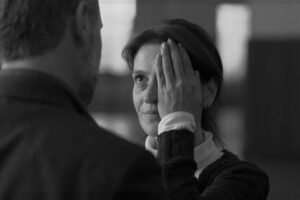
Visually, the film is a triumph of textured monochromatic art. Shot in crisp, moody black-and-white, “Guria” turns damp forests, decaying institutional halls, and misty dirt paths into an ethereal landscape reminiscent of Otar Iosseliani’s early vignettes or the laconic world of Aki Kaurismäki.
The stark visual palette serves as a poetic counterpoint to the vibrant warmth of its characters. Rather than drowning in gloom, the screen vibrates with the haunting harmonies of Georgian polyphonic folk chants, transforming mundane struggles into a bittersweet testament to communal endurance.
While the two-hour runtime occasionally lingers on anecdotal detours, the film’s unhurried pacing feels entirely intentional, mirroring the idle waiting and improvisational rhythm of its setting.
Koguashvili never turns his subjects into mere caricatures of poverty; instead, he honors their dignity, humor, and persistent quest for romance amidst systemic chaos.
“Guria” is a disarmingly gentle, beautifully composed ode to human resilience—a jewel of quiet cinema that finds radiant light in the darkest corners of history.