Anchored by high-gloss aesthetics and corporate intrigue, “Harmony Secret” marks a notable pivot in the evolution of Thai Girls’ Love (GL) television. Produced by CHANGE2561—a shingle well-regarded for its slick social melodramas—and helmed by director Oh Kritsada Techanilobon, this adaptation of serenista’s web novel graduates from the genre’s typical schoolyard romances into the cutthroat corridors of high-rise capitalism, offering a refreshing visual reimagining.

The War of Masks in High Finance
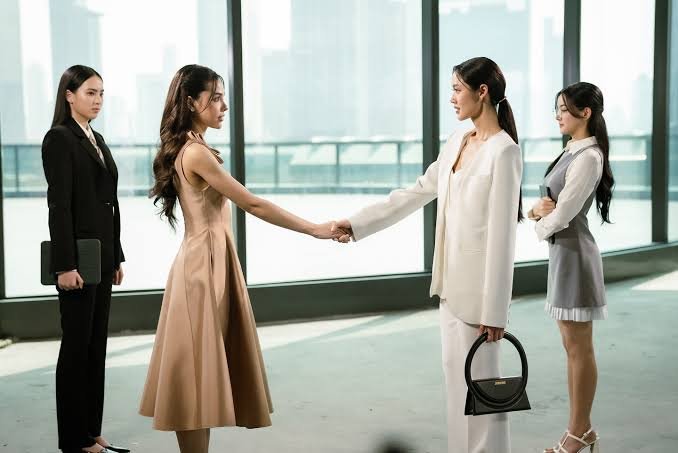
The narrative weaves a romantic thriller tinged with corporate espionage, centered on two heiresses harboring a long-standing high-school rivalry. Sonya Saranphat stars as Miuka (Mai), the lone heir to the Superior Group department store empire, driven by a desperate need to reclaim her pride after a past defeat. Opposite her is Lookmhee Punyapat as Ewarin (Ai), the heiress to the luxury Orianna Group hotels, who harbors a dormant, unspoken affection for her rival. When the two cross paths as formidable CEOs vying for a massive Greater Duty-Free concession, the boardroom battleground gives way to a fragile, deceit-laden alliance. As Mai schemes to unearth her competitor’s vulnerabilities, Ai seizes the proximity to court her secret crush, twisting their bitter rivalry into a deeply complicated emotional entanglement.

Opulent Cinematography and Sartorial Psychology
From its opening frames, the series boasts an undeniable “Black Card” production value, flexing opulent visuals that elevate the material. The cinematography favors deliberate, geometric framing that mirrors the sterile, unforgiving nature of the financial sector, smartly utilizing Thailand’s towering skyscrapers and plush executive suites to heighten the aesthetic tension long before the emotional climax hits. The costume design, too, does heavy dramatic lifting; Ai’s wardrobe of sharp, formal lines projects a quiet, imposing dignity, while Mai is draped in bold, contemporary, and fluid silhouettes. This sartorial dichotomy effectively telegraphs the profound psychological contrast between the leading ladies.
Unspoken Tension Triumphs Over Dialogue
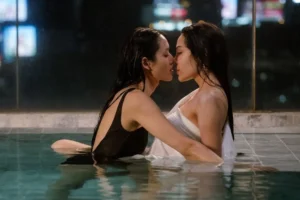
It is the undeniable chemistry and matured performances of the lead duo—affectionately dubbed LMSY—that truly anchor the series, far surpassing their previous outing in “Affair.” Lookmhee and Sonya excel in conveying a simmering, unspoken sensory tension. They masterfully construct silent sequences reliant entirely on micro-expressions, hesitant gazes, and modulated breathing. This palpable physical language grounds the romance with psychological weight, fully justifying their intimacy to the audience even when the script lacks robust dialogue. In the supporting ranks, the secondary pairing of Yam and Ji injects a welcome, vibrant energy that cuts through the corporate sterility, while the actor portraying Ai’s father delivers a standout, chilling turn as a narcissistic, authoritarian patriarch.

Structural Fault Lines
Yet, beneath its glossy veneer, the series is hampered by severe structural flaws, predominantly stemming from the script and editing bay. Condensing a densely plotted web novel into a lean eight-episode run proves to be a fatal constraint, robbing the narrative of the gradual psychological build-up it so desperately requires. The transition from fierce, adversarial tension to all-consuming romance feels jarringly abrupt, denying the audience the crucial transitional space needed to process this shift. Furthermore, the limited screen time is squandered on gratuitous melodramatic tropes—such as a feigned illness and a frustratingly truncated subplot involving Ai’s mother. These distractions cannibalize the central corporate stakes; the high-stakes duty-free bid ultimately fizzles out in a bafflingly simplistic, anti-climactic resolution.
The Editing Dilemma and Truncated Cuts
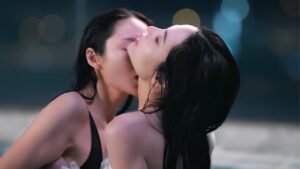
The dual-release strategy—a broadcast cut on YouTube and an unedited version on iQIYI—only exacerbates the structural confusion. A clumsy editorial decision to trim mere seconds from early episodes inadvertently framed a pivotal intimate encounter as one-sided, whereas the uncut iteration clearly depicted mutual consent. This staggering continuity error severely compromises the foundational moral reading of the protagonists.

The Final Verdict
In the final tally, “Harmony Secret” represents a definitive quantum leap for the visual and technical craftsmanship of Thai queer television. Its auditory landscape is further enriched by a bespoke soundtrack, featuring tracks like “Secret Deal” and “Only We Know” performed by the leads themselves. Nevertheless, the project is ultimately kneecapped by its fragile narrative architecture and erratic pacing. It is a show that survives—and occasionally thrills—on the sheer strength of its leading stars’ transcendent performances and the director’s breathtaking visual eye, but stumbles significantly when tasked with maintaining basic narrative coherence.