Not everyone who guards the door is capable of protecting themselves, and not everyone who survives a tragedy truly makes it back to the living. It is upon this subtle, devastating paradox that Egyptian auteur Mohamed Hamad constructs A Safe Exit (Khrouj Aamen), the sole Egyptian entrant in the Official Feature Narrative Competition at the 9th El Gouna Film Festival. Returning to the festival circuit eight years after his acclaimed festival hit Withered Green (2016), Hamad once again rejects sensationalism, crafting an introspective character study about an isolated young man navigating the quiet fractures of modern Cairo.
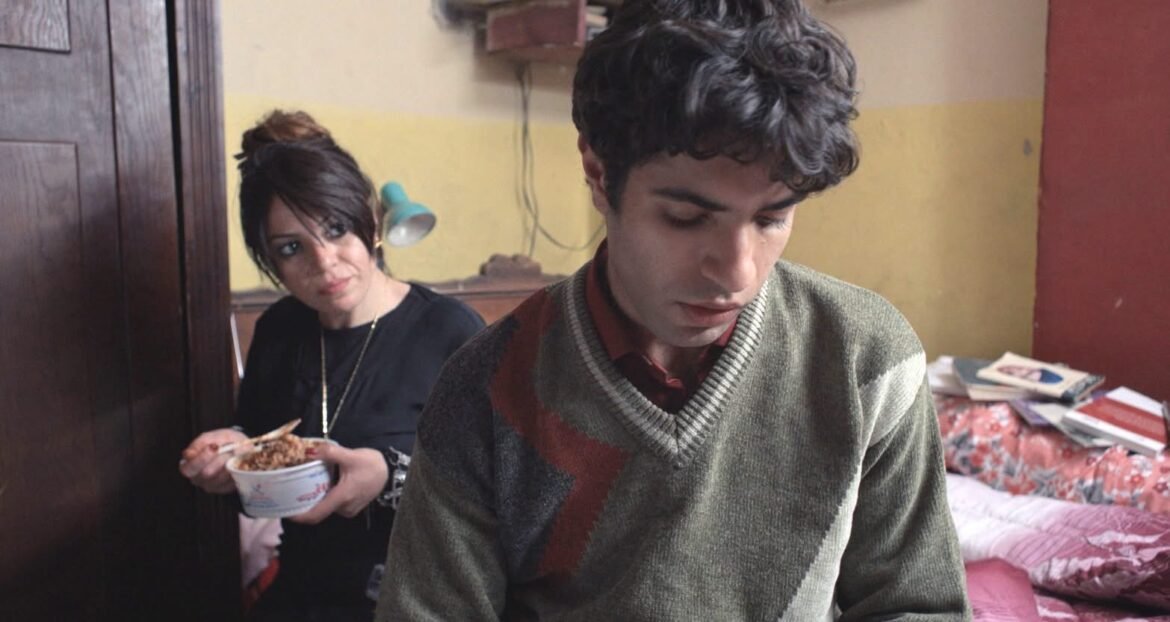
Set against the suffocating backdrop of downtown Cairo, the film centers on Samaan (a remarkably restrained Marwan Walid), a young man working as a residential building guard who lives in a cramped rooftop chamber. Samaan dutifully runs errands for tenants, monitors the gate, and keeps the peace, yet his daily routine operates as a psychological prison. A Coptic Christian haunted by childhood trauma—having witnessed his father’s murder at the hands of extremists in Libya—Samaan has internalized fear not as an occasional emotion, but as an all-encompassing survival mechanism.

Hamad’s screenplay avoids grand theatricality, focusing instead on the mundane indignities and quiet compromises of lower-class survival. Samaan’s absolute passivity is put to the test when he covers for Abdullah, a fugitive tenant, and later when he forms a tentative connection with Fatima (Noha Fouad), an undocumented young woman suffering from unmanaged epileptic seizures who seeks shelter in the building.
The dynamic between Samaan and Fatima avoids easy romantic cliches. Instead, Hamad frames their bond around shared precarity: two marginalized souls navigating a rigid bureaucracy that refuses to recognize their humanity. Meanwhile, Samaan harbors a deferred ambition of publishing his autobiographical writings—a dream constantly stalled by predatory publishers demanding vanity fees he cannot afford, alongside the crushing financial burden of securing legal counsel for his imprisoned brother.
Visually, A Safe Exit relies heavily on static, long interior takes that mirror the protagonist’s emotional stasis. Sound design plays a vital role: the relentless, intrusive drone of Cairo traffic contrasts sharply with the heavy silences inside Samaan’s room, reinforcing the visual separation within the frame. While this deliberate, observational pacing successfully immerses the audience in the hero’s isolation, it occasionally borders on narrative inertia, where repetitive beats slightly dilute the dramatic tension leading into the third act.
Nevertheless, the film is anchored by compelling lead performances. Walid delivers a interiorized portrayal of internal conflict, conveying decades of unaddressed grief through hesitant gestures and veiled glances. Fouad provides an equally grounded counterweight as Fatima, infusing her character with a dignified urgency that avoids sentimental victimization.
Ultimately, A Safe Exit functions as a thoughtful meditation on structural trauma, class inequality, and the heavy price of personal agency. While the film’s narrative threads do not all resolve with equal impact, Hamad’s nuanced direction and commitment to visual storytelling ensure that A Safe Exit stands out as a resonant, deeply human entry in contemporary Egyptian cinema.