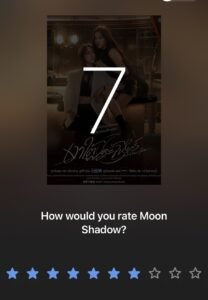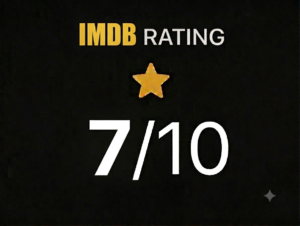
A slick, beautifully shot Thai sapphic drama, ‘Moon Shadow‘ boasts undeniable screen chemistry between leads Emi and Bonnie that frequently rescues a narrative crippled by structural shortcuts, clunky pacing, and an unearned third-act resolution.

The Chemistry vs. The Script
An adaptation of Flower of Memory’s novel, Moon Shadow centers on Chan (Emi) and Kie (Bonnie), whose relationship kicks off not with traditional romance, but with a transactional ‘sugar baby’ arrangement born out of a one-night stand. It’s a fertile, morally complex setup—exploring power imbalances, control, and boundary-pushing desire.
Yet director Kanittha Kwanyu and the writing team struggle to build a coherent bridge between transactional friction and genuine romantic commitment.
The show excels at isolated beats of intimacy, but repeatedly skips the crucial psychological development required to make those moments feel earned.
Viewers are left with a relationship that jumps from hesitation to total devotion without the necessary connective narrative tissue.

Visual Style and Pacing Pitfalls
Visually, the series is a showcase of high-end production values.
Kwanyu and her cinematographer utilize atmospheric low-key lighting, cool color palettes, and tight architectural framing to mirror the leads’ emotional isolation.
However, this aesthetic sophistication frequently devolves into empty formalism, playing more like an extended, high-fashion commercial than a character-driven drama.
The show’s structural missteps are evident from the premiere, which opens with an unnecessary flash-forward intimate scene—a cheap hook that sacrifices narrative tension for early romance thrills.
Pacing remains erratic throughout: early episodes drag in repetitive circles, while key emotional hurdles, such as Chan’s mother suddenly accepting Kie after a week off-screen, are glossed over through lazy time-skips.

Lead Performances Salvage the Core
What keeps Moon Shadow watchable is the magnetic pairing of Emi and Bonnie.
Emi delivers a tightly controlled performance as the guarded executive Chan, utilizing subtle micro-expressions to convey underlying trauma. Bonnie brings much-needed spontaneity to Kie, seamlessly balancing external allure with avoidant vulnerability.
Their organic rapport regularly sells emotional beats that the dialogue fails to support.
Conversely, the supporting cast is underutilized. A promising rival arc involving Chan’s ex, Jai, starts strong with sharp, subverted confrontation scenes, but eventually drags out into an overdrawn closure sequence. Meanwhile, ensemble players are sidelined, rendering the series’ finale—a sterile wedding completely devoid of family members—narratively hollow and social-contextually orphaned.

The Verdict
Moon Shadow delivers the emotional fan service its audience craves, backed by a standout soundtrack featuring tracks like ‘Red Kiss’ and ‘Glitch.’
But while Emi and Bonnie’s palpable chemistry breathes transcendent life into their characters, the series remains ultimately held back by a script that refuses to put in the dramatic work its leads deserve.
Read the Full & Longer version of This Review!