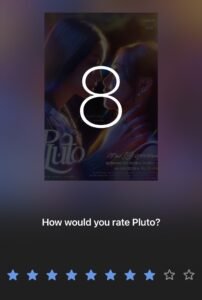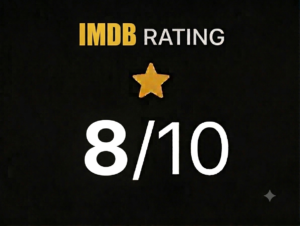
Standing out in the modern Asian GL landscape, Pluto elevates the genre from fleeting entertainment to a layered, psychologically rich narrative.
The series follows the complex web of identical twin sisters Ai-Oun and Oab-Om (both brilliantly played by Namtan Tipnaree).
On the eve of Oab-Om’s wedding, a tragic accident leaves her in a coma, prompting Ai-Oun to fulfill her sister’s request to break things off with her former lover—only to discover the ex-girlfriend, May (Film Rachanan), is visually impaired. Trapped in an identity deception, Ai-Oun steps into May’s world, igniting a gripping 12-episode journey of shifting alliances, profound emotional turbulence, and high narrative stakes.

I. Title and Cosmic Symbolism: The Drama of Stars and Darkness
The title functions as a foundational textual gateway. In astronomy, Pluto is the farthest, smallest, and most marginalized dwarf planet. Symbolically, Namtan’s Ai-Oun embodies this “familial Pluto”—the overlooked twin living in the shadow of her sister’s spotlight.
Conversely, Film’s May represents absolute darkness due to her blindness, compounded by familial rejection.
Yet, much like Pluto and its major companion moon Charon locked in a permanent, unique binary orbit, Ai-Oun and May find in each other a mirrored isolation.
Their shared marginalization draws them into a specialized orbit that transforms cosmic coldness into human warmth.

II. Narrative Architecture and Moral Gray Areas
The plot hinges on a classic, high-stakes catalyst: identity impersonation. Yet, the writing avoids cheap melodrama by grounding Ai-Oun’s deception in deep psychological realism. Though ethically compromised, Ai-Oun remains profoundly sympathetic; her lie stems from chronic deprivation and a desperate yearning for a love uniquely her own.
The narrative poses a compelling ethical question: Is pure deception justifiable when driven by genuine affection and the fear of loss?
Both characters undergo meticulous, earned arcs:
- May sheds her victimhood to confront a toxic father and build independent resilience.
- Ai-Oun reconciles with her grandmother and heals her existential void, ultimately completing her novel and achieving professional fulfillment.

The Psychology of Guilt and Love
As Ai-Oun’s lie breaches her emotional isolation, her inner conflict transforms into a silent psychological epic.
The torment is twofold: agonizing moral guilt over deceiving the pure-hearted May, and the profound trauma of experiencing unadulterated, genuine love for the first time through a false persona. Psychologically, receiving unconditional affection after prolonged emotional starvation does not bring instant relief; instead, it casts a harsh, glaring spotlight on historical deprivation, compelling her to reconstruct her broken identity from the shadows.

III. Directorial Vision: Visuals in Service of Emotion
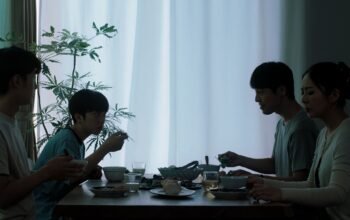
The directorial vision rejects flashy, conventional romantic palettes, opting instead for a cold color grading dominated by purples and indigos to convey suppressed internal tension.
Because one protagonist is blind, the camera functions as a tactile instrument—focusing tightly on textures, hands, and low-key lighting, effectively allowing the audience to share May’s sensory and auditory world.

IV. Performance: Anatomy of Body and Voice
- Namtan Tipnaree delivers a masterclass in dual characterization, using nuanced body language, shifting vocal cadence, and micro-expressions rather than mere wardrobe changes to separate the twins.
- Film Rachanan avoids flat tropes, anchoring her portrayal of blindness in acute auditory and tactile reactions.
Both actresses champion an understated, deep performance style relying on measured, silent glances over melodramatic excess.

V. The Alternative Score: Sound as Surrogate Sight
The original soundtrack serves as the emotional backbone without lapsing into manipulative sonic cues.
Eschewing jarring effects during tense scenes, the delicate classical piano and string arrangements function as a sonic surrogate for May’s perceptual world, elevating the series’ aural landscape.

VI. Social Issues and Universal Design
Unlike narratives that use disability merely for cheap emotional manipulation, Pluto integrates the principles of Universal Design.
It respects the structural and logistical realities of daily life for a person with visual impairment in Thailand—navigating spatial barriers and maintaining dignity without leaning into patronizing tropes. This progressive framing expands the series’ socio-political relevance.

Structural Flaws and Missteps
Despite its strengths, minor structural flaws prevent Pluto from achieving absolute timelessness:
- Rushed Final Pacing: The final third suffers from compressed narrative jumps, undercutting the slow-burn psychological depth built in early episodes.
- Unearned Redemption: May’s father—previously established as a toxic, manipulative patriarch—undergoes an abrupt, psychologically unmotivated 180-degree turn into an understanding father, reducing a complex antagonist to a rushed plot device.
- Rushed Resolution: The climax glosses over the profound trauma and trust-building required between the leads, hurrying straight to a traditional happy ending that feels artificially compressed.
- The Secondary Plot Stumble: The subplot involving Police Officer Bim (Kapook) and her neighbor suffers from erratic character motivations, jarring switches in emotional alignment, and a lack of foundational staging, rendering it feel like disconnected narrative filler.
Conclusion
Pluto remains a watershed moment in contemporary Asian GL drama—a profound exploration of isolation, identity, and healing from the dark. Despite minor structural stumbles in its final stretch, it triumphantly proves that the genre can deliver mature, formally accomplished texts where cinematography and music match the literary weight of the narrative.