CANNES—**The curtains have officially come down on the 79th Cannes Film Festival, concluding a spectacular twelve-day marathon of world cinema that culminated in a thrilling and highly unpredictable awards ceremony. Held at the iconic Grand Théâtre Lumière, the closing night delivered a series of historic milestones and sudden twists that left film critics, journalists, and industry insiders thoroughly stunned. Led by Jury President Park Chan-wook, the nine-member international jury charted a distinct and fiercely independent path, ultimately defying the consensus built by international critical grids over the course of the festival.
A Historic Second Palme d’Or for Cristian Mungiu
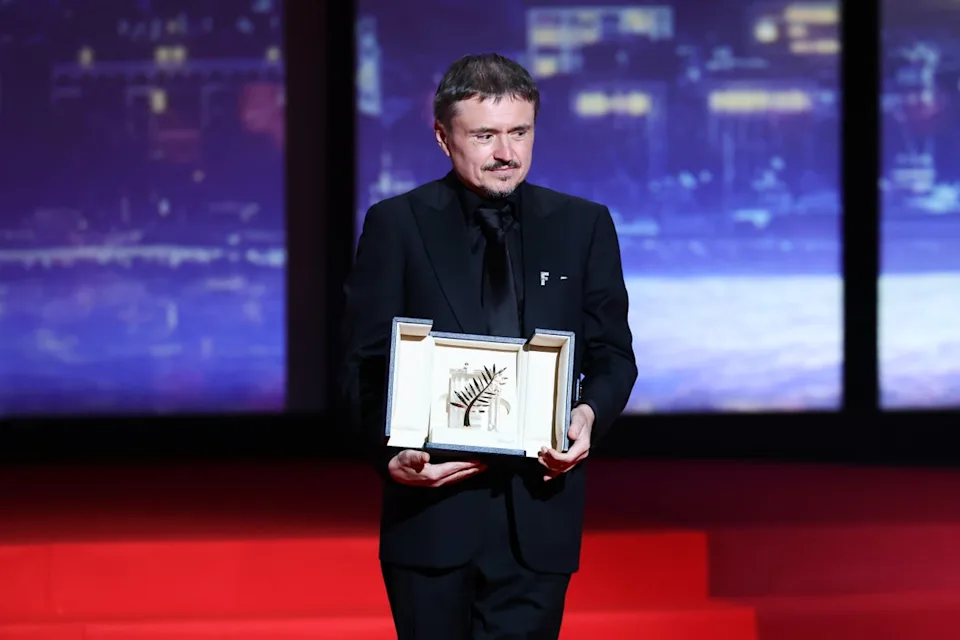
The definitive shockwave of the evening came with the announcement of the festival’s ultimate prize, the Palme d’Or. While critical buzz in the final days had coalesced strongly around alternative titles, the jury bestowed the top honor upon Romanian auteur Cristian Mungiu for his masterful drama, Fjord. A profound, slow-burning sociological examination of systemic morality within a fracturing community, Fjord captivated the jury with its visual precision and narrative weight.
With this triumph, Mungiu enters one of the most exclusive circles in cinematic history, becoming a two-time Palme d’Or winner following his historic 2007 victory for 4 Months, 3 Weeks and 2 Days. While critics had universally praised the technical execution of Fjord, few had predicted it would take the top prize over flashier, more overtly avant-garde competitors. The choice reaffirmed Cannes’ historic commitment to rigorous, uncompromising art-house realism, even when it flies under the radar of immediate festival hype.
Defying the Critics: The Major Prizes
The divergence between critical expectations and the jury’s final ballot became even more pronounced across the remaining major categories. The prestigious Grand Prix, traditionally viewed as the runner-up prize, was awarded to Russian director Andrey Zvyagintsev for his brooding, atmospheric epic Minotaur. Prior to the ceremony, critical polls had heavily favored Minotaur for either the Palme d’Or or a screenwriting accolade, making its placement in the Grand Prix category a bittersweet victory for the director’s passionate camp of supporters.
Meanwhile, the Best Director category yielded a rare, high-profile tie that split the room. The jury chose to share the honor between Spanish creative partners Javier Calvo and Javier Ambrossi for their vibrant, stylistically daring feature The Black Ball, and Polish master Paweł Pawlikowski for his meticulously framed historical drama Fatherland. The joint award was seen by analysts as a brilliant compromise by Park Chan-wook’s jury, effectively balancing the bold, contemporary energy of the Spanish New Wave with the classical, deeply rooted cinematic vocabulary of Pawlikowski.
A Celebration of Global Visionaries
In the performance categories, the jury continued to reward emotional authenticity over established Hollywood star power, choosing international performers whose low-key, devastating turns had anchored their respective films. The screenplay award also saw a surprise win, redirecting attention back to narrative structure rather than visual spectacle, which had dominated conversations earlier in the week.
As the ceremony concluded, the consensus among the international press corps at the Palais des Festivals was one of deep respect mixed with genuine surprise. While the 2026 critical charts had painted a very different picture of how the prizes should be distributed, Park Chan-wook’s jury proved that the true magic of Cannes lies in the closed-door deliberations—where artistic merit is judged not by media momentum, but by the raw, enduring impact of the moving image.