Four Elements: The Air bets heavily on the star power of a high-profile central duo FreenBecky carrying massive fan and critical expectations. Yet across its eight-episode run, the series gambles away crucial elements, ultimately leaving devotees of this popular franchise wanting more.
As the third installment in the Four Elements project, the show lands on solid ground, carving out its own distinct identity within the genre. Being part of the wider 4 Elements saga gave it an immediate viewership boost, given that the umbrella project remains one of the most anticipated dramatic endeavors in modern Thai television—an ambitious bid to blend action-thriller tropes, political intrigue, and character-driven romance.
Examining the gulf between its promising artistic vision and its execution, a broad look at this divisive title offers a clear assessment across all fronts—from script architecture and performance to directorial vision, cinematography, and visual effects.

Scripting and Dramatic Construction
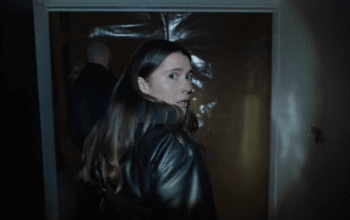
On page, the writers attempt to break free from the original novel’s routine pacing and surface-level characterizations. The television adaptation lends greater weight to character motivations, particularly in reshaping the bodyguard, Lum Phayo. Rather than presenting her as a mechanical operative led astray by unearned romance, the script grounds her in professional rigor. Her tight restraint creates a mounting psychological tension, making her eventual emotional unraveling feel like a natural consequence rather than a cheap plot point.
The script’s primary flaw lies in its pacing. Condensing the story into just eight episodes creates a structural bottleneck the writers never quite overcome, leaving two key strands in tension:
- The Political Backdrop: Handled with obvious haste, the political feuds and high-stakes threats surrounding the target princess feel like stage props stripped of geopolitical depth, sacrificing tight espionage plotting for oversimplification.
- The Romance: Receiving the lion’s share of screen time, this focus triggers a mid-season lull, creating a jarring contrast between fast-paced action bookends and a sluggish middle section.
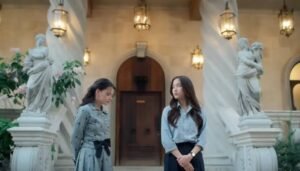
Despite this imbalance, the text excels in weaving together family dynamics. Ensemble scenes featuring the broader cast are never mere filler; they provide a warm, human anchor that breaks up the dryness of chasing scenes while anchoring the concept of the “element” as a symbol of roots rather than a superhero trait.
However, the storytelling suffers from a lack of romantic payoffs. For a series pitched as a GL romance, withholding heat alienates fans who tuned in expecting intimate moments between the leads, saving its only significant intimacy beat for the final episode.

Performances
Acting remains the core pillar keeping the series afloat whenever the script or technical execution falters. The leads showcase noticeable restraint and maturity:
- Lum (The Bodyguard): Freen Sarocha delivers a disciplined performance, using rigid body language and steady eye contact to convey military precision and emotional armor. Her strongest work appears as that wall breaks down, transitioning from stone-faced resolve to subtle shifts of confusion and vulnerability. Freen stretches her range further by showcasing natural comedic timing, emerging as the project’s true winner by choosing a role that redefines her image. Conversely, Becky Armstrong finds herself retreading familiar ground in a role that lacks the sharp appeal of her previous turn in The Loyal Pin.
- The Target Princess: Becky Armstrong delivers a balanced performance, blending external vulnerability with aristocratic pride. She avoids the passive victim trap, positioning the princess as the active catalyst in romantic scenes who breaks through the bodyguard’s icy exterior.
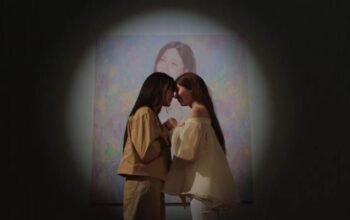
- On-Screen Chemistry: The central dynamic works well, moving beyond surface-and-stare glances to quiet shared moments, sharp banter, and joint survival. This natural rapport helps viewers overlook plot holes, anchoring the drama around their connection.
Supporting cast members lend grounded realism to the universe, though antagonist roles suffer from stock writing due to limited screen time. Among the secondary roster, Orntara Poolsak delivers a standout performance, capturing attention whenever she enters the frame.



Direction, Visuals, and Frame Design
The series maintains a clear visual identity crafted around the concept of air—conveying fluidity, space, and volatility. From its opening frames, rich cinematography highlights Thailand’s natural landscapes, doubling as a tourism spotlight before serving the narrative.
- Color Grading and Lighting: The camera favors cool blues, muted grays, and soft whites, pairing wide-angle lenses with natural outdoor lighting to evoke freedom and grandeur.
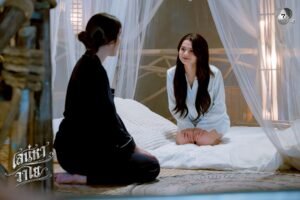
- Framing: Interiors use framing to reflect psychological barriers. Early episodes keep characters separated by physical obstacles like glass or doorways, slowly moving toward shared, narrow depth-of-field shots that isolate the duo from the outside world.
However, the direction stumbles across genres. While assured during quiet human moments, the helm loses its grip during action set pieces, resulting in chaotic cuts and mismatched camera angles when tension peaks.
Action, Visual Effects, and Technical Stumbles
If performances and visual aesthetics represent the triumphs of Four Elements: The Air, the action sequences and special effects mark its glaring weak point.
- Weak VFX: Unpolished digital effects—from cheap-looking explosions to synthetic muzzle flashes—pull viewers out of the drama at peak moments.
- Overused Slow-Motion: The excessive reliance on slow-motion during fight sequences kills momentum. Instead of heightening stakes, the combat sequences resemble slow-paced runway shows.
- Stunt Choreography: Hand-to-hand combat feels overly rehearsed, lacking real physical impact. An early action set piece featuring officer Lum handling a tactical raid borders on comical due to its unrealistic staging.
These technical shortcomings reflect tight production schedules and budget constraints common in regional television attempting Hollywood-style set pieces without equivalent technical infrastructure.

Soundtrack and Audio Design
The audio track yields mixed results. Environmental sound effects lack weight during combat scenes, but the musical score elevates the emotional beats. Woodwinds and flutes reinforce the central atmospheric theme, building into lush orchestral arrangements that guide key character transitions.

The Verdict
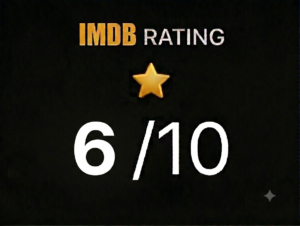
Four Elements: The Air lands as a split-decision entry. On one side, it boasts strong performance work, genuine lead chemistry, and cinematic landscape photography. On the other, it falters under rushed technical execution, weak stunt work, and uneven pacing across its brief eight-episode order.
Ultimately, the series stands as a baseline entry for the franchise, proving that strong performances can hold a show together even when technical tools fall short. It offers enough to satisfy fans of character-driven romance while serving as a reminder that ambitious action concept shows require production values to match their narrative goals.