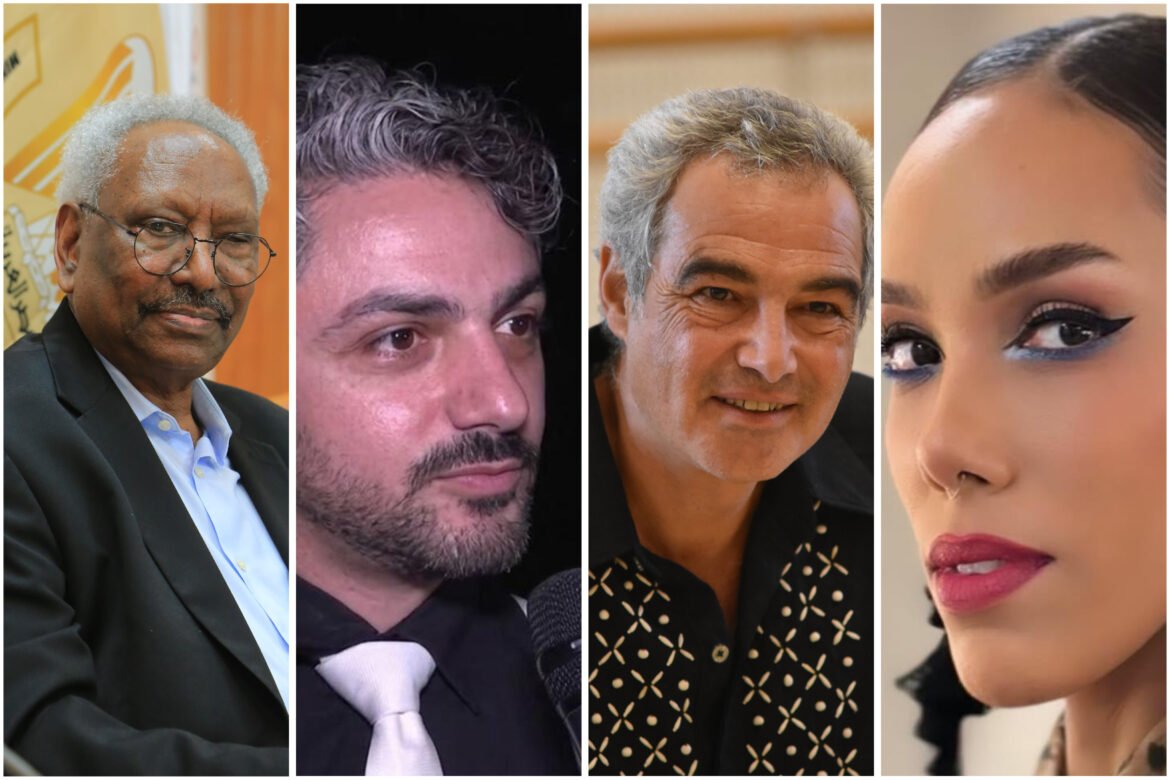
Behind the scenes with the visionaries and trailblazers shaping this year’s high-profile lineup at the Cairo International Festival for Experimental Theater.
Cairo—Since its inception, the Cairo International Festival for Experimental Theater (CIFET) has stood as a cornerstone of avant-garde drama across the Arab world and beyond. Far more than an annual showcase, the festival functions as an open lab for theatrical innovation, shattering traditional forms and redefining contemporary performance. By bringing together world-class auteurs and vanguard creators, CIFET has continually breathed new life into regional theater, offering a haven for bold physical and intellectual experimentation that drives the craft forward across generations.
At this year’s 33rd edition, four standout creators are generating major buzz, leaving an indelible imprint on the festival’s footprint.

Controversy and Craft on Opening Night
Leading the charge is director and choreographer Karima Bedair, whose opening production Hayah (Life) ignited instant artistic debate. Bedair notes that launching the festival came with immense creative weight, framing the opening act as an artistic piece in its own right rather than a mere ceremonial formality. For Bedair, modern audiences are far more open and discerning than often assumed, seeking genuine logic and raw emotion over conventional narrative structures. Her approach treats theatrical dance as an independent narrative language, where silence and stillness carry as much dramatic charge as constant movement. Addressing the influx of modern technology—such as AI, holograms, and projection mapping—she stresses that while digital tools can enhance a vision, they can never replace the visceral, unpredictable energy of a live human body on stage.
Unearthing Identity in “Book of the Dead”
Director Ezzat Ismail helms the festival’s most talked-about Egyptian entry, Book of the Dead. Grounded in ancient Egyptian iconography and the Papyrus of Ani, the production looks past historical reenactment to tackle existential questions of identity, morality, and digital existence in the modern era. Death, in Ismail’s framework, serves as an unsparing mirror where societal masks dissolve. Marking a significant evolution from his 2022 festival debut with Lovetronics, Ismail’s latest effort reflects years of artistic research tailored specifically to CIFET’s ethos of radical deconstruction and rebuilding.
A Lifetime of Visionary Scholarship
The spotlight also shone bright on renowned Sudanese playwright, scholar, and thinker Dr. Youssef Aydabi. A foundational figure in Arab performance art and co-architect of the influential “Forest and Desert” literary movement, Aydabi was honored during the opening ceremony for a career that spans academia, criticism, and cultural leadership. Expressing gratitude to festival president Dr. Sameh Mehran, Aydabi underscored that the tribute celebrates Sudan’s rich cultural heritage alongside his own journey, acknowledging the deep influence of Egypt and his years in Sharjah. For Aydabi, theater remains a vital civic duty that must constantly break free from purely theoretical confines to renew its transformative power.
Two Decades on the Cairo Stage
Rounding out the roster of luminaries, acclaimed Kuwaiti playwright and director Sulayman Al-Bassam spearheaded the festival’s high-demand workshop, “From Page to Stage.” Marking a 24-year relationship with CIFET since his debut in 2002– history decorated with multiple festival awards—Al-Bassam returned this year both as an instructor and an honoree. His three-day intensive guides participants through the deconstruction and reimagining of classical texts, converting static prose into active, physical stagecraft. For Al-Bassam, the Cairo festival remains an irreplaceable hub for cross-cultural exchange and creative collaboration among international theater practitioners.
Published by: September 1, 2026.