A casual glance at the roster of directors helming GL (Girls’ Love) projects over the past four years reveals a field dominated primarily by amateurs and experimentalists, with few possessing a genuine grasp of cinematic language or demonstrating authentic, original talent behind the camera. A rare exception to this trend is director Suttasit Dechintaranarak (Nui Suttasit), who delivered his masterpiece Heart Code this past spring.
This production undeniably stands at the forefront of a promising genre, not merely because of the director’s balanced execution or the lead actors’ skill, but owing to the effortless fluidity and grace with which the series presents itself. It rebels against the tired tropes of high school corridors and university campus drama, which so often rely on superficial conflicts and lightweight romance.
Heart Code deftly fuses procedural thriller noir, mystery, and romantic drama into an unforced visual and psychological experience that completely defies conventional expectations. The series does not settle for merely telling a love story; it explores the tension between duty and emotion, illustrating how one confronts the ghosts of the past while anchored in the warmth and reassurance of present love.

Narrative Structure and Pacing
One of the series’s greatest assets is its dense narrative architecture. Unlike many Asian productions that fall into the trap of unnecessary padding and bloat, the creators of Heart Code opted to tell their story across a lean seven episodes. This was no mere production shortcut, but a narrative necessity that maintains a breathless pace and a heightened level of dramatic tension. The plot kicks off at a point of acute crisis for Vicky, the daughter of an influential police official, who faces relentless assassination attempts. Yet the innovative solution to save her does not involve locking her in a secluded, heavily guarded mansion; instead, she is covertly embedded in a brutal training program for an elite security force. This narrative choice establishes a high-pressure environment: on one hand, the looming threat of assassination; on the other, the physical severity of the regimen itself. The camera and script work in tandem to construct a pervasive sense of impending danger, rendering every brief moment of safety fragile and stolen.

Character Deconstruction
The character of Vicky explicitly dismantles the stereotype of the spoiled rich girl or damsel in distress awaiting rescue. Her transition from a world of luxury into a grueling military environment represents a visual and psychological journey toward reclaiming agency. Crucially, the script does not present her transformation as a miraculous overnight shift, but rather as a path fraught with physical and psychological agony, where we watch her struggle, fall, and rise again. The assassination attempts she survives leave a lingering psychological threat, making her entry into the training program less of a hiding spot and more of a deliberate effort to forge an internal and external shield. Actress Nitchanart Prommart delivers a standout performance in embodying this duality—hiding fragility behind a defiant facade with iron resolve to survive—capturing internal conflict without relying on exposition-heavy dialogue, leaning instead on body language, expressive gazes, and an understated, effortless realism.
On the flip side, Thara serves as the thematic counterweight of disciplined rigidity. Thara is more than just a sharp police officer; she is a human being who has built high walls of strict compliance as a defense mechanism against an old family tragedy. Her hyper-discipline is, at its core, a coping mechanism for deep-seated historical trauma. The encounter between Thara and Vicky within a confined space—their shared room—acts as the primary catalyst for tearing down those walls. Thara, accustomed to total control over her environment and emotions, finds herself confronting unexpected chaos in the form of her new roommate. Thara’s character arc is an exercise in patient dramatic writing: her armor does not shatter overnight, but cracks gradually as her bond with Vicky deepens, and as she realizes that the world is not merely black and white, and that absolute justice can sometimes be a cruel illusion.
These compelling characters would not have resonated as powerfully without the superb casting of leads Tongpang and Jesse. Their natural chemistry serves as the primary engine of the show’s success, heavily relying on subtle eye contact and gestures rather than the heavy-handed, overt declarations that frequently plague similar works.

The Shared Room Dynamic
The use of the shared room within the security facility functions far beyond a mere sleeping quarter; it becomes a psychological stage where the characters’ deepest vulnerabilities unfold. Outside, on the training grounds, reign discipline, competition, and constant hazard. Inside the room’s four walls, the space transforms into a sanctuary where masks drop and ranks dissolve. The direction utilizes this space with sharp intent: in early episodes, the camera emphasizes the physical distance between their beds to signify coldness and distrust. As the story progresses, both physical and emotional space contracts. Scenes where they bandage each other’s wounds after grueling drills carry rich semiotic weight—tending to the exhausted body becomes a metaphor for healing the weary soul. These quiet, intimate beats lay the groundwork for an organic bond born of mutual need and shared reliance, completely free of forced romantic clichés.

The Crucible of Choice
The drama reaches its psychological peak when Thara discovers that Vicky’s father—the man whose daughter she is tasked to protect—is the very individual tied to the tragedy that destroyed her family. Here, the series shifts from a procedural thriller into a complex human tragedy, posing a poignant philosophical dilemma: Should children pay for the sins of their fathers? Thara finds herself torn between a buried impulse to pursue and prosecute the father and her deep affection for Vicky, who bears no blame for her father’s crimes. This internal fracture generates palpable dramatic tension, driving the viewer forward to unravel the mystery.
It is here that the screenwriter’s skill shines brightest. The script refuses to resort to tidy resolutions or artificial happy endings, leaving its characters to wade through a quagmire of difficult moral choices, lending a bitter, grounding realism to the narrative trajectory.



Visual and Directorial Vision
Simply put, director Nui Suttasit’s vision is a cornerstone of Heart Code’s triumph. He adopts a visual language rooted in uncompromising realism, steering clear of the glossy, airbrushed aesthetics typical of mainstream Thai romantic drama. The color palette directly mirrors the narrative psychology: scenes set in the academy and training fields are dominated by cold, desaturated grays, reflecting institutional sterility and environmental harshness. Camera movement during action sequences is fast and kinetic, conveying chaotic danger, while settling into steady, deliberate stillness during intimate dialogues to allow viewers to absorb the micro-expressions of the lead performers.
Adding to the artistic achievements is the high quality of the combat choreography, executed with a level of precision and craft that rivals cinematic feature films.

Handling Intimacy

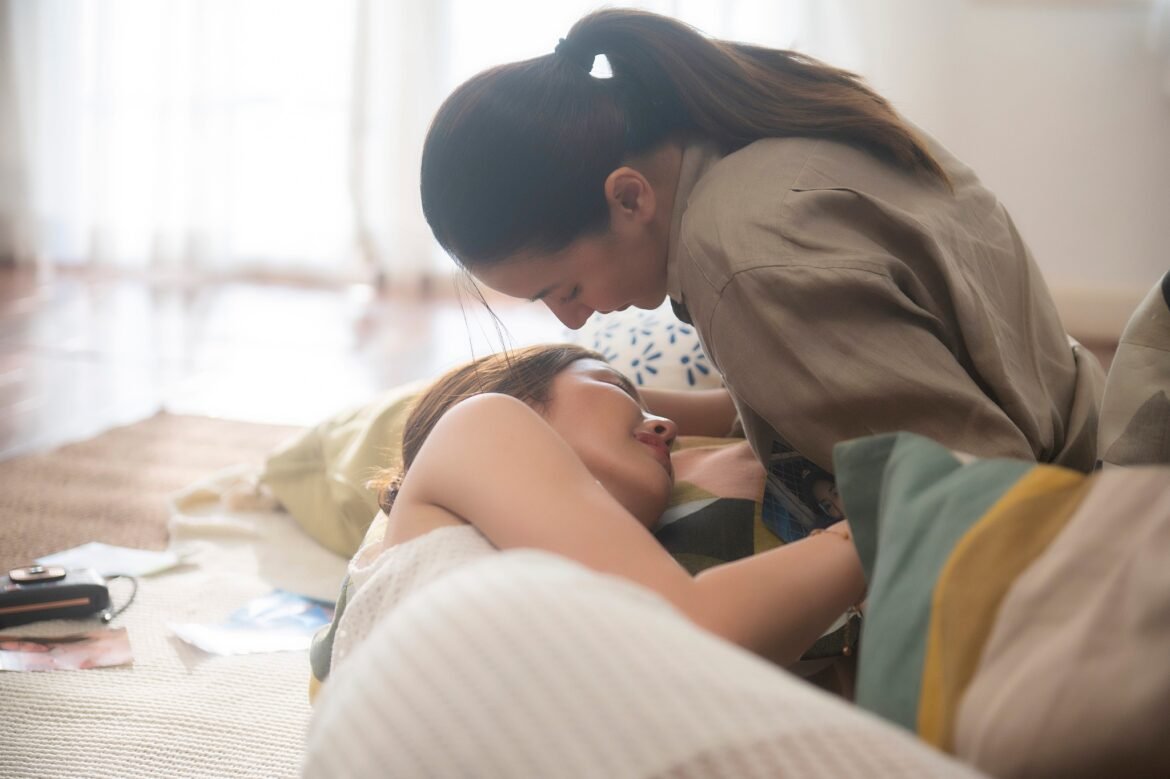
In approaching intimate scenes, director Nui Suttasit shows remarkable courage by subverting the standard visual tropes of romantic television. He strips these moments of warm, romantic lighting and soft-focus aesthetics, opting instead for crisp, neutral white illumination that mirrors the sterile, institutional environment surrounding the protagonists. This directorial choice is no technical misstep, but a deliberate dramatic philosophy aimed at stripping the moment of physical spectacle or visual commodification. It places raw emotion and stark psychological exposure under a direct spotlight; white light leaves no shadows for characters to hide behind, forcing a transparent confrontation where spiritual connection and empathy eclipse surface aesthetics.
Furthermore, the palpable harmony and comfort between lead actresses Tongpang and Jesse allow the relationship to be portrayed with striking balance and equality, steering clear of the tired, power-imbalanced tropes common to traditional romance.
Resisting Commodification
Looking at the broader picture and the subtle themes embedded in its narrative, Heart Code serves as a crucial model for breaking the male gaze that frequently dominates female-led action. Action heroines are routinely commodified through impractical costumes or gratuitous poses designed for visual gratification, but Heart Code adheres strictly to visceral realism in both fight design and wardrobe choices. The training drills are gritty and exhausting, and the attire is entirely practical and tactical. This commitment to realism reflects genuine respect for both the characters and the audience, reinforcing that true strength springs from grit and discipline rather than physical appearance. Similarly, the romantic relationship is rendered with equity and respect, untainted by artificial dynamics or conventional dominance-and-submission roles, making the series a forward-looking achievement in gender representation and female agency.
Musical Score and Sound Design
Any complete critique must highlight the vital role played by the musical score and sound design. The soundtrack is no passive backdrop, but an active participant guiding the emotional narrative. Slow, melancholic string arrangements evoke psychological weight during moments of isolation and introspection. Conversely, rapid percussion and rhythmic drive dominate pursuit and combat scenes, creating a pulse that mimics a racing heartbeat.
The deliberate absence of music during critical turning points—most notably the central confrontation regarding Vicky’s father—is a masterstroke of direction. The silence allows natural breathing and raw performances to dominate the soundscape, heightening the scene’s emotional brutality.
Crucially, the director demonstrates refined artistic sensibility by deploying tango-infused classical violin and cello pieces during moments of emotional and physical intimacy, rather than falling back on standard pop ballads. This choice injects a brooding psychological depth, elevating the sense of desire laced with tension that perfectly complements the procedural noir setting.
Conclusion
Heart Code is far more than just another entertaining entry in the GL canon; through its poetic subtlety and lingering impact, it elevates the ceiling for local television drama. While it tackles the well-worn theme of revenge and the sins of the father—a concept previously thoroughly explored in literature and cinema that could have benefited from a touch more innovation rather than relying on certain dramatic coincidences in the final episodes to propel the plot toward its climax—the series remains a compelling case study in genre blending, seamlessly weaving procedural action with psychological romance without losing its identity.
Ultimately, the work stands as a vital touchstone for depicting complex, formidable, and authentic female characters, paving the way for bolder productions that challenge conventional molds and expand the horizons of visual storytelling.