College football is a sport defined by fine margins, high-stakes decisions, and split-second choices that can either cement a coach’s legacy or haunt them for a lifetime.
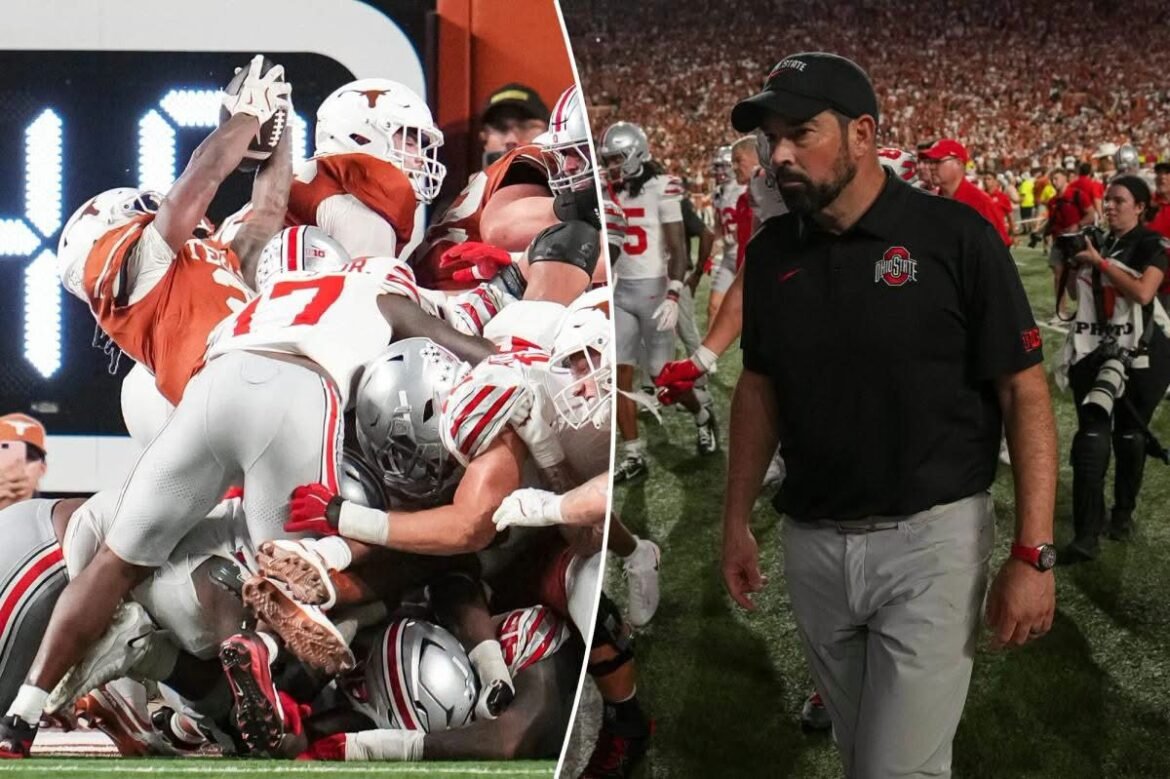
For Ohio State head coach Ryan Day, a stunning early-season showdown against the Texas Longhorns at Darrell K Royal-Texas Memorial Stadium turned into an absolute nightmare.
After dominating the first three quarters and building a commanding 23-3 lead, the top-ranked Buckeyes suffered an astonishing 24-23 collapse, surrendering 21 unanswered points in the final frame. While a complete offensive shutdown and an inspired fourth-quarter masterclass by Texas quarterback Arch Manning fueled the comeback, it was a single, highly scrutinized strategic decision by Ryan Day in the dying moments of the game that ultimately sealed the program’s fate and drew fierce national condemnation.
The defining sequence unfolded with just 1:23 remaining on the game clock.
Texas, orchestrating a breathtaking, historic rally, had clawed their way down to a first-and-goal at the 1-yard line, trailing 23-17. At this precise junction, football analytics and conventional end-game clock management presented Day with a clear, albeit agonizing, choice: instruct his defense to let Texas walk into the end zone immediately, or trust his defense to stuff the run and attempt a goal-line stand.
Opting to let Texas score quickly would have given the ball back to his elite offense, trailing by just a single point (24-23) with over a minute remaining and plenty of time to orchestrate a drive for a game-winning field goal.
Instead, Day doubled down on his defense. He later admitted that while letting Texas score was briefly considered, he and his staff decided to play for the stop.
The decision immediately backfired in terms of clock preservation. Although Ohio State initially stymied the Longhorns on the first two attempts, the grueling physical battles at the line of scrimmage melted the remaining game clock away.
On third-and-goal, Texas running back Hollywood Smothers punched the ball across the goal line to take a 24-23 lead, leaving a meager 25 seconds remaining on the stadium clock. By refusing to concede the touchdown moments earlier, Day had inadvertently starved his own offense of the most precious commodity in football: time.
When Ohio State finally got the ball back, quarterback Julian Sayin and the desperate offense were left with a nearly impossible task. Hampered by frantic play-calling, a short-yardage penalty, and zero timeouts, the possession quickly dissolved into a chaotic, desperation heave that ended in an interception, sealing an unforgettable victory for the Longhorns.
The fallout from the defeat was immediate and brutal.
Historical data highlighted the sheer unlikelihood of the collapse: Ohio State had previously been 309-0 when leading by 17 or more points at halftime, and had never surrendered a 20-plus-point lead after the third quarter in modern program history.
Analysts across the country labeled Day’s choice “coaching malpractice” and poor game management, arguing that a head coach must always prioritize maximizing possessions for his offense over prideful goal-line stands.
As Steve Sarkisian and the Longhorns celebrated an iconic victory, Ryan Day was left to face an avalanche of criticism.
The devastating loss transformed what should have been a statement road triumph into a painful lesson in situational football, proving once again that in the unforgiving world of major college athletics, a single strategic misstep can unravel an entire season’s ambitions in a matter of seconds.