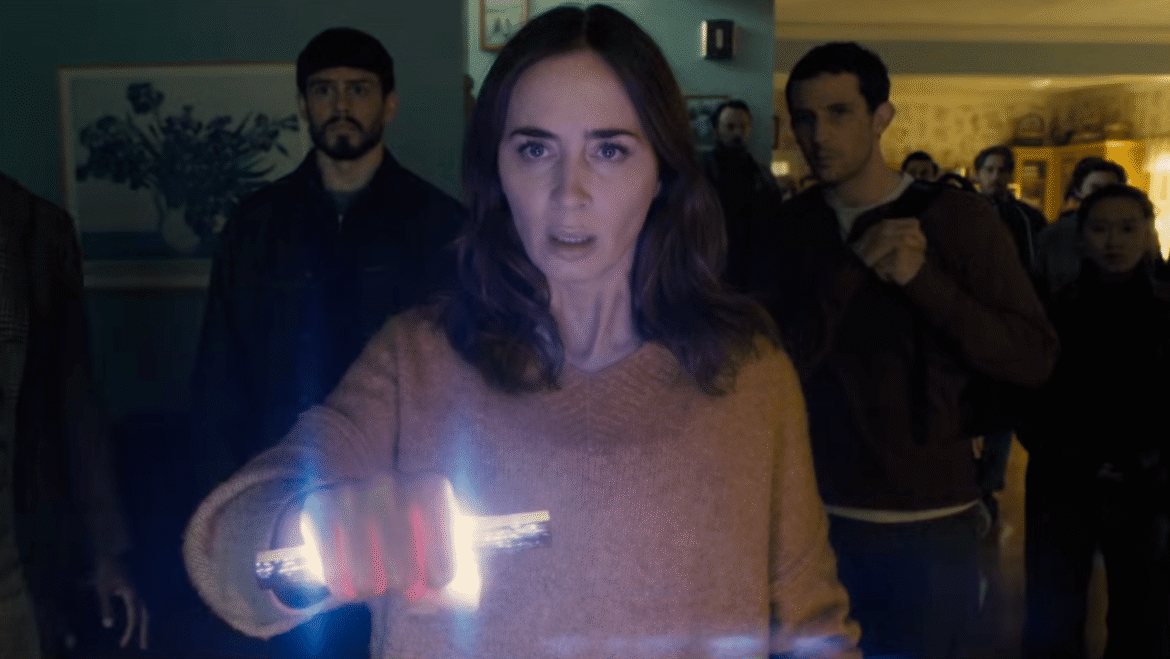
In Disclosure Day, Steven Spielberg returns to his oldest existential sandbox. Yet, this isn’t merely a retread of his lifelong fixation with cosmic neighbors; it is a mature, albeit strained, attempt to pivot from the wonder of first contact to a modern ethical quagmire. The driving question here is no longer are we alone? but rather: What happens the day after they arrive? How does humanity reckon with an “Other” that defies our biological and social paradigms?
The cosmos here functions as a thinly veiled mirror for our own earthly tribalism. Spielberg frames these extraterrestrial drifters as ultimate stand-ins for immigrants, minorities, and marginalized outliers—an ideological and humanistic touchstone rooted deeply in the director’s own mid-century upbringing.
Modern Anxieties and the Gates of Disclosure
The film operates as a dense cultural matrix, inviting audiences to parse its narrative through several contemporary entry points. On a sociopolitical level, it feeds directly into the zeitgeist, drawing a cynical line from Barack Obama’s cryptic UFO acknowledgments and Donald Trump’s farcical dismissals, to Elon Musk’s manic obsession with colonizing Mars. It positions itself as a critique of American hegemony and imperialist greed, where the infinite void becomes just another frontier for corporate plunder.
Concurrently, the film masquerades as a high-stakes whistleblower thriller. It introduces a central figure who channels the essential DNA of Julian Assange—a noble rogue weaponizing state secrets to give the public agency, or at least awareness, over their own destiny. Beneath this political scaffolding lies Spielberg’s trademark humanist soul, a worldview driven by grace and radical empathy, striving for reconciliation in a world otherwise dictated by zero-sum power dynamics and military dominance.
A Fading Vision Trapped in a Nostalgic Sandbox
Despite these lofty philosophical ambitions, Disclosure Day is hamstrung by a surprisingly flat, binary script that robs the narrative of moral ambiguity. While its premise is philosophically sound, the film stumbles into the classic trap of cinematic anthropomorphism. Spielberg’s imagination seems strangely limited here, rendering these alien visitors as distorted, less intelligent iterations of ourselves.
The mechanics of this cosmic contact feel jarringly antiquated, playing out like a 1970s sci-fi pastiche. The aliens communicate via clumsy parlor tricks—crop circles and apocalyptic countdowns broadcasted straight to a pristine, monolithic CNN, as if the world hadn’t evolved past the golden age of network television. For a film backed by an astronomical budget, Spielberg’s directorial toolbox feels overly familiar. Instead of taking a bold, avant-garde leap into a visionary madness, the maestro chooses to play it safe, leaving his once-razor-sharp imagination feeling slightly rusted.
The Long Gestation: This was no flash of sudden inspiration. Disclosure Day lived rent-free in Spielberg’s mind for over two decades. It was a lingering obsession he gradually chipped away at, accumulating 52 pages of existential anxieties on his phone notes before handing them over to his most trusted collaborator, David Koepp. This mark’s Koepp’s fifth outing with Spielberg (following Jurassic Park and War of the Worlds), cementing him as the director’s ultimate cinematic midwife.
Performance as Narrative Salvation
If the film’s linear plot threatens to flatline, it is resurrected by a powerhouse ensemble. Emily Blunt delivers a beautifully grounded performance as Margaret Fairchild, a meteorologist caught in the headlights of a cosmic reality far grander than her weather charts. Blunt excels at the slow burn, letting the terrifying gravity of the situation chip away at her composure in a way that feels utterly organic.
Josh O’Connor masterfully rejects the comfortable tropes of the Hollywood hero. As Daniel Kellner, he embodies the Assange-esque whistleblower with a frayed, self-destructive integrity, playing a man who knows he is destroying his own life for the greater good and doing it anyway. Meanwhile, Colin Firth delivers a chillingly precise exercise in bureaucratic coldness, perfectly capturing the institutional arrogance of a government more concerned with preserving its own monopoly on power than understanding the universe.
The Tactile Splendor of the Frame
Visually, the film is an absolute triumph of classical filmmaking. Spielberg and his longtime cinematographer, Janusz Kamiński, bypass digital sheen in favor of glorious 35mm celluloid, utilizing anamorphic lenses to give the frames a panoramic, mythic scale worthy of the cosmos. Digital cameras are relegated strictly to gritty, handheld sequences.
Kamiński drenches the film’s opening acts in a moody, neo-noir aesthetic, generating an underlying visual anxiety that keeps the audience perpetually off-balance. Tech purists will also relish the production’s commitment to practical effects. When cars smash and steel twists on screen, it carries the visceral, bone-rattling weight of real physics—a refreshing antidote to contemporary CGI fatigue.
Ultimately, Disclosure Day leaves us with a haunting question that faces the audience long after the credits roll: Is impeccable craftsmanship enough when the central vision has grown dim?
The auteur who practically invented the modern blockbuster with Jaws and redefined visceral combat in Saving Private Ryan feels intellectually cloistered here. The execution is flawless, but the ideas are vintage. Spielberg has built an immaculate, high-tech engine, but he has steered it directly into a dead end of safe, old-fashioned ideas.