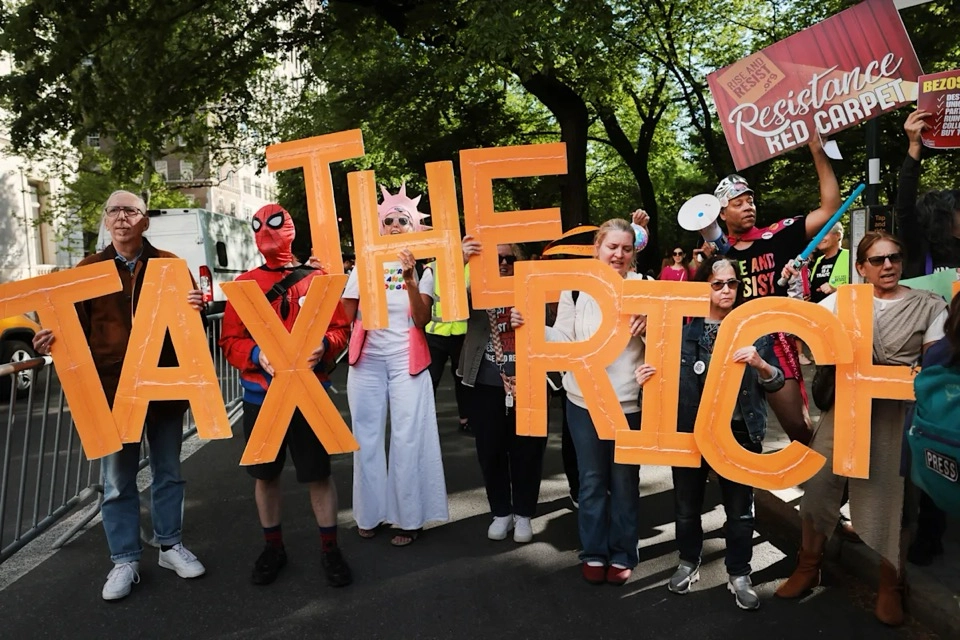
As the curtain rose on fashion’s most prestigious evening, the atmosphere outside the Metropolitan Museum of Art was anything but celebratory. While the elite of the entertainment and fashion worlds paraded up the iconic red steps, a vocal contingent of protesters gathered behind police barricades, their chants nearly drowning out the rhythmic clicks of paparazzi cameras.
The source of the unrest? The prominent involvement of Amazon founder Jeff Bezos and his wife, Lauren Sánchez, who served as honorary chairs and primary sponsors for this year’s gala.
A Night of Glitz Meets a Wall of Grievance
For many, the Met Gala is a sanctuary of art and high fashion. However, for the advocacy groups present, the billionaire’s patronage represented a “commercial takeover” of cultural spaces. Demonstrators held placards with slogans like “Labor is Art, Not Exploitation” and “The People Behind the Smile,” a direct nod to Amazon’s famous logo and long-standing controversies regarding warehouse labor conditions.
Highlights of the Protest:
• Symbolic Counter-Events: While the gala celebrated its official theme, activists organized a “Ball Without Billionaires” in the Meatpacking District, featuring a runway show modeled by frontline workers.
• Visual Protests: Guerrilla messages were projected onto nearby landmarks and even Bezos’ own Manhattan penthouse, calling for a boycott of what they dubbed “The Bezos Met Gala.”
• Creative Dissent: Some activists went as far as planting parody merchandise in the museum gift shop to highlight the disconnect between the event’s opulence and the struggles of the working class.
The Growing Divide
Despite the glitz inside, the presence of the tech mogul has sparked a broader debate within the industry. Critics argue that the gala, once a fund-raiser for the Costume Institute, is increasingly becoming a playground for the “ultra-wealthy” to polish their public image through “philanthropic branding.”
While Anna Wintour praised the couple’s “incredible generosity” in recent statements, the scene on the streets of New York told a different story—one of a deep-seated cultural friction between the world’s most powerful billionaires and the public’s perception of fashion’s true values.