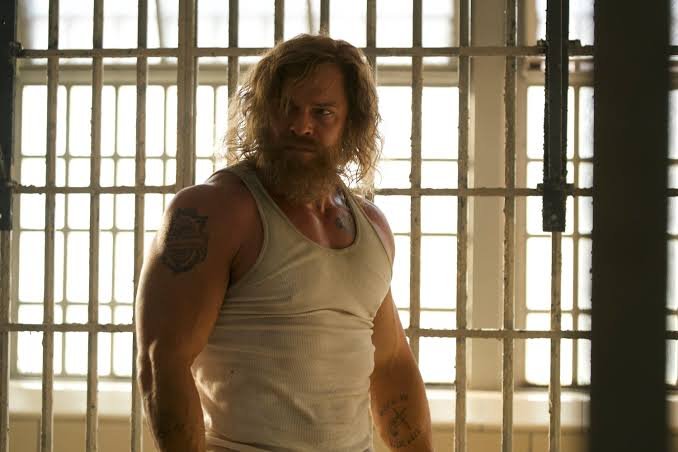
The neon-soaked streets of 1970s Michigan serve as the backdrop for Motor City, a revenge thriller that prioritizes visual flair over narrative substance. Directed by Potsy Ponciroli, the film attempts a daring cinematic experiment by stripping away almost all dialogue, leaving its lead actors to navigate a gritty underworld through physicality and silence. However, despite the committed presence of its stars, the project ultimately feels like a stylistic exercise that prioritizes artifice over emotional depth.
Alan Ritchson stars as John Miller, a blue-collar autoworker whose life is dismantled after being framed for a crime he didn’t commit. Upon his release from prison, Miller embarks on a silent, bloody mission to reclaim his life and rescue his former flame, played by Shailene Woodley.
A Gimmick in Search of a Story
The defining characteristic of Motor City is its near-total lack of spoken words. While the concept of a wordless action film is intriguing—recalling recent experiments like Silent Night—the execution here often feels labored. The film relies heavily on a saturated soundscape and a propulsive rock score curated by Jack White to fill the silence. While the music provides a gritty, period-accurate atmosphere, it occasionally smothers the performances rather than enhancing them.
Without dialogue to ground the character motivations, the plot falls back on the most familiar tropes of the revenge genre. The “wronged man” narrative and the “distress” of the female lead are presented with little variation, making the 100-minute runtime feel overstretched.
Performances Under Pressure
Alan Ritchson, known for his imposing physical presence in Reacher, handles the action choreography with brutal efficiency. He is a formidable screen presence, and his ability to convey Miller’s simmering rage through silence is a testament to his growth as a performer. However, the script gives him little to work with beyond scowls and tactical movements.
Shailene Woodley is tasked with playing Sophia, a role that unfortunately remains largely reactive. Despite Woodley’s inherent talent for bringing nuance to her characters, the “silent” format limits her to an object of desire and a catalyst for the male characters’ conflict. Her inconsistent motivations are a byproduct of the film’s refusal to allow its characters to speak, leaving her feeling like a shadow in her own story.
Critical observations include:
• The Villainous Turn: Ben Foster delivers a performance of flamboyant excess as the drug lord Reynolds. With a wardrobe of garish 1970s patterns and a menacing stillness, he provides a sharp, albeit stereotypical, contrast to Ritchson’s stoicism.
• Visual Direction: The cinematography by John Matysiak is undeniably beautiful. The film captures the industrial decay and late-night glow of Detroit with a lurid, comic-book aesthetic that is consistently engaging to look at.
• The Action Peak: The third act features a standout sequence in an elevator that stands as the film’s creative high point. It is a masterclass in close-quarters choreography, highlighting the visceral brutality that the rest of the film occasionally lacks.
Style Over Substance
Ultimately, Motor City struggles to justify its experimental format. While it successfully avoids the pitfalls of clunky exposition, it replaces them with a narrative hollowness. The “silent” gimmick feels less like a narrative necessity and more like a hurdle that the film is constantly trying to jump over.
By the time the final shell casing hits the floor, Motor City leaves the audience with the impression of a high-end music video expanded into a feature film. It is a bold attempt at genre-defying storytelling that is worth watching for the stylized visuals and Ritchson’s physical prowess, but it remains trapped by the very clichés it tries to reinvent.
As a stylistic exercise, it is impressive; as a human drama, it remains stuck in neutral.