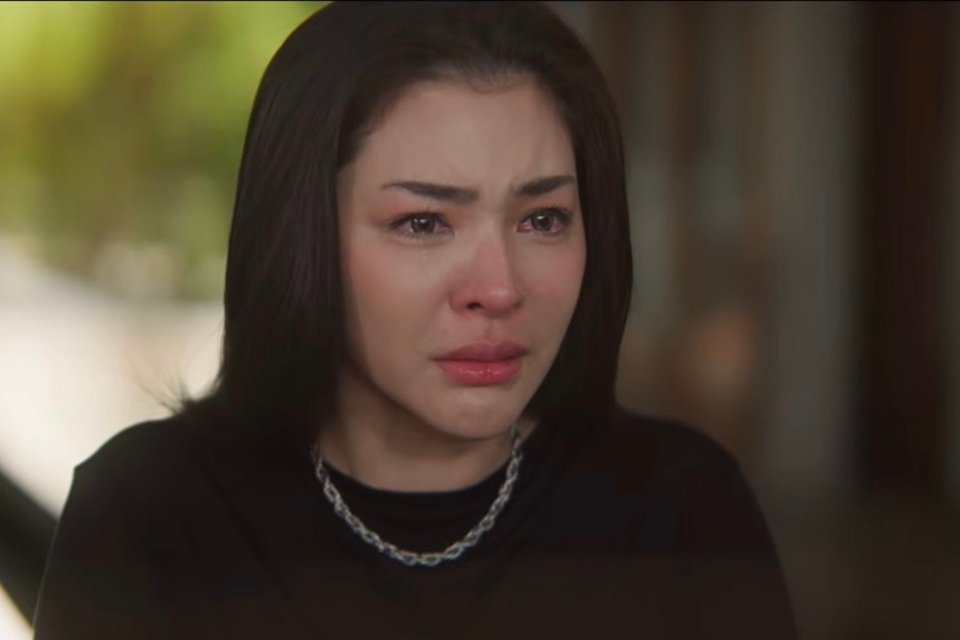
At a time when golden opportunities are multiplying and doors are swinging wide open across both fanbases and commercial markets for the GL/BL (Girls’ Love/Boys’ Love) phenomenon, even an exceptional artist can stumble due to flawed strategic planning or the absence of skilled management to navigate fierce competition. This exact scenario has recently played out in the career trajectory of Thai star Faye Peraya.
When Faye Peraya’s star ascended a few years ago, she was akin to a buried diamond suddenly unearthed-a refined talent who had long lacked the mainstream recognition commensurate with her raw skill. Her emergence as an Asian lead generated a swift global footprint, positioning her as a rare commodity in terms of market impact.
However, that momentum, earned after the breakout success of Blank The Series, was not fully leveraged to sustain her promising trajectory. Her follow-up choice, starring in Broken (of) Love, ultimately diminished her star equity rather than expanding her global reach.
How did Peraya lose footing this year following the massive high of Blank?
To understand her career trajectory, one must examine her background. Before Blank The Series introduced her to an international audience, Faye Peraya Malisorn was already a household name in Thailand, though in a vastly different arena. Prior to entering the GL domain, she was a prominent public figure and a headliner in the modeling and pageant circuits, along with appearances in traditional Thai television dramas (Lakorns).
The Pre-GL Footprint
Peraya captured the Miss Grand Thailand title in 2016, one of the country’s most heavily followed pageants. She represented Thailand at Miss Grand International 2016, securing the second runner-up spot and cementing her image as a high-profile media personality across Asian and Middle Eastern beauty markets.
Capitalizing on her stature, she transitioned into top-tier modeling, gracing covers of international fashion titles in Thailand and walking major runway weeks.
Commercial endorsements and television hosting roles followed, establishing her face in mainstream media well before her dramatic acting career fully materialized.
In 2017, she inked an acting contract with Channel 7 HD, one of Thailand’s major free-to-air networks, appearing in prime-time Lakorns such as Massaya, Hak Klieng Klon, and Charn Saneha.
Despite these high-profile broadcasts, she was frequently cast in supporting or antagonist roles (N’Rae). While industry insiders respected her technical ability, she was rarely positioned as a top-billed leading lady until Blank.
Blank fundamentally altered her trajectory, shifting her status to a global main lead and building an extensive international GL fan community.
Deconstructing the Shift: “Broken (of) Love” vs. “Blank”
The critical dampening surrounding Faye Peraya Malisorn’s reception in Broken (of) Love compared to her breakout performance in Blank The Series stems primarily from script execution, production choices, and directorial missteps beyond her core performance skills.
Nevertheless, as the primary anchor for the project’s marketing and brand equity, the miscalculation on the property ultimate rested on her shoulders.
1. Troubled Script and Overused Tropes
- The “Blank” Blueprint: Based on a novel by a popular author with an established readership, the source material offered complex pacing and multi-layered character arcs. Peraya was handed the role of Khun Nueng’a carefully constructed persona featuring emotional restraint, pride, and underlying vulnerability. This structure gave her room to display nuanced facial expressions and micro-expressions that drew critical acclaim.
- The “Broken (of) Love” Execution: The primary vulnerability of the series lies in its screenplay. The narrative heavily relies on exposition over dramatization (telling rather than showing), informing the viewer of backstories and conflicts rather than allowing them to unfold organically on screen. Unconvincing narrative turns-such as a mother suddenly revealed to be alive late into a revenge setup-diluted the emotional stakes.
- Furthermore, the writing leaned heavily into traditional Lakorn melodramatic tropes. Dialogue lacked subtext, favoring elevated emotional outbursts that made the performance feel forced compared to her prior understated work. The characterization of Arisa (played by Peraya) was fragmented; she was assigned a scattershot array of traits (corporate executive, race car driver, equestrian, boxer) without deep development in any single dimension. Additionally, the narrative burden of reveal and emotional weight was placed disproportionately on co-star Atom Pariya, depriving Peraya’s character of an organic discovery arc.
- Despite these narrative stumbles, the project merits acknowledgement for its explicit intent to highlight issues surrounding violence against women through serious themes and grounded depictions.

2. On-Screen Chemistry and Casting Dynamics
- The “Blank” Formula: The runaway success of Blank relied heavily on the organic on-screen chemistry between Peraya and her co-star Yoko Apasra. Despite debate regarding casting suitability due to youthful aesthetic contrasts, their dynamic delivered a palpable connection that drove the show’s global appeal.
- The ‘Broken (of) Love’ Realignment: In Broken (of) Love, the pairing with Atom Pariya Piyapanopas struggled to generate that same unscripted emotional resonance. As a result, both romantic and confrontational beats felt mechanical, affecting viewer retention early in the run. The stylistic contrast between Peraya’s grounded presence and Atom’s softer performance failed to yield the necessary screen tension.
- Given that Peraya served as a producer on the project via her own company, casting decisions may have been influenced by internal strategy. In dynamic-driven genres like GL, romantic chemistry serves as the narrative engine; if one half of the pairing lacks alignment or mechanical synergy, the overarching property struggles to hold viewer engagement.
- A notable exception occurred in the fifth episode, where Peraya drew praise for a intimate sequence executed with technical precision and emotional authenticity. The scene generated over 17 million views on YouTube alone, earning widespread engagement across social platforms as a benchmark sequence within the sub-genre. This moment proved crucial in maintaining core audience loyalty by demonstrating her underlying performance capabilities.

3. Directorial Guidance and Pacing Issues
- Broken (of) Love lacked the precise directorial framing required to balance heavy emotional sequences. Accelerated plot transitions forced the cast into exaggerated expressions to convey high stakes, which translated on screen as performance friction. Over-reliance on wide-angle lenses, dark color grading, and heavy musical cues applied to underdeveloped dramatic beats further impacted the final polish.

4. Independent Production Constraints vs. Studio Development
- Blank benefited from a longer development runway, including extensive actor workshops and dynamic-building prep prior to principal photography. Conversely, Broken (of) Love faced a rushed production schedule aimed at capitalizing on market momentum, which manifested in uneven lighting quality, camera placement, and scene framing.
- This expedited timeline falls under the responsibility of the project’s production house, Fabel Entertainment, owned by Peraya. While specific budget figures were not publicly disclosed, the project was positioned as a mid-to-high budget independent production within its category.

5. Genre Positioning and Audience Segmentation
- ‘Blank The Series’: Built on accessible romantic themes, age-gap dynamics, and universal relationship conflicts, Blank possessed an easily digestible narrative arc for cross-cultural audiences. The show emphasized direct emotional beats and gradual relationship development, creating ideal short-form content for platforms like TikTok and Instagram, driving algorithmic reach without requiring heavy contextual translation.
- ‘Broken (of) Love’: The production intentionally departed from conventional romance formats, pivoting toward a darker revenge thriller narrative featuring corporate power plays, family secrets, and psychological twists. This genre shift distanced the project from broader GL demographics that favor lighter romantic narratives. The focus on intricate plotting reduced the space dedicated to relationship development, targeting a narrower niche and producing fewer viral, stand-alone clips for organic social marketing.
Ultimately, instead of delivering a highly shareable commercial product, the series produced a complex psychological narrative, trading mainstream social media reach for specialized genre experimentation.

By the Numbers: Commercial Performance
The contrast between Blank The Series and Broken (of) Love illustrates the difference between an established studio-backed project and an artist-owned independent venture:
- Viewership Metrics: Blank The Series achieved global saturation, exceeding 200 million cumulative views on YouTube across its run. In contrast, Broken (of) Love averaged between 10 to 15 million cumulative views across its episodic releases on the official company channel.

Synopsis & Narrative Framework
Broken (of) Love is a Thai GL romantic revenge drama centered on Arisa, a woman consumed by grief and driven to avenge the death of her parents. She targets Chang Wei Ling, a powerful business executive whom she holds responsible for her family’s downfall.
To execute her plan, Arisa attempts to dismantle Wei Ling’s corporate footprint by targeting her most valuable connection: her daughter, Lalin. However, complication arises when Arisa unexpectedly develops genuine feelings for Lalin, creating a central conflict between her pursuit of retribution and her emotional allegiance. As the narrative progresses, long-buried truths regarding the past emerge, revealing that her revenge was constructed on incomplete information.
Cast and Production Profile
- Arisa: Portrayed by Jenny, navigating the central revenge arc and internal conflict.
- Lalin: Portrayed by Faye Peraya, playing the daughter caught in the emotionally complex dynamic.
- Chang Wei Ling: Portrayed by Nat, playing the formidable corporate executive.
- Supporting Cast: Features Fluke and Kik in secondary roles driving the core plot progression.
- Production House: Produced by Fabel Entertainment, an emerging Thai production entity focused on youth-oriented digital content and GL properties, distributed primarily via direct-to-consumer digital platforms for domestic and international markets.