Tech experts and health specialists are highlighting ergonomic vertical mice as an effective solution for computer users suffering from chronic hand strain and nerve fatigue during long working hours.
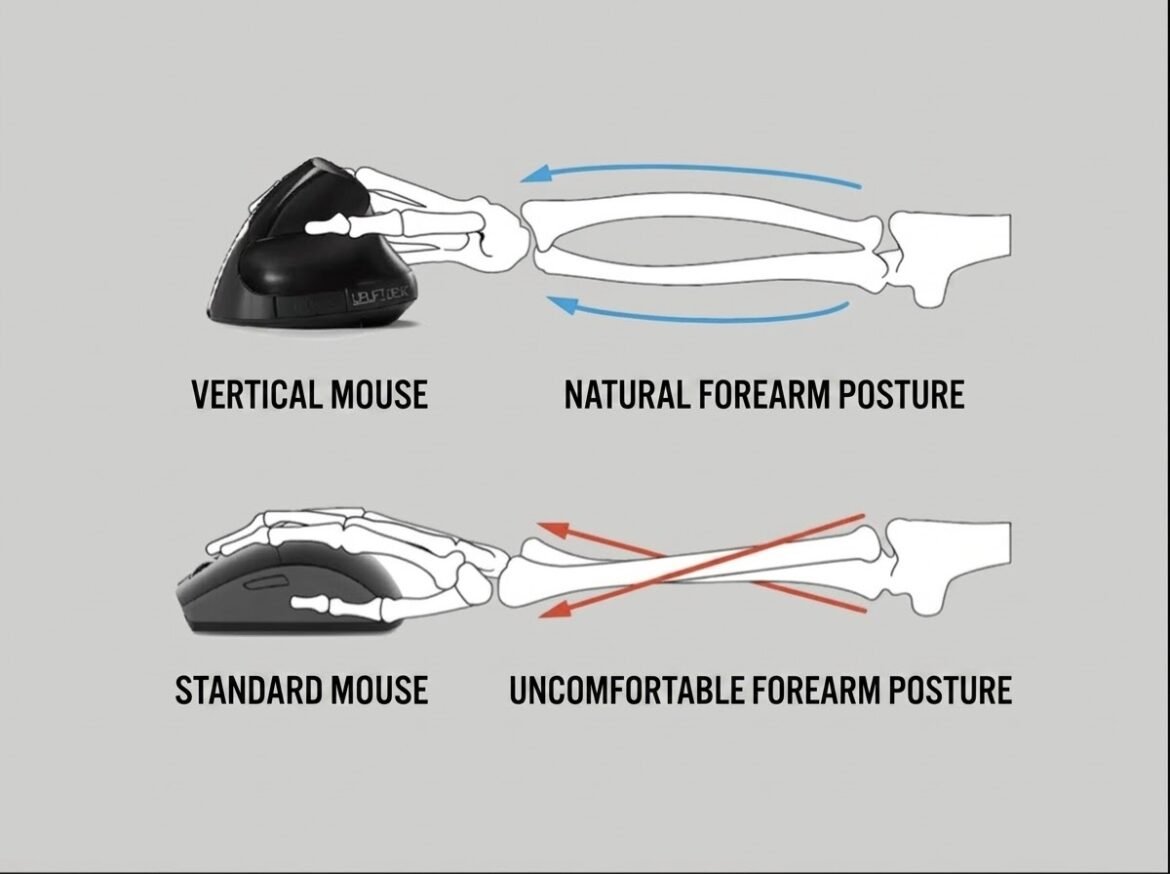
Standard computer mice force the forearm into an inward twist, known as forearm pronation, to keep the palm flat against the desk. Over time, this unnatural posture places continuous tension on the muscles and nerves of the wrist, forearm, and shoulder, often leading to nerve inflammation and discomfort.
In response, vertical mice introduce an alternative design angled at roughly 70 degrees. This placement allows the hand to rest in a natural “handshake” position, preventing the radius and ulna bones in the forearm from crossing or placing pressure on one another.
While flagship models like the Logitech MX Vertical lead the market in performance, technology advisors suggest trying entry-level alternatives first to gauge comfort. Budget-friendly options, such as the RAPOO EV310M, offer a similar ergonomic shape, enabling users to test the vertical grip style before committing to higher-end investments.