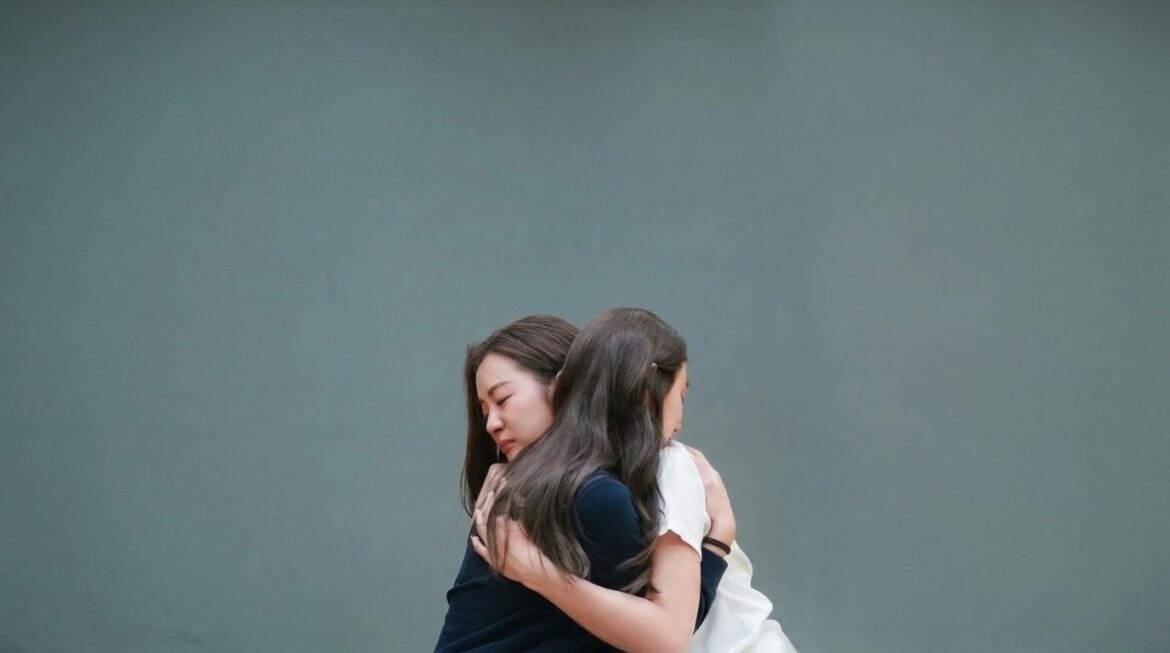
There is a strain of romance that requires no crescendo to be heard, nor any ostentatious display of passion to compel belief—a romance that quietly diffuses into the heart, deriving its elegance from the minute expanse between two glances, from a fleeting tremor of hesitation before a confession, and from a hand extended solely to reassure another. It is as though love, in its sublimest form, is less a impulse toward possession than a quiet yearning for the other’s well-being. This is the artistry of subtle nuances, where tenderness stands not as the antithesis of fervor, but as its most luminous expression; where tranquility assumes the grace of devotion, and solace becomes a testament that seldom demands articulation.
From this sanctuary, the Thai series My Safe Zone approaches love—not as a ephemeral spark of attraction, but as a sentiment exquisitely sculpted in stillness. It unfolds between a lingering familiarity and the shadows of a past departure, between a heart defined by patient endurance and another that realizes, only in retrospect, that its lifelong quest was anchored right beside it all along.
In the dynamic bridging Alin and Jean, romance springs less from the thrill of discovering a stranger than from the profound rediscovery of a cherished presence—from awakening to the truth that the very closeness we take for granted may harbor depths of emotion we simply lacked the audacity to name.



My Safe Zone carves its distinct niche within romantic narrative cinema through the exquisite delicacy with which it approaches intimacy. This softness is not predicated on the complete absence of anguish or conflict, but rather on the poignant juxtaposition of vulnerability and grace, of quiet reproach and the enduring vow to remain, of the dread of repeated betrayal balanced against the fragile hope that this same soul might grant us a renewed sanctuary. Here, the safe zone ceases to be a mere physical retreat when the world grows overburdened; it manifests as a human presence in whose light we may shed our armor, casting aside caution to embrace authenticity without fear that our fragility will ever be deemed a burden.

Yet when gentleness becomes an aesthetic and narrative compass, it inevitably prompts a critical inquiry no less vital than its charm: Does the work truly succeed in translating this emotional serenity into a structurally cohesive portrayal of a relationship? Or do certain passages merely rely on the inherent magic of proximity and the magnetic chemistry between its leads? Between these two horizons lies the analytical realm of My Safe Zone—a realm where love invites earnest contemplation, not for being loud or inherently extraordinary, but because it endeavors to whisper that some emotions need not astonish us so much as they need to grant us the serene assurance that we are, at last, safe.
In the following lines, we dissect the artistic elements of the show, from narrative construction and scriptwriting, through visual aesthetics and direction, to performance, exceptional chemistry, and sound design, before offering a nuanced take on the narrative missteps that mar its overall structure.

First: Dramatic Structure..
The Philosophy of the Rebound and Healing Through Love
The show’s dramatic framework grounds itself in the concept of the “Safe Zone” as a philosophical anchor to frame its conflict. The script avoids treating the idea as a hollow title or a simplified romantic trope, framing it instead as a core human necessity born from accumulated traumas and setbacks.
The narrative architecture splits into two primary axes that merge to serve this theme:
- External Collapse and Internal Vulnerability: Represented by Alin, a photographer returning from a bruising stint in New York laden with professional and emotional failure. The teleplay masterfully constructs Alin’s world as a fragile glass house; her radiant, polished exterior in fashion photography conceals deep psychological vulnerability and a terrifying fear of loss and societal rejection.
- Quiet Containment and Silent Resilience: Embodied by Jean, who serves as the objective correlative for stability and peace. The script refrains from painting Jean as a flawless archetype; she is a character who understands herself and accepts her history, making her uniquely equipped to serve as a haven that catches what remains of Alin without imposing moral or intellectual judgments. She receives her with a long-standing desire to shelter and reassure her.

The Necessity of the Rebound and the Inevitability of Healing via “Alternative Love”
The narrative advances a bold, controversial stance on psychological transition, asserting that Alin’s immediate dive into a rebound relationship is not a superficial rebound, but a psychological imperative to uproot the scars of an older wound.
Alin was never going to recover quickly or move past her former bitterness through isolation or passive waiting. Healing from a past love required love itself, even if sourced from a completely different vessel with an entirely different set of emotional tools.
The series legitimizes the successful rebound as an effective mechanism for recovery and catharsis, positioning Jean’s presence as the driving force that extracts Alin from her lingering trauma loop. This dramatic framing restores credibility to alternative relationships, emphasizing that deep emotional trauma often demands a parallel, positive emotional presence to displace the past rather than serve as a mere temporary substitute.

Second: Cinematography and Direction.. Visual Poetry and Spatial Symbolism
The production crafts a distinct visual identity heavily reliant on non-verbal body language and spatial symbolism to push the narrative forward, dodging the wordy dialogue tropes that often plague regional television dramas.
The directorial vision excels in utilizing framing and space to project internal emotional states:
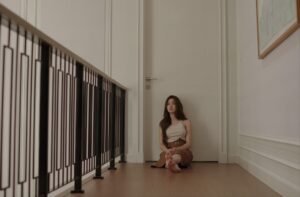
- Tight vs. Open Framing: In early episodes, Alin is consistently framed in claustrophobic compositions, behind glass reflections, or trapped within harsh shadows to visually emphasize her sense of entrapment and dread of vulnerability. Jean, by contrast, is bathed in warmer tones within open spaces, signaling her self-acceptance.
- Spatial Symbolism of Doors and Partitioning: The staging makes impressive use of architectural elements to physically embody psychological barriers. A standout sequence features a closed door physically separating both characters as they sit back-to-back against it. Beyond its aesthetic polish, the visual composition functions as an eloquent representation of their emotional gap—and their desperate desire for connection despite the fear of confrontation.


Third: Performances and Chemistry
The show anchors itself entirely on its lead duo, Lorena Schuett and Natcha Deechamroenkalapiwat (affectionately dubbed “LenaMiu” by the fan base).
Both deliver restrained, minimalist performances that rely heavily on micro-expressions over broad physical melodrama.
- Lena Lorena Schuett (Alin): Delivers a layered performance balancing outward pride with internal collapse. She shines brightest in silent beats, using subtle eye movements and hesitant pauses before speaking to convey a character perpetually bracing for impact.
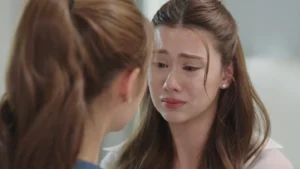

- Miu Natcha Deechamroenkalapiwat (Jean): Brings a composed, grounding presence that imparts emotional weight without slipping into detachment. Playing the anchor, her grounded reactions serve as a stabilizing force against her co-star’s anxious spirals.

The Explosive Lead Chemistry
The chemistry between Lena and Miu transcends conventional actor dynamic, forming the core engine of the entire series.
This dynamic generates warm emotional tension through brief glances and fleeting physical contact without needing heavy dialogue. There is an unforced synergy and mutual performance trust on display; Miu’s receptive body language responds seamlessly to Lena’s tentative shifts in real-time.

This exceptional chemistry lends authenticity to the quick-turnaround recovery arc, convincing the audience they are witnessing a genuine emotional convergence rather than a scripted romance.

Fourth: Soundscape and Original Score
The sound design plays a carefully calibrated role in sustaining the show’s contemplative mood. The score avoids pushing emotional beats artificially, opting instead to linger quietly in the background to complement moments of dialogue or silence.
The instrumentation leans heavily on delicate strings and understated piano arrangements, heightening the sense of intimacy and isolation.
The aesthetic framework is further anchored by the standout main track, “Safe Near Me,” performed by lead actress Lena Lorena Schuett. The direction treats the track not as a commercial tie-in, but as an organic sonic mirror to the protagonists’ internal evolutions. The track blends delicate piano melodies with warm string arrangements and a tender vocal delivery that captures the show’s core thematic spine: the dread of abandonment balanced by the sanctuary found in another.

Fifth: Critical Shortcomings and Flaws
Despite its visual maturity and emotional intelligence, a thorough critical examination highlights several structural flaws that hold the series back from total narrative execution:
- Pacing Slumps: Despite a concise eight-episode run, the narrative hits a noticeable slump in its midsection (specifically episodes five and six). The plot circles the same internal conflicts without uncovering new character dimensions, spending extended screen time reiterating Aline’s anxieties in repetitive fashion, which stalls dramatic momentum ahead of the climax.

- Undercooked Supporting Cast: The script channels almost all its energy into the lead duo, treating the surrounding ensemble as afterthoughts. Secondary figures—such as colleagues and friends—function as flat narrative devices used to drop exposition or advice, lacking distinct motivations or arcs of their own, leaving the world around the leads feeling thin.

- Rushed Climax and Convenient Resolutions: The finale stumbles into a rushed resolution when resolving long-standing emotional baggage. Traumas built up over eight years are tidied up too neatly; the narrative opts for quick emotional fixes to secure a crowd-pleasing ending, undercutting the psychological rigor established early on.

- Didactic Monologues: While the series relies heavily on silence and subtle visual cues, it occasionally stumbles into heavy-handed exposition. Certain scenes feature characters directly spelling out their psychological motivations through analytical monologues, trading poetic subtlety for explicit explanation as if doubting the audience’s ability to read between the lines.

Conclusion
My Safe Zone marks a notable step forward for soft-toned romantic and psychological drama. Its genuine achievement lies in its willingness to chart emotional healing through visual poetry, cinematic language, and quiet restraint, stepping away from standard melodramatic tropes to offer a compelling case for recovery through comforting alternative bonds.
Even with its pacing hitches, underwritten subplots, and a hasty final act, the series stands as a worthy entry—one that understands how to transform physical and emotional spaces into a canvas for exploring human vulnerability, asking a timeless question: How do we build our own sanctuary in a world full of collapse?