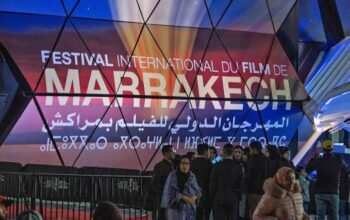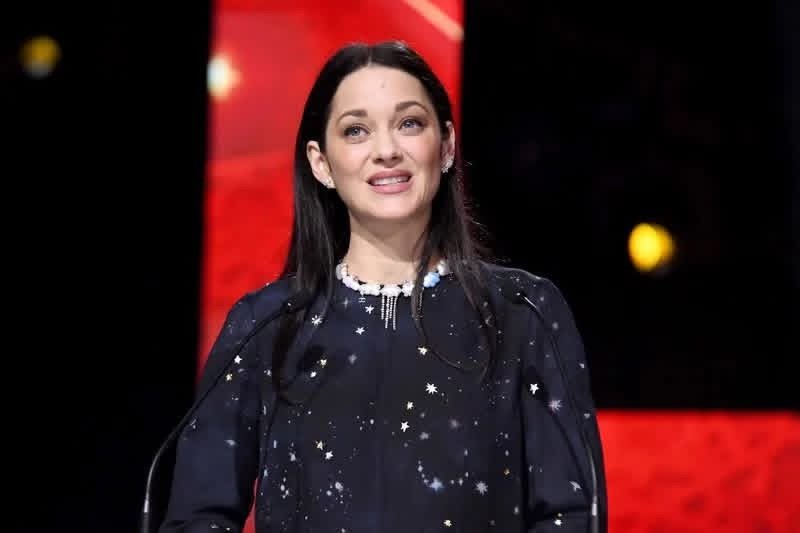
The opening night of the 23rd Marrakech International Film Festival on Friday evening, November 20, at the Palais des Congrès was far more than a red-carpet parade.
It carried the unmistakable pulse of a cinematic wager: looking past marquee glamour toward unearthing fresh voices and sparking an intergenerational conversation among storytellers.
Between the sweep of world cinema and a strong Moroccan presence, the Red City launches nine days of screenings and creative encounters anchored by a slate of 76 films from 39 nations.
French screen icon Marion Cotillard commands the spotlight—not merely as a headline opening-night guest, but as president of the official competition jury.
Beside her sits an ensemble of eight filmmakers shaped by distinct aesthetics and trajectories: Tunisian director Kaouther Ben Hania, Danish actor Claes Bang, Luxembourgish actress Vicky Krieps, Franco-British actress Emma Mackey, French actor and director Gilles Lellouche, British filmmaker Andrew Haigh, Franco-Senegalese director Ramata-Toulaye Sy, and Moroccan director-producer Saïd Hamich Benlarbi.
Addressing the ceremony, Cotillard voiced her gratitude to King Mohammed VI and Prince Moulay Rachid, commending the warmth of the reception and hospitality.
She underscored the festival’s role as a sanctuary for cinema and a launchpad for emerging directors bringing debut works to wider audiences, echoing the official competition’s commitment to first and second narrative features.
Fourteen works vie for the Golden Star in a curation that elevates rising voices and places them in dialogue with seasoned figures across acting, directing, and producing.
Rather than reducing selection to a hierarchy of prizes, the competition becomes a vital meeting ground where fledgling visions cross paths with established international auteurs.
The programming reflects striking geographic and artistic range, featuring ten world premieres across the official competition, gala screenings, Horizons, The 11th Continent, and Panorama of Moroccan Cinema, alongside youth and family showcases and tribute screenings.
Morocco’s footprint goes well beyond playing host, with 11 Moroccan films woven across sections and three additional titles lensed in the kingdom.
Panorama of Moroccan Cinema reclaims essential ground to spotlight domestic diversity, while neighboring strands open windows onto Arab, African, and global cinemas, sketching a wide cartography of contemporary production movements and narrative registers.
To set the curtain rising, the festival selected American filmmaker Jesse Eisenberg’s Mona, starring Julianne Moore, Paul Giamatti, Halle Bailey, and Colton Ryan. Screening within the gala lineup that pairs international cinema figures with high-profile titles, the opener blends familiar screen magnetism with Eisenberg’s directorial sensibility.
Yet some of the festival’s deepest impact unfolds beyond the screening rooms through the Atlas Workshops, which shepherd projects in development and connect directors and producers with industry collaborators.
Twelve films in this edition’s official selection have drawn support from the workshops.
Ultimately, the measure of this 23rd edition lies not only in its title count or star wattage, but in how deftly it links the heritage that built cinema with the voices charting its next chapter.
By drawing the global film community to Marrakech, the festival also takes on the charge of turning visibility into tangible production avenues, talent discovery, and cinephile engagement that treats cinema as more than passing spectacle—a promise the coming days will put to the test.