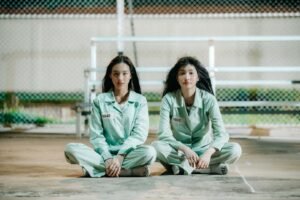
Not for the faint-hearted, ClaireBell is an unquestionable cinematic achievement—a gritty, adrenaline-fueled tour de force that no other GL series dares to emulate, let alone match in artistic ambition. From its opening minutes, Mine Media Production’s latest offering eschews cheap thrills and fleeting romance, plunging headfirst into a high-stakes psychological drama where affection is withheld and survival is paramount.
Narrative Architecture
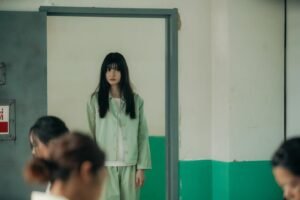
Steeped in the oppressive gloom of penal incarceration and sharp socio-economic divides, the narrative operates as both a psychological thriller and a raw survival saga. The series kicks off with Bell, a meek young woman devoted to caring for her ailing father, whose life is upended during a police raid at a high-society party, leading to her wrongful arrest on drug possession charges. The script’s true brilliance lies not in this twist of fate, but in its scathing critique of systemic privilege embodied by her boyfriend, Top. The son of a powerful politician, Top represents a brand of cowardly male entitlement; rather than demonizing him as a caricature, the writing frames him as a spineless figure collapsing into self-flagellation and addiction, articulating a haunting truth: love that fails to protect is merely an illusion.
Bell’s transfer to prison shifts the dramatic engine from personal grief to brutal self-preservation. Here, the screenplay deftly constructs the prison ecosystem as a microcosm of society at large, complete with institutional corruption, power abuse, and hierarchical brutality enforced by the “3D” gang led by Didi. Amid this suffocating atmosphere stands Claire—an isolated inmate serving a lengthy sentence after taking the fall for a homicide to protect her sister. Dubbed a “Mad Dog” for her fierce volatility, Claire becomes the polar opposite anchor to Bell’s vulnerable meekness.

Resisting the easy trap of instantaneous romance, the narrative crafts a slow-burn emotional evolution rooted in mutual psychological transformation. Bell does not fall for Claire merely as a knight in shining armor, but rather discovers Claire’s shattered humanity beneath her fierce exterior. This dynamic culminates in a poignant, pivotal sequence in the finale: Bell sits alone on the steps of her ex-boyfriend’s house, eating noodles after orchestrating a calculated scheme that leaves him taking the fall for her drug charges and burning his mansion to reclaim her real freedom. It is a stunning visual metaphor for a victim shedding her passivity to claim absolute agency.
Performances and Visual Authenticity
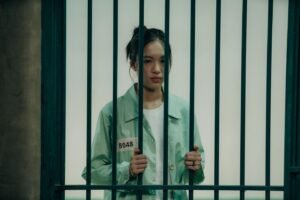
Director Jeen Prach Rojanasinwilai deserves tremendous credit for stripping away the polished commercial gloss and heavy filters that typically define Thai television. Presenting the lead actresses entirely barefaced, the lens captures every raw pore, exhaustion line, and unglamorized sob with brutal intimacy. Far from a cosmetic gimmick, this choice grounds the performances in stark authenticity. Yet, Rojanasinwilai gracefully balances this grit with a breathtaking dream-wedding sequence in Episode 5, satisfying classic aesthetic expectations while deepening the audience’s emotional investment.

The chemistry between the leads relies on unspoken glances and weighted silence. Playing Claire, the lead delivers a physically grounded performance marked by heavy steps and a guarded, predatory gaze. Conversely, Bell’s journey is mapped physically—moving from hunched, timid postures to an erect, unwavering presence. The intimate beats between them are stripped of sensationalism, framed instead as two broken souls clinging to warmth in a frozen environment. This excellence extends to the supporting ensemble, notably Didi, whose subtle shift from ruthless inmate to a soul seeking moral redemption adds palpable texture to the prison community.

Cinematography and Production Design
Visually, the series draws inspiration from neo-noir and modern Korean thrillers. The cinematographer utilizes muted, desaturated tones and heavy shadows to evoke claustrophobia. Diffused natural light piercing through iron bars and narrow corridors instills a stark realism. Dynamic handheld camerawork during prison altercations pulls the audience directly into the fray, while romantic beats lean on slow camera movements and deep focus, isolating the duo from their hostile surroundings.
Furthermore, the custom-built sets supervised by actress-producer Davika Hoorne and Ter Chantavit lend the space a tactile, architectural weight. The prison never feels like a theatrical stage, but rather a suffocating monument of concrete and steel pressing down on its occupants.





Directorial Pacing and Intimate Choreography
Spanning a tight eight episodes, Rojanasinwilai maintains an unrelenting tension, employing sharp cliffhangers that propel the narrative forward without falling into episodic filler. If there is a flaw, it lies in the frantic pace of the closing act. While Claire and Bell’s arc receives a fully realized payoff, Didi’s redemption and several logistical resolutions feel slightly rushed—a narrative crunch that might have benefited from a ten-episode order. Nevertheless, the editing seamlessly bridges visceral violence and quiet emotional tenderness, exemplified by the now-celebrated library scene.

The romantic sequences remain grounded and deeply authentic. Rather than courting cheap titillation, the intimacy reflects a desperate emotional need between two traumatized figures. A key landmark arrives in Episode 5 with a bold, unprecedented inclusion of an explicit scissoring scene—a groundbreaking leap for Thai drama. The sequence is brilliantly juxtaposed against the cold, coercive encounter between Warden Vichai and inmate Dao. Warm, balanced lighting on Claire and Bell highlights genuine equality, while cold, shadowy tones expose institutional exploitation.



Soundscape and Score
The musical score avoids manipulative melodrama, opting instead for subtle electronic textures and dark orchestral harmonies that underline isolation and danger. Immersive sound design—clanking iron gates, echoing footsteps, and hollow corridors—serves as an active narrative layer. These elements are complemented by a curated soundtrack featuring Violette Wautier’s emotional rendition of “Starlight,” Yellow Fang’s “I’m A Feeder,” and tracks from independent Thai artists, capped off by an arresting opening title sequence that signals the show’s radical departures from mainstream norms.

Flaws in Episode 6
The series narrowly misses perfection due to two jarring directorial missteps in Episode 6 that strain narrative credibility. First, during a pivotal assault sequence, the director initially builds suspense through audio cues—the unbuckling of a belt and rustling fabric. However, when the camera pulls back as the victim reaches for scissors, the teacher appears fully clothed with a zipped belt, while the student remains impeccably arranged, instantly deflating the dramatic stakes through poor continuity. Second, Claire’s instantaneous sobriety upon receiving her sister’s distress call relies on a tired melodramatic trope, ignoring the physical reality of intoxication for narrative convenience.

Conclusion
Ultimately, ClaireBell stands as a courageous artistic gamble for Mine Media Production. While inviting comparison to international prison dramas like Orange Is the New Black or Wentworth, the series carves out its own distinct identity by embedding human vulnerability within a fierce critique of class corruption, abortion taboos, and systemic sexual violence. Refusing to offer facile fairy-tale resolutions, the finale rewards its protagonists with something far more profound: emotional peace and a clean slate. ClaireBell is not merely a romance set behind bars; it is a landmark statement on resilience, reclaiming one’s voice, and discovering light in the darkest of places.