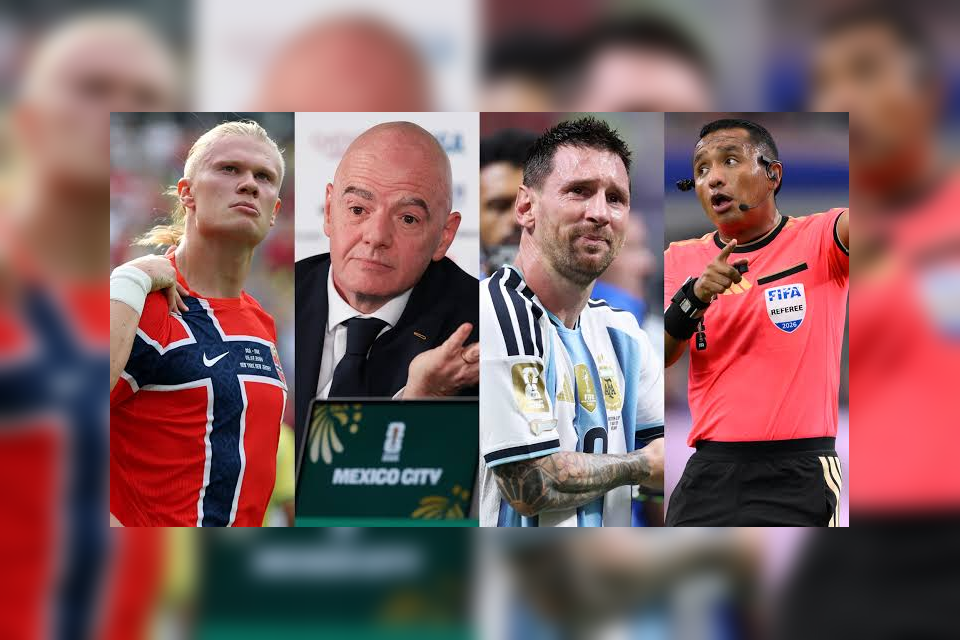
As the expanded 48-team FIFA World Cup 2026 draws to its ultimate conclusion with a blockbuster final scheduled between Spain and Argentina at MetLife Stadium, the tournament has already provided plenty of drama, high-stakes narratives, and definitive career turns. From tactical masterpieces to agonizing underperformances, the tournament has clearly defined its biggest winners and losers on the global stage.
Egypt’s Historic Pharaohs Conquer the Global Stage
Among the most spectacular success stories of this expanded tournament is the Egyptian National Team, which emerged as the ultimate dark horse of the 2026 World Cup. Under inspired leadership and flawless tactical organization, the Pharaohs defied all oddsmakers by embarking on a historic run deep into the knockout stages, capturing the hearts of football fans worldwide. Egypt’s fearless performances against traditional European and South American heavyweights proved that African football is no longer just competing, but actively dominating on the world stage. Their historic achievement has elevated Egyptian football to unprecedented heights, making them the absolute biggest winners of this tournament.
Spain’s Tactical Evolution and Defensive Masterclass
Luis de la Fuente’s Spain team has arguably been the most impressive side of the entire tournament, maintaining an unbeaten streak that has now matched the historic record of 37 matches. Their semi-final triumph—a commanding 2-0 victory over rivals France—demonstrated both defensive steel and offensive fluidity. Anchored by a phenomenal midfield and a solid defense that kept six clean sheets throughout the tournament, La Roja has proved that possession-based football can still coexist with incredible defensive resilience.
The Historic Consistency of Argentina
The defending champions, led by the eternal Lionel Messi, have proven that their winning mentality remains completely unshakeable. By securing a 2-1 victory over England in a highly charged semi-final in Atlanta, Argentina reached consecutive World Cup finals. Having already captured the 2021 Copa América, the 2022 World Cup, and the 2024 Copa América, the Albiceleste are now on the verge of becoming the first international team to win four straight major tournaments.
FIFA President Gianni Infantino’s Hollywood Misstep
In a scathing analysis of the tournament’s cultural footprint, The Hollywood Reporter positioned FIFA President Gianni Infantino among the event’s prominent losers. The entertainment publication highlighted how Infantino’s aggressive push to “Hollywood-ize” the tournament backfired significantly. By prioritizing celebrity-stuffed VIP suites, heavily commercialized pop spectacles, and a focus on entertainment over authentic sporting tradition, the FIFA administration faced intense backlash from both purists and match-going fans. According to industry critics, Infantino’s strategy to treat the historic tournament primarily as a glitzy American media product ended up diluting the soul of the sport, leaving the governing body’s leadership looking increasingly out of touch with real global football culture.
Christian Pulisic and the USMNT’s Missed Opportunity
For the co-hosts, the tournament was supposed to be a historic home-soil celebration and a career-defining moment for Christian Pulisic. Touted for nearly a decade as the face of American soccer, Pulisic unfortunately failed to deliver under the brightest of lights. He struggled to make a lasting impact, finishing the tournament with a solitary assist across four games before an injury forced him off early in the decisive knockout clash against Belgium.
Marcelo Bielsa and South American Giants Bowing Out Early
The tournament was not kind to several historic heavyweights. Uruguay, managed by Marcelo Bielsa, suffered a highly publicized tactical breakdown that saw them exit much earlier than anticipated. Similarly, Brazil found themselves struggling to make the most of their elite talents, particularly failing to maximize the peak years of stars like Vinícius Júnior, culminating in another disappointing tournament cycle for the Seleção.