As the Asian Girls’ Love (GL) genre surges globally, a bitter clash over Episode 7 of ‘Moonshadow‘ highlights the volatile tension between creative freedom and passionate online fandoms.
The Asian drama industry—particularly the rapidly expanding Girls’ Love (GL) sector—is experiencing unprecedented global momentum and heightened audience engagement. Yet, as viewership numbers soar, fandom fervor has intensified in tandem, placing creators under an unforgiving industry microscope where every plot turn and scene composition is dissected in real time.
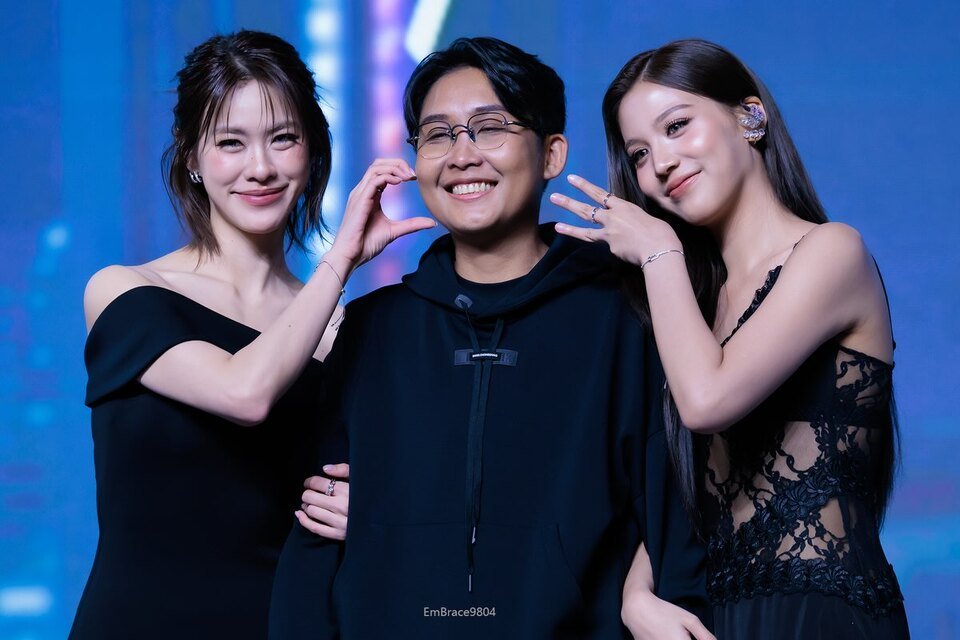
That volatile dynamic erupted into a full-blown public crisis over the past 48 hours following the release of Episode 7 of Moonshadow Series. Tensions between a sizeable segment of the show’s fanbase and director Fon Kanittha Kwunyoo escalated rapidly, culminating in the filmmaker issuing an explicit public statement on social media to address a wave of aggressive backlash and targeted direct messages.
Roots of the Rift: What Triggered the Episode 7 Backlash?
The immediate outcry was no isolated incident; rather, it was the climax of brewing audience expectations colliding head-on with the narrative trajectory chosen for Episode 7. Industry analysts and viewers point to three primary catalysts behind the fan outrage:
- Overbearing Family Drama: Episode 7 pivoted sharply toward intense domestic trauma and authoritarian conflict, focusing heavily on the harsh treatment and psychological distress inflicted by Chan’s mother upon Key. A large section of viewers argued that this sudden slide into darkness degraded the core romantic tone expected from the series.
- Diminished Lead Screen Time: Fans voiced intense frustration over the allocation of significant runtime to secondary character disputes, claiming it came at the direct expense of screen time and romantic development between the central leads, Chan and Key.
- Passive Characterization and Scripting: Critics within the fanbase targeted the writing, arguing that Chan’s passive stance in the face of her mother’s cruelty weakened her character arc, leaving the storyline reliant on formulaic dramatic cliches centered on miscommunication and a lack of agency.
When Critique Turns into Personal Attacks
As disappointment spread across social platforms, constructive narrative critique quickly degenerated into organized digital campaigns—ranging from hostile trending hashtags to direct messaging—targeting the director and production staff.
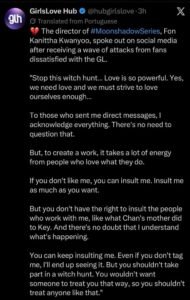
In response to the influx of hostile messages, the media account GirlsLove Hub shared a translation of director Fon Kanittha Kwunyoo’s public statement addressed directly to the incensed fanbase.
Opening her message with a call to halt mob action, Kwunyoo stated:
“Stop this witch hunt… Love is so powerful. Yes, we need love and we must strive to love ourselves enough…”
Acknowledging the barrage of private messages filling her inbox, the director made it clear that viewer grievances had been received:
“To those who sent me direct messages, I acknowledge everything. There’s no need to question that.”
Emphasizing the heavy labor and passion required behind the scenes of television production, she noted:
“But, to create a work, it takes a lot of energy from people who love what they do.”
While expressing a willingness to absorb personal criticism as the head of the creative vision, Kwunyoo offered a blunt response to her detractors:
“If you don’t like me, you can insult me. Insult me as much as you want.”
However, the filmmaker established a strict boundary regarding her crew and cast, drawing a direct parallel between the hostile online behavior and the toxic dynamics depicted in the show itself:
“But you don’t have the right to insult the people who work with me, like what Chan’s mother did to Key. And there’s no doubt that I understand what’s happening.”

Concluding her statement, Kwunyoo addressed indirect attacks and vagueposting, reminding the audience of fundamental digital ethics:
“You can keep insulting me. Even if you don’t tag me, I’ll end up seeing it. But you shouldn’t take part in a witch hunt. You wouldn’t want someone to treat you that way, so you shouldn’t treat anyone like that.”
The Volatile Fandom Phenomenon and the Dilemma of GL Content
The Moonshadow controversy opens a wider conversation regarding the delicate ecosystem of niche television drama. Audiences of GL series display exceptionally high levels of emotional investment in character dynamics, which explains the sharp blowback when a plot diverges from fan expectations. The incident illustrates how valid narrative feedback—such as concerns over pacing or screen time—can rapidly escalate into organized cyber-bullying. Furthermore, it underlines the ongoing dilemma directors face in niche genres: balancing high-stakes dramatic conflict against audience demand for consistent, conflict-free romance.

Looking Ahead
The fallout surrounding Moonshadow represents a defining moment in the evolving relationship between Asian drama creators and global fandoms. Fon Kanittha Kwunyoo’s statement serves as a line in the sand between legitimate artistic discourse and online harassment. As future episodes roll out, the television industry will be watching closely to see whether the production adjusts its narrative pacing to placate vocal viewers or remains steadfast in its original creative vision.