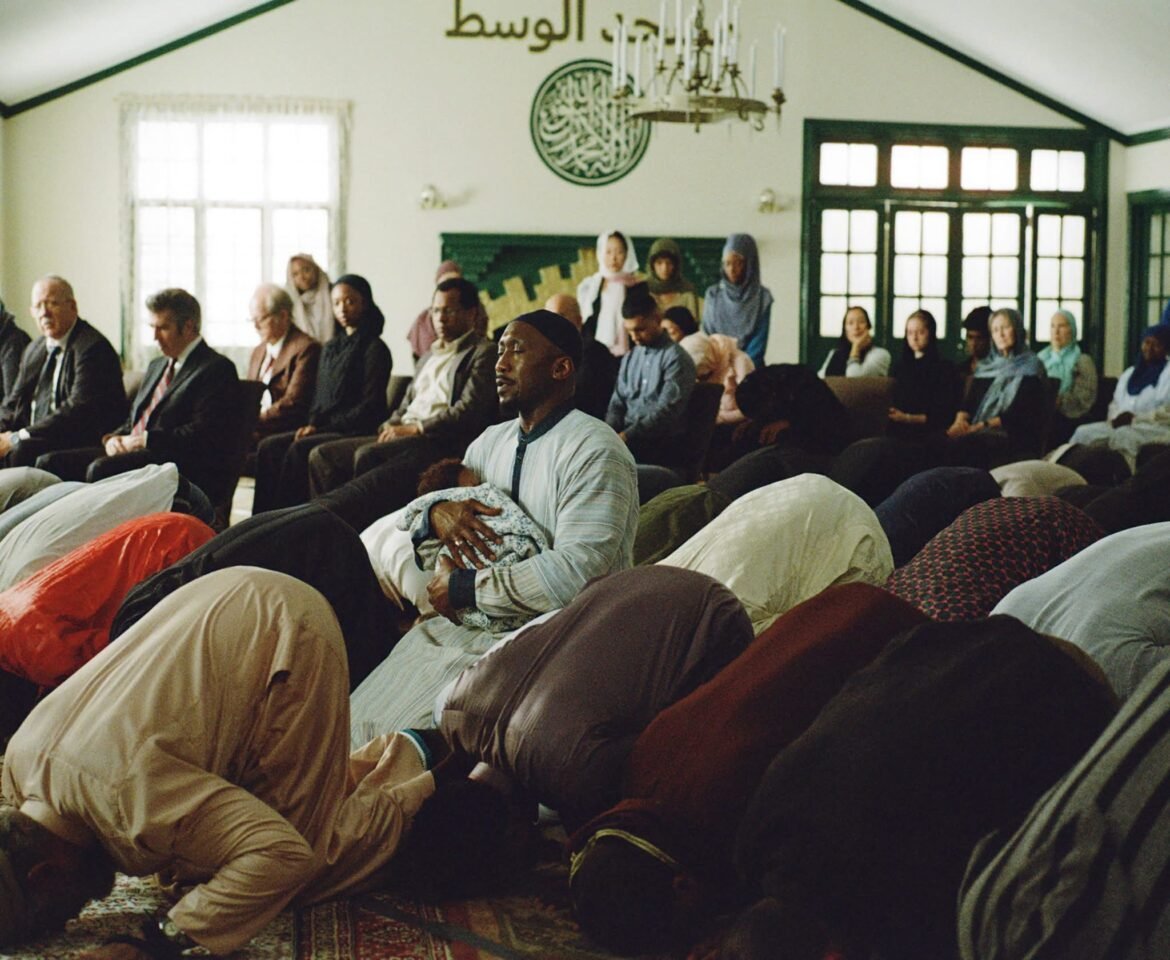
Where standard action thrillers usually revel in body counts and slick revenge motifs, director Bassam Tariq’s “Your Mother Your Mother Your Mother” asks a far more haunting question: how does a man trained in taking lives learn to sustain them? Premiering at the Toronto International Film Festival, this ambitious Houston-set feature subverts the hitman-on-a-final-job trope, turning what could have been a routine genre exercise into a soulful, faith-infused drama about fatherhood, loss, and spiritual accountability.
A Hitman Confronts Domestic Chaos
Mahershala Ali delivers a remarkably grounded lead performance as Lateef, a devout Muslim hitman navigating an impossible dual existence.
Balancing lethal contract kills with daily prayers, Lateef’s compartmentalized world shatters when his wife dies unexpectedly.
Left as a single father to three children—including a newborn infant in desperate need of nursing—he is simultaneously squeezed by his employer for one last assignment.
Instead of embarking on a crusade for vengeance, Lateef finds himself utterly ill-equipped for the quiet chaos of domestic life. The film’s central irony hits hard: a man who can eliminate a target in seconds is paralyzed by a crying baby or the task of explaining grief to his young daughter.
Maternal Echoes and Faith
Taking its title from the famous Hadith emphasizing maternal primacy, Tariq avoids superficial religious dressing, using the phrase as a thematic anchor.
The absent mother haunts every frame—in the children’s longing, in the frantic search for infant formula, and in Lateef’s realization of his own domestic inadequacy.
The screenplay eschews melodramatic flourishes, grounding its emotional weight in mundane routines like home-schooling, meal prep, and diaper changes.
Ali Commands a Soulful Performance
Ali is the beating heart of the film. Playing Lateef with a quiet, exhausted dignity, he communicates immense guilt and vulnerability through physical posture alone.
Watching him pivot seamlessly from lethal precision to clumsy tenderness with his kids provides both subtle humor and poignant sorrow.
John Cho turns in a compelling supporting turn as an extremist pastor, creating an intriguing ideological mirror to Lateef as both men grapple with how faith can be corrupted into a justification for violence.
Atmospheric Craft and Narrative Ambition
Visually, cinematographer Katelyn Arizmendi captures Lateef’s internal turmoil by juxtaposing crisp, brutal action sequences with dreamlike, contemplative frames during prayer and reflection.
The score by Son Lux elevates the tension, transforming combat scenes into chaotic, ritualistic beats rather than glorified violence.
While the film occasionally overstuffs its narrative with superfluous side characters and subplot threads, its sheer ambition and refusal to offer neat moral redemption keep it compelling.
Ali delivers one of his most nuanced performances in years, anchoring a film that courageously insists that the hardest battle a man can fight isn’t against his enemies, but within his own home.