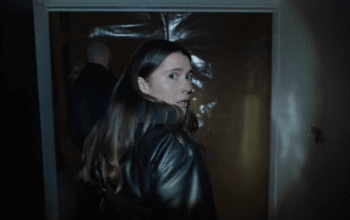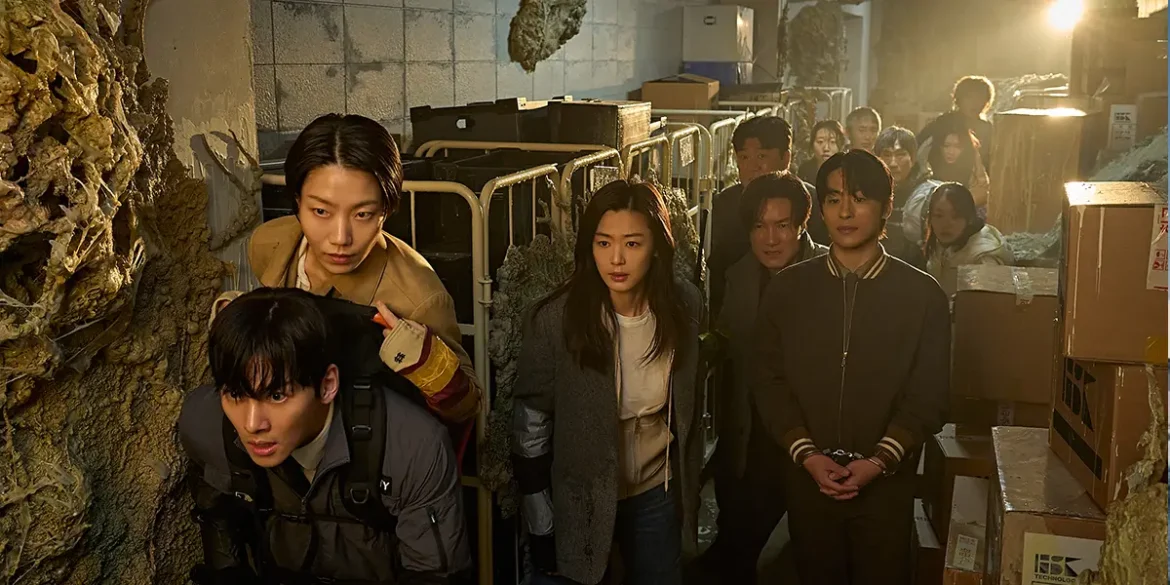
At the world premiere of the South Korean film GUN-CHE (internationally titled Colony) in the Midnight Screenings section of the Cannes Film Festival, the stakes were incredibly high for director Yeon Sang-ho. Audiences and critics alike arrived with the haunting memory of his iconic masterpiece Train to Busan, eager to see what new life he could breathe into a zombie genre that has felt largely over-saturated and redundant for the past decade.
Emerging from Salle Agnès Varda, GUN-CHE proved itself to be far more than a conventional horror flick. It is a visually and philosophically striking reinvention of zombie lore, though it left critics sharply divided—sparking immense praise for its technical innovation, yet leaving many yearning for deeper emotional substance.
The “AirDrop” Evolution and the Redefinition of Terror
The film’s absolute trump card lies in its screenplay, co-written by Yeon Sang-ho and Choi Gyu-seok. The infected here are no longer the mindless, lumbering horde driven by primal hunger; instead, they have evolved into a “colony” possessing a sophisticated collective intelligence, communicating instantly through a network that feels terrifyingly akin to a biological AirDrop. This brilliant twist shifts the narrative from traditional body horror to a techno-psychological thriller. These creatures coordinate strategies, and their tactical intelligence accelerates exponentially as their numbers grow, moving as a single, cohesive entity.
This visual ingenuity is masterfully elevated by Julian Pascal’s immersive sound design. Rather than relying on cheap jump scares, the film forces the audience into the heart of the quarantine lock-up. Every sickening crunch of bone, every wet tear of flesh, and every sudden scuffle in the claustrophobic corridors resonates with jarring realism. This sonic dread seamlessly complements the brilliant choreography of the stunt performers. It is best epitomized in harrowing set-pieces—like the mutated creatures fusing together into a literal human pyramid to scale the walls—injecting a breathless kinetic energy that bypasses an over-reliance on green-screen CGI.
The Communication Dilemma: Philosophy Consumed by Action
Beneath the visceral chaos, the film unearths a biting social commentary. The monsters succeed and evolve precisely because they have eradicated individuality to operate as a harmonious hive mind. Humans, by contrast, disintegrate because they treat survival as a ruthless individual competition. Selfishness, paranoia, and slamming doors in the faces of the terrified are what ultimately doom humanity inside the compound, far more than the virus itself.
Herein lies the film’s thesis statement, spoken by one of its characters: “Incomplete communication is the source of all tragedy.” Yet, in a cruel twist of irony, the film itself falls victim to this very line. While Yeon Sang-ho succeeds in staging philosophical ideas and jaw-dropping combat, the script fails to establish a “complete communication” with the audience on an emotional frequency.
The narrative’s most glaring flaw is the thin characterization of its human protagonists. The relentless rush toward high-octane set pieces and hallway standoffs occasionally reduces the film to a beautifully engineered video game—where the viewer simply progresses from one level to the next. Despite solid, grounded performances by Gianna Jun and Koo Kyo-hwan, we are rarely given the breathing room to truly invest in their plight. Consequently, the sacrifices and tragic demises in the final act lack the devastating, soul-crushing human weight that made Train to Busan an emotional juggernaut.
The Verdict
GUN-CHE (Colony) represents a massive technical leap forward for K-Zombie cinema—a visceral, fast-paced, and meticulously crafted commercial ride tailor-made for the biggest screens. It offers genuine conceptual novelty and undeniable technical maturity. However, in its frantic race for adrenaline, it sacrifices a piece of its human soul. It remains a top-tier midnight movie, even if it falls just short of becoming an enduring dramatic masterpiece.