Four Elements: The Fire occupies an exceptional position within the landscape of contemporary Thai drama aimed at the Girls’ Love (GL) audience. This installment was not merely a transient continuation of a series addressing the four natural elements, but formed a stylistic turning point and a critical vision entirely distinct from its predecessors. While previous segments relied on a calm poetic rhythm and a gradual emotional construction consistent with the nature of water, earth, and air, this chapter arrived as a dramatic explosion embodying the nature of the fourth element with all its combustion, destruction, and reconstruction. The creators chose to step outside the comfort zone of traditional romantic drama, daringly entering the spaces of complex psychological drama where inherited traumas intersect with class conflicts and emotional manipulation.
The creators’ gamble was not to appease the audience by offering an idealized love story with spotless characters, but to present an experience that deconstructs the concept of toxic relationships and explores how a harsh family environment can shape malevolent or defensive mindsets in individuals. This approach transformed the work from a mere niche entertainment piece into material for psychological analysis on how Asian drama navigates complex psychological issues and emotional recovery from past scars.

To professionally unpack the series, it must be placed within its historical and genre context in Thai drama productions. For years, this genre remained confined to rigid frameworks relying on themes of innocent love, minor obstacles, and rapid emotional harmony, with a primary focus on light comedy or romance. However, The Fire clearly signals a complete rupture with these inherited clichés, pushing the narrative into an interplay with psychodrama and dark family drama. The writing demonstrates narrative maturity, accommodating advanced concepts such as gaslighting, conditional affection, and intergenerational trauma. The plot is no longer driven by simple tropes like love at first sight, but by a complex engine fueled by suspicion, manufactured hostility, and revenge. These themes directly inform character behavior, offering viewers a tense, demanding experience that requires keen attention to the underlying motives of every action taken by the protagonist.
Narrative Deconstruction and Dramatic Structure
Conflict of Inherited Trauma
The narrative arc launches from a central spark: absolute distrust and severe familial friction. The plot builds on a complex subplot where financial interests intersect with psychological distress. The protagonist, Phai, emerges wrapped in a cocoon of fear and harshness, a result of persistent indoctrination by her aunt, Banni, claiming that Phai’s father is being exploited and that Kra-pao is merely an opportunistic woman seeking control of the family fortune. This narrative framework sets up a dual conflict: an external battle between Phai and Kaprao, and an internal conflict where each character grapples with their own illusions and truth.
The screenplay exhibits an asymmetric pacing; direct confrontations and intense verbal and physical clashes cascade heavily across the initial episodes. Rather than building gradually in the conventional manner, the script throws the viewer into the center of the fire from frame one. While this narrative strategy succeeds in maintaining constant tension and suspense, the relentless intensity emotionally exhausts the audience, lessening early sympathy for Phai, who initially appears excessively impulsive and aggressive.

The second narrative pillar focuses on unmasking the villainy embodied by Aunt Banni. The script gradually reveals that true malice is not always overt, often disguising itself under the guise of familial care and deceptive advice. This progressive exposure gives the story its genuine dramatic depth, shifting the struggle from a clash between two leads into a joint battle to break free from years of oppressive matriarchal control.

Character Analysis
A psychological breakdown of the lead characters reveals a meticulously crafted narrative model that avoids simplistic characterizations. Phai represents the psychological profile of a traumatized, perpetually threatened individual. Her aggression, explosive outbursts, and urge to hurt others serve merely as defense mechanisms rooted in a deep fear of abandonment and betrayal. Brainwashed and manipulated from a young age, she views the world through a stark black-and-white lens. Her harshness toward Kaprao is ultimately a mirror of her inability to confront her own vulnerability and inner turmoil.

On the opposing pole stands Kaprao, representing resilience, calm, and inner fortitude. Yet this composure is not merely a moral virtue, but also the product of accumulated suffering and resignation to an imposed reality. Kaprao’s endurance of Phai’s cruelty stems not from weakness, but from a sense of moral obligation and a desire to protect the family.
This dynamic demands close attention: how quiet endurance evolves into a formidable force capable of reshaping aggression into love and protection. Recognizing this dynamic elevates the evaluation of the series, where the effort in writing and direction is unmistakably clear. The psychological development of the central pair on screen is neither effortless nor abrupt; it unfolds through a volatile journey marked by frequent setbacks. The scenes in which Phai reexamines her actions upon discovering the truth represent the peak of emotional performance, as her psychological defenses crumble to reveal raw vulnerability and heartbreak. This transformation from burning flame to illuminating light forms the philosophical core of the screenplay.

The Nostalgic Impact of Familiar Faces
The appearance of Din and Rose in this final chapter was far from a token cameo for the franchise’s stars; it was a strategically sound move with tangible impact. Having cultivated significant audience goodwill and comfort across previous installments, their presence provided an emotional anchor amidst the anxiety-laden atmosphere of The Fire. From a marketing standpoint, the production house leveraged their appearance to interconnect the franchise universe, guaranteeing the engagement of a loyal fanbase while boosting viewership and digital media traction.
Dramatically, their scenes served as a necessary counterweight to the overarching severity. Their familiar presence offered a reassuring hint that stability remains possible after turmoil, symbolizing emotional maturity and providing a well-earned respite for the audience following the intense clashes between the leads.
Speaking of the franchise’s ensemble, one of the cleverest and most amusing visual touches occurs when circumstances force the leads of The Fire to wear the exact outfits worn by Lom and Princess Catherine in the Air installment. This deliberate wardrobe repetition served as a playful directorial homage to loyal viewers, skillfully tapping into nostalgia and unifying the narrative universe. Far from being a mere fan-service gimmick, this visual nod heightened viewing pleasure, offering a lighthearted breather that cut through the fiery tension while cementing the shared aesthetic identity of all four leads.

Balanced Comedy and De-escalation of Tension
Despite the sharp, high-octane drama dominating The Fire, the filmmakers demonstrated exceptional skill in weaving comedic moments that serve the characters’ psychological development. Far from being cheap comic relief or forced insertions, the humor was intelligently crafted as an emotional breathing room amidst the blazing conflict. The screenplay relied on situational comedy and sharp wit stemming from the stark contrast between Phai’s stubborn pride and the unexpected, sarcastic reactions of Kaprao and the supporting cast. This precise timing and delicate balance between fierce confrontation and swift banter highlight the maturity of the writing and direction, preserving the show’s gravity as a heavy psychological drama while infusing realism and charm into the character relationships.

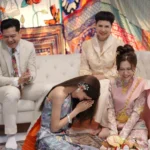
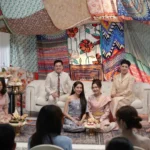
The real thrill escalates starting from Episode 7, specifically with the love confession scene that marks a pivotal turning point in the dramatic trajectory. In these moments, we witness a pair terrified of rejection and loss cautiously drawing closer in a highly sensitive, emotionally charged sequence that makes heartbeats almost audible to the viewer. Much of the credit for this intimacy goes to the character design and their complete lack of prior romantic experience; both navigate these emotions for the first time, wavering between confusion, excitement, and an overwhelming desire to embrace their partner passionately. These delicate details create the emotional peak of the story, executed with commendable craft to deliver a deeply satisfying visual and emotional experience.

Visual Direction: Embodying Fire through Image and Color
The artistic success of The Fire cannot be detached from the directorial vision of Director Kittisak Cheewasatjasakun. The direction translated the title element into a cohesive visual language through scenography, lighting, and frame composition. The color palette relied heavily on warm tones—dusty orange, deep red, and glowing yellow—particularly during verbal face-offs or emotional tension. Even within interior set designs, warm wooden textures and dim lighting evoke a sense of internal combustion and suffocation. Conversely, as truths emerge and emotional healing begins, cooler tones and open natural light seep into the frame, signaling a semiotic shift from the hell of conflict to the openness of understanding.
The camera movement aligned seamlessly with this approach. In confrontation scenes, the director favored extreme close-ups and handheld camerawork to instill anxiety and heighten the sense of psychological claustrophobia felt by the characters. The framing was deliberately unsettling—a conscious stylistic choice designed to immerse the viewer directly into the emotional turmoil rather than keeping them as a neutral observer.
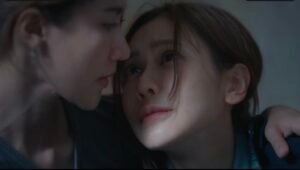
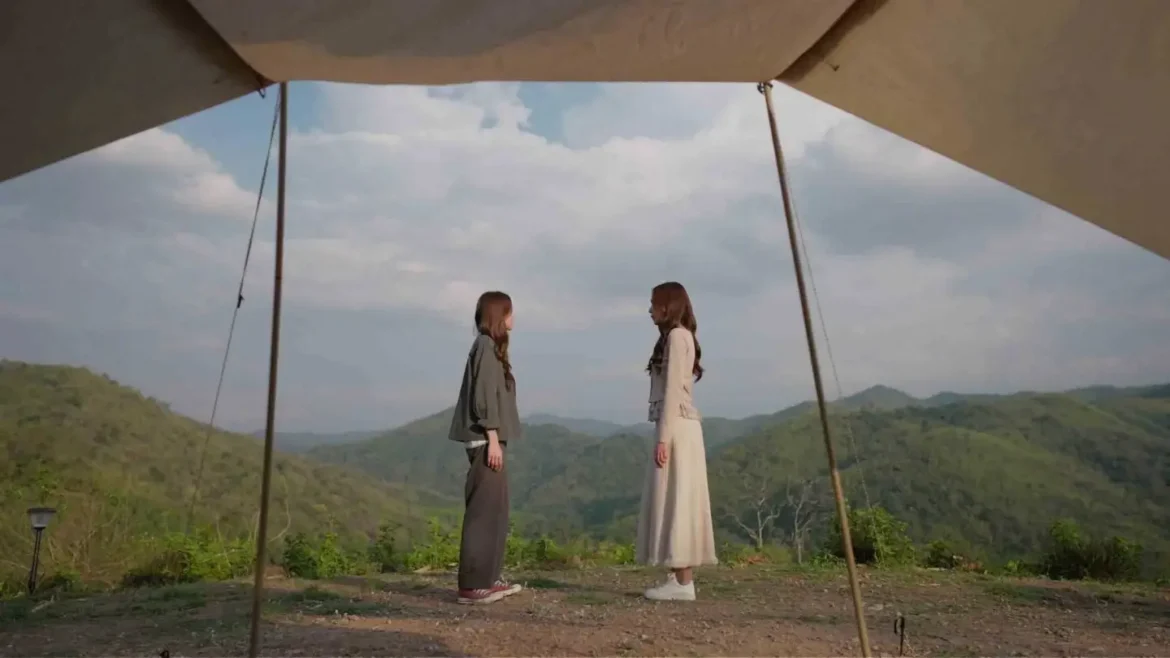
However, despite meticulous attention to visual identity and the aesthetic appeal of the two leads, the production suffered from rare missteps where details were overlooked. This is evident in the mountain camping scene where Phai sits near Kaprao right before the latter confesses her feelings; a sudden close-up reveals prominent blue veins on Phai’s neck. This intrusive framing detracted from the visual polish expected of a lead character in a romantic scene, breaking the poetic intimacy of the moment.
Another notable technical oversight lies in the direction of young actress Milin Dokthian. Despite her promising presence across the first three installments, her starring role revealed directorial oversight during her first major camera confrontation. This flaw appears glaringly in Episode 1, where the actress breaks the fourth wall by looking directly into the camera lens—a elementary technical error indicating a lack of precise guidance from the director, who should have required a retake to preserve the cinematic illusion.

Performances
The acting of Milin and Kanteera formed the foundational bedrock of the series. The project demanded high dramatic caliber given the volatile emotional shifts and negative energy in the first half, transitioning into vulnerability and warmth in the second.
Milin, playing Phai, delivered a dynamic two-part performance. In the initial episodes, her portrayal was intensely physical, relying not just on a raised voice but on full body language to express distress: rapid breathing, darting eyes, and tense shoulders. She successfully presented her character as an explosive bundle of emotions bursting at the slightest friction. While her harshness alienated a segment of the audience, it demonstrated a thorough understanding of psychologically disturbed characters. In the second half, her tearful expression and sorrowful eyes authentically conveyed the agony of postponing her happiness with Kra-pao until her family troubles were resolved.

Conversely, Kanteera as Kaprao delivered a nuanced performance reliant on silent gazes and restraint. Her strength lay not in loud reactions, but in absorbing hostility and transforming it into moments of quiet, defiant grief. The chemistry between the two leads was palpable in joint scenes requiring swift transitions from overt hostility to non-physical attraction—a shift demanding high trust and synchronization to feel authentic.
Among the supporting cast, Prima Ratchata as Aunt Banni delivered a traditional yet impeccably executed villainous performance, using a calm, poisonous tone and manipulative gazes to balance Phai’s overt volatility.
Sound Design and Score
The soundscape and original score played a vital role in establishing the atmosphere. Rather than serving as mere background noise, the music acted as an emotional guide. The composer employed rhythmic percussion and tense strings in high-stakes scenes to amplify danger, shifting to solo piano and cello for intimate moments revealing internal pain.
Equally notable was the strategic use of dramatic silence. In several critical scenes, the soundtrack cut out completely to focus on ambient sounds: breathing, wind, or footsteps. This calculated auditory void heightened psychological tension, forcing total focus onto the actors’ physical performances. Meanwhile, the main theme songs carried metaphoric depth surrounding burning, ashes, and rebirth, rendering the soundtrack integral to the show’s philosophical framework.

The primary flaw in the audio design lay in clear budget-conscious choices, resulting in repetitive placement of stock music rather than dedicated compositions tailored to this installment’s distinct identity. This misstep is evident in Episode 6 during a pivotal moment where Nod confesses her love to Kaprao, only to be interrupted by Phai. The scene lazily featured “Affectionate Love,” a track heavily associated with Frozen Valentine from earlier in the year. Recycling such a recognizable piece undercut the scene’s emotional weight and robbed a crucial moment of its singularity.
Production Restraints
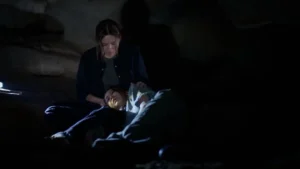
While the production cannot be characterized as cheap given the clear investment in wardrobe, set variety, and technical equipment, the overall budget was not generous enough to deliver a flawless visual experience. This cautious spending manifested in skipping key narrative moments that audiences anticipated seeing on screen, most notably Phai’s exit from the cave. The story abruptly jump-cut from the trapped characters to the hospital setting, skipping any visual explanation of their rescue. This jump cut suggests cost-saving measures to avoid complex rescue staging and special effects, but it undermined dramatic weight and created an unwarranted narrative gap.
The Finale Procession: Pacing Neglect and a Missed Celebratory Moment
As a critic who has followed the franchise from its inception, the wedding procession scene in the finale was a disappointing misstep. The sequence possessed all the marketing and dramatic ingredients to serve as an unforgettable celebratory climax, especially with the successful assembly of all four leads in a single frame.
Yet the direction squandered this moment through poor execution. The procession segment was rushed and unfairly brief, depriving characters of time to interact or generate joyous energy. Compounding the issue was a lackluster musical choice devoid of celebratory Thai flair, giving the impression that the audio track was rushed to fulfill a plot requirement. This visual and auditory failure robbed the story of its earned climax, turning a potential festival into a hasty montage. Tellingly, fans subsequently re-edited the footage with alternative music on social media, creating a far more impactful version than the director’s cut.

Conclusion
This installment of the Four Elements series represents the most critically challenging chapter to evaluate. In its favor stands its willingness to address familial exploitation and dysfunction directly, reflecting realities present in certain Thai families where financial motives intersect with toxic dynamics. The project demonstrated strong production values, refined direction, and dramatic growth from its leads compared to prior works. Although the initial episodes were difficult due to Phai’s extreme hostility toward Kaprao, this harshness can be understood if viewing this chapter as the problem child of the franchise.
The work deserves credit for tackling toxic love and redemption head-on, establishing itself as a drama that challenges audience expectations. Refusing commercial shortcuts like a neat, frictionless romance, it insisted on a complex path, framing love not as a magical fix but as an arduous process requiring self-confrontation and liberation from past trauma.

The cathartic journey of the leads was not a forced happy ending, but the natural outcome of self-reckoning. By shattering illusions and taking responsibility for mistakes, the narrative transformed the element of fire from a destructive force into a purifying catalyst that cleansed human relationships of deceit.
Ultimately, The Fire provides a lesson in delivering nuanced drama that balances commercial appeal with artistic and philosophical depth. It proves that dramatic love need not always be as calm as a morning breeze or as clear as water; it can be like fire—wild, confusing, and harsh, yet ultimately offering warmth and illumination to those brave enough to walk through it.